
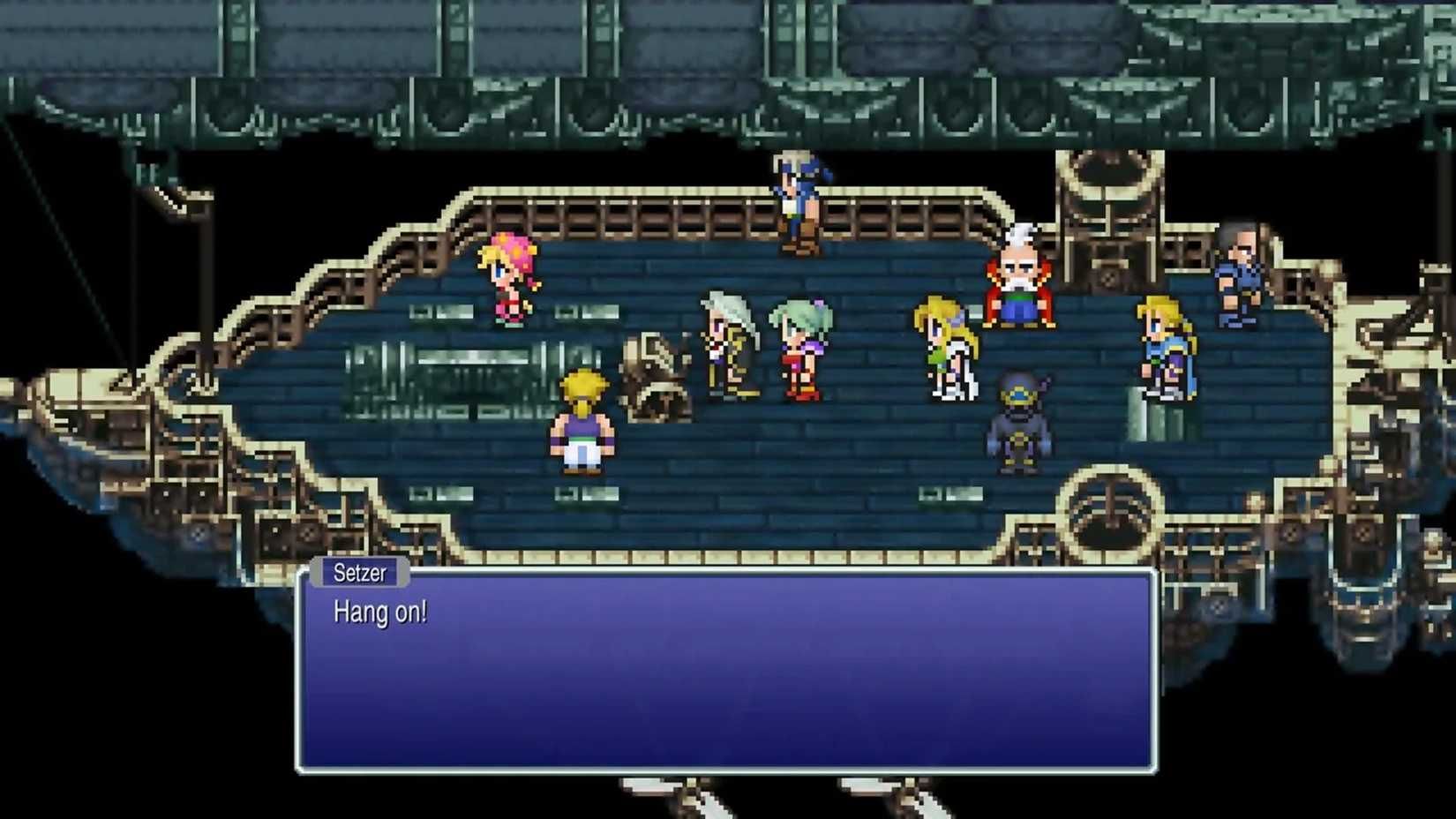

Square Enix producers Naoki Yoshida and Naoki Hamaguchi say a Final Fantasy 6 remake on the scale of FF7 Remake would be a much larger commitment than fans may expect.
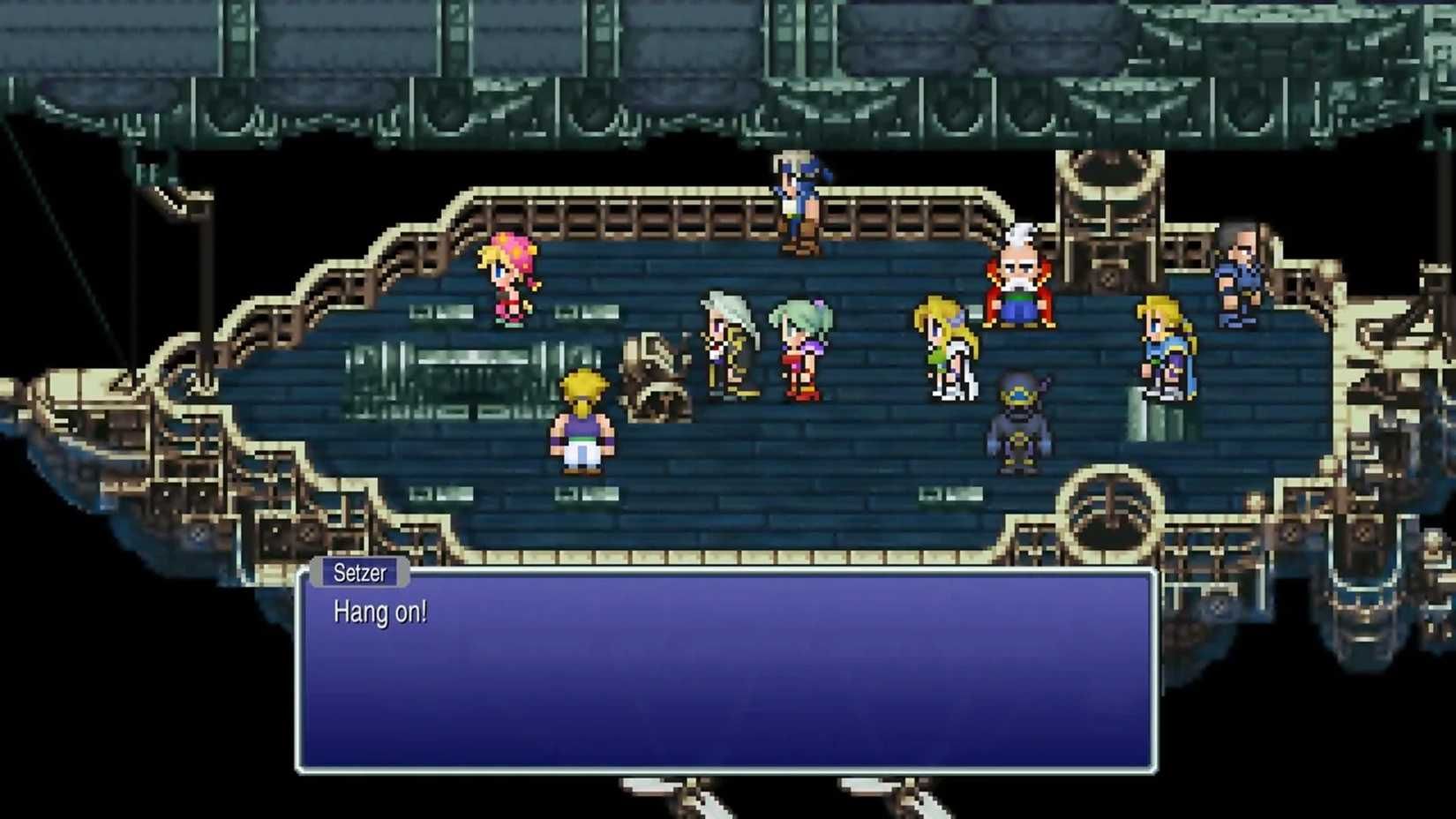
Image: xda-developers.com
Square Enix’s clearest message is also the least romantic one
Naoki Yoshida has put a hard production frame around one of Square Enix’s longest-running fan wishes: a Final Fantasy 6 remake on the scale of the Final Fantasy 7 Remake project would probably need four or even five installments. Speaking at the Final Fantasy 14 Fan Festival in Berlin, the Final Fantasy 14 director, widely known as Yoshi-P, said through a translator that he understands why players ask for modern remakes of older entries, but that the scale of Final Fantasy 6 is “immense,” according to Video Games Chronicle and Eurogamer.
That is the concrete news, and it immediately complicates the dream version of an FF6 remake. Yoshida was not announcing a project. He was explaining why a remake in the Final Fantasy 7 Remake mold could be even less manageable than the trilogy Square Enix is already trying to finish. VGC reports that Yoshida made the comparison directly while sitting with Naoki Hamaguchi, the director tied to the Final Fantasy 7 Remake trilogy, saying that Final Fantasy 6, Final Fantasy 8, and Final Fantasy 9 would likely become four or five releases if rebuilt with similar ambition.
For fans, the important distinction is between desire and production reality. A Final Fantasy 6 remake has not been confirmed by Square Enix in the supplied source material. No platforms, date, price, development team, or format have been announced. The only confirmed development is that senior Square Enix figures publicly discussed why such a project would be exceptionally difficult, and why players should not treat Hamaguchi’s affection for Final Fantasy 6 as a teaser.
Hamaguchi loves FF6, but he says that does not make it his next project
The Berlin panel also addressed the rumor cycle that forms whenever Hamaguchi talks about Final Fantasy 6. According to VGC, Hamaguchi said Final Fantasy 6 is the reason he wanted to work in games and that it holds a special place for him. He also joked that every time he gives that answer in an interview, an article appears saying he is going to remake it, so he now pairs the praise with a denial.
Eurogamer quotes him making the point plainly: he says “no, I am not” when the subject turns into speculation about him remaking Final Fantasy 6. That does not mean Square Enix will never remake FF6. It means the public evidence in these reports supports the opposite of the rumor: Hamaguchi’s personal attachment is confirmed, but an active Final Fantasy 6 remake under his direction is not.
This matters for how fans should read producer language. In RPG communities, creator affection often gets treated as a quest flag. A director names a favorite game, players infer a hidden objective, and the next step becomes assumed. Hamaguchi is warning against that exact reading. His answer is biographical, not a product announcement. Yoshida’s follow-up then turns that fan expectation into a production problem: if Square Enix were to answer the demand at Final Fantasy 7 Remake scale, the studio would be looking at a multi-game commitment that could exceed the current trilogy.
Why FF6 expands so quickly when translated into modern remake logic
Yoshida’s “four or five installments” comment is easier to understand if Final Fantasy 6 is viewed as a systems and content problem rather than a nostalgic object. GameSpot describes Final Fantasy 6 as a massive title with more than a dozen protagonists, several major battles, and some of the strongest worldbuilding in the series. Wccftech points to its two distinct world maps and calls it one of the biggest 16-bit JRPGs, despite the limits of the SNES cartridge format.
Those details are not trivia. They are exactly the kinds of ingredients that become expensive when a 2D RPG is reimagined as a modern, fully staged production. A large ensemble cast is not only a writing challenge. It implies character models, animation sets, combat roles, voice direction, cinematic staging, party composition logic, and revised progression arcs. Final Fantasy 6’s structure also asks a remake team to carry many character threads while preserving the sense that the world itself changes around the party.
The Final Fantasy 7 Remake trilogy shows the template Yoshida is using for comparison. Square Enix did not simply lift the 1997 game into cleaner visuals. The project expanded areas, rebuilt combat, staged story beats cinematically, and split one original game into multiple full releases. Yoshida’s warning is that if Square Enix applied that same approach to Final Fantasy 6, the result would likely outrun the three-part model. In that context, four or five Final Fantasy remake installments sound less like exaggeration and more like a rough estimate of how modern production scale multiplies old RPG density.
The FF7 Remake trilogy is the proof and the warning
Hamaguchi’s comments at the same panel give Yoshida’s estimate a second layer. According to VGC, Hamaguchi said he feels fortunate that the Final Fantasy 7 Remake team has stayed together for over 10 years across three separate games based on a single original title. Eurogamer reports that he stressed this kind of long-term team continuity is not common in the games industry, which is why he cannot casually say he will remake Final Fantasy 6.
That is a production risk fans rarely see from the outside. Multi-game RPG remakes are not only about whether there is enough story to divide into chapters. They also depend on whether Square Enix can keep leadership, tools, combat design, art direction, narrative planning, and institutional memory aligned across many years. Once a remake becomes a sequence of full-priced releases, every installment has to satisfy players on its own while also preserving builds, character arcs, and long-range narrative promises.
The current trilogy is nearly complete, but even there the reports show how large the commitment has been. VGC describes Final Fantasy 7 Revelation as the final part of the remake trilogy and says it is coming next year. Twisted Voxel reports the third installment is scheduled for Spring 2027, while Vice also frames Revelation as launching in 2027. The sources agree on the broad point that Square Enix is nearing the end of a years-long three-game effort. Yoshida and Hamaguchi are effectively saying that a comparable FF6 remake would ask the company to begin an even longer marathon.
A smaller remake path is possible, but it is not what Yoshida was discussing
Several reports correctly narrow the scope of Yoshida’s remarks: he was talking about remakes on the scale of Final Fantasy 7 Remake, not every possible form a Square Enix remake could take. Vice explicitly notes that Yoshida did not say Square Enix would never remake another classic Final Fantasy game. The warning is aimed at a particular model, one where an older RPG is rebuilt as a huge, multi-release modern production.
That leaves room for other approaches, but those are interpretation rather than announcement. GameSpot argues that HD-2D could be a better fit if Square Enix wanted to revisit older Final Fantasy games without turning them into decade-spanning projects. The outlet describes HD-2D as a style that blends retro-inspired pixel art with modern 3D environments, lighting, and effects, and points to Square Enix’s experience with games using that look.
For Final Fantasy 6 specifically, that distinction is central. A full Final Fantasy 7 Remake-style FF6 remake would have to solve the problem Yoshida identified: massive story scope, a huge cast, and a likely four or five-game runway. A more constrained visual remake could preserve more of the original structure and reduce the need to convert every location, battle, and character beat into cinematic AAA form. Square Enix has not announced either route in the provided sources, so the practical answer is simple: fans can reasonably discuss formats, but there is no confirmed FF6 remake plan to wait for.
For fans hoping to play a modern FF6, patience should come with caution
The immediate guidance is not glamorous, but it is useful. There is no announced Final Fantasy 6 remake in these reports. Hamaguchi has publicly pushed back on the idea that his love for FF6 means he is making one. Yoshida has said that doing it at Final Fantasy 7 Remake scale would probably require four or five installments. Anyone expecting a reveal soon should separate that hope from what Square Enix leaders actually said in Berlin.
The more interesting question is what kind of remake fans truly want. A systems-faithful Final Fantasy 6 could prioritize party management, character progression, pacing, and the original’s ensemble structure. A Final Fantasy 7 Remake-style version would likely chase cinematic expansion, action-hybrid combat, and a much longer release plan. Those are different design promises, with different risks. The former might feel less lavish. The latter could ask fans to follow one SNES-era story across many years and several releases.
Yoshida’s estimate does not close the book on an FF6 remake. It clarifies the cost of the most ambitious version. For now, the confirmed Square Enix position is caution, not commitment. The appetite from players is acknowledged, the affection from Hamaguchi is real, and the production math is sobering. If Final Fantasy 6 ever returns as a major remake, the first question may not be whether Square Enix can honor the story. It may be whether the company can choose a format that does not bury that story under the weight of its own scale.