
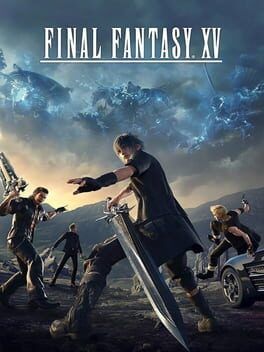
The Final Fantasy XV anniversary has reopened the argument over Square Enix's road-trip RPG, its post-launch rebuild, and the legacy of one of the series' most debated modern entries.
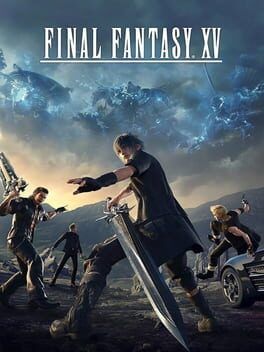
Image: IGDB
Store links: Final Fantasy XV on Steam
The anniversary reopened an argument Square Enix never fully settled
Square Enix's official Japanese Final Fantasy account marked Final Fantasy XV's 10th anniversary by calling it a story of father, son, and king, then asked fans to share the scenes that stayed with them. That is the clean commemorative version of the moment. The messier version is visible in the anniversary discussion around it: Push Square used the date to ask whether Final Fantasy 15 still splits opinion, and its poll framed the game across the full range from “fantastic” to “terrible.”
That tension is the most honest way to revisit Final Fantasy XV. Ten years after its November 29, 2016 PlayStation 4 release, according to Push Square, the game is neither safely canonized nor quietly discarded. It remains a mainline Final Fantasy that many players defend for its mood, party chemistry, and ending, while others still see it as an expensive lesson in how long development cycles, multimedia planning, and post-launch repair work can leave a role-playing game feeling unstable at the foundation.
There is also no new product announcement in the supplied anniversary material. No remaster, no new platform listing, no fresh expansion, no current upgrade path, and no new price are confirmed by the sources here. The anniversary discussion is therefore about legacy rather than purchasing news. For anyone searching Final Fantasy 15 10th anniversary or Final Fantasy XV anniversary and expecting a concrete re-release, the confirmed development is simpler: Square Enix acknowledged the milestone publicly, and the community conversation has returned to the same unresolved question that followed the game from launch. Which Final Fantasy XV are we judging?
A decade of development left the finished game carrying old expectations
Final Fantasy XV arrived with unusually heavy baggage even by this series' standards. Push Square describes the project as having gone through a “hellish development cycle,” with Square Enix veterans including Tetsuya Nomura reshaping it repeatedly over a full decade. The same outlet notes that the game began life connected to Final Fantasy XIII's expanded universe, a context that makes the final release feel even stranger in hindsight: a royal road movie, an open continent, an action combat system, and a four-man party built around Noctis rather than a conventional ensemble rotation.
Gamevaro's anniversary write-up, which cites Push Square as its source, frames that history through the older Final Fantasy Versus XIII identity and says the project went through creative overhauls, engine changes, and directorial reshuffling before becoming the numbered entry that shipped. The important part for today's debate is not nostalgia for the version that never arrived. It is that many fans did not only evaluate Final Fantasy XV against other 2016 RPGs. They evaluated it against years of trailers, assumptions, and a phantom game that had already become powerful in the imagination.
That is why Final Fantasy 15 opinion still tends to harden quickly. If a player came to it as the long-awaited realization of Versus XIII, the finished structure could feel compromised from the opening hours. If a player came to it as a self-contained road-trip RPG, the same choices could feel refreshingly focused. Those are different entry points into the same object, and Square Enix never entirely escaped the friction between them.
The road trip gave Final Fantasy XV its strongest identity
Polygon's anniversary essay argues that one of the most criticized pre-release choices became the game's greatest strength: keeping the playable adventure centered on four men. The outlet recalls the skepticism around an all-male party and the social-media jokes about Noctis, Gladio, Ignis, and Prompto looking like a “boy band,” especially with their black outfits designed in collaboration with Japanese rock-fashion brand Roen. After release, Polygon says, that label persisted but turned into a compliment among fans who embraced the group's dynamic.
The reason is structural. Polygon describes Final Fantasy XV as the series' first open-world game, built around traversal by car, on foot, and on chocobo. Across that travel time, the four companions talk constantly: commenting on scenery, trading inside jokes, teasing each other, making radio requests, and reacting during combat. Push Square reaches a similar conclusion from a different angle, writing that the game's tale of brotherhood, filtered through a road-trip lens, works especially well despite failures in the overarching plot.
For an RPG player, that party design changes the texture of progression. Final Fantasy XV limits the rotating-cast fantasy that older entries often provide, but it deepens familiarity through repetition. You learn the party less through menu swapping and more through accumulated routines: Ignis cooking, Prompto photographing, the group bickering after a fight, and the car becoming a moving campfire. The game asks players to invest in a narrower social system, and that choice is still central to the Final Fantasy XV legacy. Some players experience it as intimacy. Others experience it as a loss of party variety.
The systems were ambitious, but the first version made the gaps visible
Push Square's retrospective identifies Final Fantasy XV as a bold departure from the series' usual formula, citing its open-world structure, action combat, and live service-style support. It also says the original release divided opinion despite “rock solid” critical reviews, with longtime fans pointing to shallow gameplay and a disjointed story. That diagnosis explains why the game remains so difficult to place in the series. Its innovations were not minor surface changes. They altered combat pacing, exploration, quest flow, and how narrative information reached the player.
From a systems perspective, Final Fantasy XV often feels like a game chasing immediacy. Combat moves away from the command emphasis many fans associated with the series. Exploration is framed through a continent that encourages wandering between objectives. Polygon notes that Noctis must gather Royal Arms scattered through dungeons across the map after the kingdom falls and his wedding journey collapses into a fight to reclaim the throne. That premise gives the open world a clear progression spine: travel, search, dungeon, weapon, repeat.
The problem, as reflected in the anniversary criticism summarized by Push Square, is that the surrounding RPG fabric did not satisfy everyone. A strong party loop can carry a lot, but it cannot fully replace coherent storytelling, satisfying build decisions, or quest design that consistently rewards curiosity. When players call Final Fantasy XV unfinished, they are often talking about that friction between the pleasures of being on the road and the feeling that major systems and story beats were still being stitched together around the player.
Royal Edition changed the debate by changing the game people played
Final Fantasy XV's post-launch life is essential to any fair assessment because Square Enix did not leave the 2016 release untouched. Push Square says the publisher added major updates after launch, including new combat mechanics, quests, and full cutscenes intended to flesh out the narrative. The outlet also notes that multiple character-specific DLC episodes followed. According to Push Square, many would argue that the game did not fully come into its own until the Royal Edition arrived in 2018, bundling updates and expansions into a more cohesive RPG.
That creates a basic but important split in the Final Fantasy 15 opinion landscape. Some players are judging the launch version, when the missing seams were at their most visible. Others are judging a later version shaped by patches, DLC, and repackaging. Both are legitimate historical experiences, but they are not identical. A player who met Noctis and his friends in 2016 encountered an RPG that asked for patience with narrative absences. A player who came in through Royal Edition encountered a version that, by Push Square's account, had already received significant structural reinforcement.
For anyone considering a revisit, the source-supported guidance is straightforward. The anniversary material points to Royal Edition as the more complete form of Final Fantasy XV, specifically because it gathered the updates and expansions that followed launch. The supplied sources do not provide current store pricing, performance comparisons, or platform availability beyond Push Square's note on the original PS4 release, so buyers should verify those details on their storefront of choice. But if the question is which version best represents Square Enix's repaired vision, the reporting here favors the 2018 package over the day-one release.
The multimedia plan made the game feel bigger and less self-contained
Polygon notes that Square Enix had wide-ranging plans for a Final Fantasy XV multimedia universe in 2016, including a feature film, an animated series, several rounds of DLC, multiple mobile games, a dedicated multiplayer expansion, and a PSVR fishing spinoff. Gamevaro similarly describes the game as spawning a multimedia universe that included anime, feature films, and spin-off games, and reports that Final Fantasy XV sold over 10 million copies worldwide.
Those details help explain why the game's legacy carries both scale and strain. Square Enix treated Final Fantasy XV as a broad franchise initiative, not a single boxed RPG that would stand entirely on its own at launch. For some players, that made the world of Eos feel unusually expansive. For others, it reinforced the sense that the main game had been distributed across companion media and later additions instead of arriving whole.
This is where Final Fantasy XV differs from many merely divisive RPGs. Its controversy is not only about taste in combat, party composition, or open-world pacing. It is also about format. How much narrative weight should a mainline entry carry inside the game itself? How much repair can post-launch content perform before it changes the historical memory of a release? And when a publisher builds films, animation, DLC, mobile projects, multiplayer, and VR around one numbered game, does that ambition enrich the core experience or expose the pressure placed on it?
Final Fantasy XV endures because its best and worst traits are connected
The reason Final Fantasy XV still divides fans at its 10th anniversary is that its strengths are tied closely to the same choices that produced its weaknesses. A tighter four-character party gives the game its memorable brotherhood, but it also narrows the playable ensemble. A road-trip structure creates warmth and routine, but it sits beside a plot that Push Square describes as disjointed. Action combat and open-world exploration gave the series a dramatic modern turn, but Push Square's retrospective says longtime fans criticized shallow gameplay and an unfinished feeling. Post-launch updates improved the package, yet they also became evidence for critics who felt the original release needed repair.
Even Push Square's own user-rating context reflects that unsettled status. The outlet says Final Fantasy XV sits 16th on its Best Final Fantasy Games list, based on user ratings, with a 7.5 out of 10 overall. That is not a collapse, and it is not a coronation. It is the statistical shape of a game many people like, some people love, and plenty of series devotees still qualify heavily before recommending.
As a Final Fantasy XV legacy piece, the anniversary is less useful as a verdict than as a lens. The game proved that a mainline Final Fantasy could become a companion-driven open-road RPG and still leave a strong emotional imprint. It also showed the cost of shipping a game whose final identity had been negotiated through years of change, then clarified through updates, DLC, and repackaging. Ten years later, Noctis, Gladio, Ignis, and Prompto remain easy to remember. The argument around the game they inhabit has aged right alongside them.