

EA Sports has officially teased Fight Night's return after 15 years away. Here is what is confirmed, what remains unannounced, and what the first reveal needs to prove.
Image: IGDB
EA has finally put Fight Night back on the card
EA Sports has officially revived Fight Night, ending a 15-year wait for one of sports gaming’s most requested comebacks. The publisher announced the return through a new social media post from the EA Sports Fight Night account, writing, “To everyone who stayed in our corner: Fight Night is coming back.” The image attached to the post shows boxing gloves hanging above a ring with the line, “The fight is never over,” according to reports from VGC, IGN, Push Square, Shacknews, Bleacher Report, BoxingScene, and Yahoo Sports.
That is the confirmed news. The tension is everything EA did not say. There is no title, release window, platform list, developer confirmation, trailer, gameplay footage, price, roster, mode list, or statement on whether this is a new Fight Night game, a remake, or a remaster. IGN noted that no developer has been named and pointed out that the original and most recent two Fight Night games were built by EA Canada in Vancouver, while Fight Night Round 2 and Fight Night Round 3 were developed by EA Chicago, a studio that has since closed.
For now, the safest reading is simple: EA Sports Fight Night returns, but the project is still mostly a promise. That matters because the series has been gone long enough that a modern EA boxing game cannot simply pick up where Fight Night Champion left off. It has to reintroduce its roster model, career structure, control feel, presentation standards, and business model to a sports-game market that changed dramatically during the franchise’s absence.
The gap is the story: Fight Night has been absent since 2011
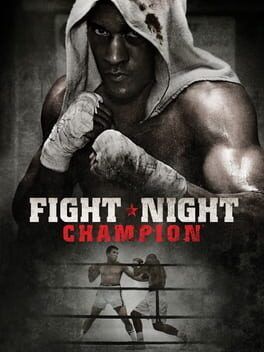
The last mainline entry was Fight Night Champion, released in 2011 for PlayStation 3 and Xbox 360, according to Yahoo Sports and other reports. Push Square described the series as a product of the PS2 and PS3 eras, with four entries arriving before Champion between 2004 and 2009. BoxingScene similarly traced the series back to its 2004 debut, followed by yearly releases until 2006, then updated versions in 2009 and 2011.
VGC reported that all five Fight Night games released between 2004 and 2011 earned Metacritic scores in the mid-to-high 80s. That track record is a big reason the Fight Night revival carries more weight than a routine brand resurrection. The series was remembered for high-end presentation, analog punching, cinematic knockdowns, and a serious approach to licensed boxing at a time when major sports publishers still treated standalone boxing as a premium console category.
Shacknews noted that the franchise featured modern and historic fighters, a career mode, and the ability to create boxers. BoxingScene added useful roster context for Fight Night Champion, reporting that the 2011 game featured 54 past legends and then-current contenders, later expanded to 85 through downloadable content. Its listed fighters spanned heavyweights such as Muhammad Ali, Mike Tyson, George Foreman, Joe Frazier, Lennox Lewis, and the Klitschko brothers, along with names from other divisions including Roy Jones Jr., Bernard Hopkins, Sugar Ray Robinson, Jake LaMotta, Manny Pacquiao, Oscar De La Hoya, Miguel Cotto, Shane Mosley, Julio César Chávez, Pernell Whitaker, Nonito Donaire, and Diego Corrales.
That history sets a high bar for any new EA boxing game. Fans are not waiting for a logo. They are waiting to see whether EA can rebuild the full boxing ecosystem that made Fight Night feel like a sport rather than a one-off combat game.
EA left boxing for UFC, and the licensing math helps explain why
The Fight Night comeback also reopens the question of why EA stepped away from boxing in the first place. VGC reported that after Fight Night Champion, EA shifted its attention to UFC and released five EA Sports UFC entries between 2014 and 2026. Shacknews cited comments from then-EA Sports executive Andrew Wilson from the early 2010s saying the majority of the Fight Night team had been redirected to work on UFC. IGN also noted that EA’s UFC series remained active, with UFC 6 released earlier in 2026.
The business logic was different for UFC than it was for boxing. VGC reported that complications around licensing athlete likenesses of top boxers, including rising fees, contributed to EA’s decision to focus on UFC, where it could make a broader deal covering athletes under the UFC umbrella. That distinction is crucial for roster expectations. Boxing is fragmented across promoters, sanctioning bodies, weight classes, broadcasters, and individual stars. A UFC-style blanket deal is harder to replicate.
That is why the first meaningful reveal cannot only show gloves, sweat, and a famous ring walk. It needs to show how EA is solving the roster problem. A modern Fight Night roster will be judged on three fronts: current champions and contenders, retired legends, and the depth needed to support career progression across weight classes. BoxingScene’s look back at Fight Night Champion’s roster shows why fans remember that game so fondly. It mixed Ali and Tyson with Pacquiao, De La Hoya, Cotto, Donaire, and others, giving the game historical fantasy matchups and contemporary relevance.
VGC also reported that Tyson Fury and Anthony Joshua appeared as bonus fighters in EA Sports UFC, and BoxingScene noted that modern and legendary boxers including Fury, Joshua, Tyson, and Ali have appeared as playable characters in EA’s UFC games. That proves EA has maintained some boxing-adjacent licensing relationships, but it does not confirm anything about the roster for the new Fight Night game.
The comeback lands in a busier sports-game market
A new Fight Night game is returning to a market where EA Sports has already shown it can revive a dormant franchise, but also one where players expect long-term support, regular content updates, and deep modes. Shacknews compared the Fight Night announcement to EA Sports College Football’s revival announcement in 2021 and noted that College Football 25 took about three years to release after its initial reveal. That does not confirm a Fight Night timeline, but it is a useful caution against expecting an imminent launch.
Push Square similarly suggested the release is probably still a few years out, while making clear that EA has not shared a date. Yahoo Sports reported that the announcement included no official release date, gameplay footage, or platform details. If EA follows a long runway, the first months of the Fight Night revival may look more like recruitment and positioning than a normal pre-release campaign.
The boxing-game field is also no longer empty. Push Square pointed to Creed: Rise to Glory and Undisputed as boxing games that arrived during Fight Night’s absence. Bleacher Report described Undisputed from Steel City Interactive as the first licensed boxing game since Fight Night’s last release in 2011 and suggested EA may have been influenced by its popularity. That influence is not confirmed by EA, so it should be treated as outside interpretation rather than stated publisher reasoning.
Still, competition changes the assignment. Fight Night returns with the advantage of brand memory and EA Sports production scale, but it cannot count on nostalgia alone. In today’s sports market, players will ask whether the game has a serious career mode, meaningful created-boxer tools, online stability, realistic judging, authentic stamina, and post-launch roster support. Those are the areas where a modern boxing sim either earns a long life or becomes a curiosity for lapsed fans.
The modes may matter as much as the punches
As a sports-game comeback, Fight Night’s most important question may be mode design. Shacknews specifically recalled the older games’ career mode and create-a-boxer feature, and those pillars are where expectations should start. A new Fight Night career mode has to handle boxing’s unusual rhythm: fewer events than team sports, long training cycles, opponent negotiations, weight management, title politics, aging, cuts, injuries, and the risk-reward calculus of moving divisions.
Nothing in EA’s announcement confirms any of that. There is also no word on whether the new EA boxing game will include a story mode like Fight Night Champion, a traditional career, online leagues, ranked play, created gyms, esports-style competition, or a live-service content plan. Because EA has not announced pricing or editions, there is no confirmed information on monetization, downloadable content, deluxe editions, early access, or roster packs.
That absence should shape how fans read the first reveal. A cinematic trailer will tell us the tone. Gameplay will tell us whether EA is prioritizing simulation footwork, punch commitment, stamina drain, clinch behavior, judging logic, and damage modeling. Mode details will tell us whether the game is being built for solo careers, online competition, or both. Roster reveals will tell us whether EA has solved the licensing problem at scale or is starting with a smaller pool and building over time.
The feel also matters because Fight Night’s reputation was tied to control identity. IGN’s Ryan McCaffrey recalled Fight Night Round 3 as, in his view, one of the first major visual showcases of the HD era. That is an opinion, but it reflects the franchise’s old role as a graphical and tactile benchmark. A current-generation Fight Night would be expected to sell impact, fatigue, knockdowns, and body damage in a way that feels specific to boxing rather than borrowed from MMA.
PIF timing, boxing momentum, and the questions EA has not answered
VGC reported that the Fight Night news arrives close to the completion of EA’s sale to Saudi Arabia’s Public Investment Fund, and noted that Saudi Arabia has become a major force in staging high-profile boxing events. VGC also reported that Saudi Arabia runs boxing promotion Zuffa with UFC president Dana White. Those details add business context, but EA has not said the ownership change caused the Fight Night revival, and no source material provides a direct statement from EA linking the two.
There were also reports before the official announcement that complicate the picture. Bleacher Report cited an Insider Gaming report from the prior month that said plans for a Fight Night reboot had been canceled, while also noting that EA’s sale to a PIF-led group left some hope alive because of PIF’s major stake in boxing. EA’s official social post now confirms the franchise is coming back, but it does not clarify whether an earlier plan was canceled, restarted, replaced, or misunderstood. That is a conflict in the public reporting, not something EA has resolved.
The most practical guidance for fans is to wait for the first proper reveal before making assumptions. Confirmed today: Fight Night returns. Unannounced today: the release date, platforms, developer, roster, modes, gameplay systems, business model, and whether the project is a sequel, remake, remaster, or broader reboot.
When EA shows the game, fans should look past the brand pop and ask sharper questions. Which studio is building it? Is it targeting current consoles, PC, or future hardware? How many active fighters and legends are licensed? Does career mode model the sport’s structure, or does it follow a generic ladder? Are created boxers central or secondary? Is online play built around fair competition, persistent gyms, or monetized roster building? How does the game handle stamina, reach, footwork, southpaws, clinches, cuts, referee stoppages, and scorecards?
The Fight Night revival is real. The next phase is proving that EA Sports can bring boxing back with the depth, roster credibility, and ring feel that kept players in its corner for 15 years.