
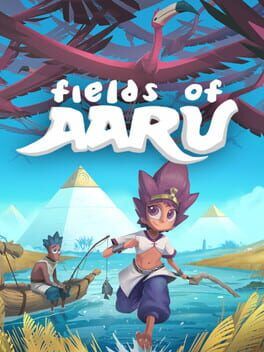

Hands-on with the Summer Game Fest demo of Fields of Aaru, a cozy open-world life sim that brings Ancient Egyptian mythology, farming, exploration, and social systems together ahead of its planned Q4 2026 PC launch.
Beginning Your Afterlife Along the Nile
Fields of Aaru opens not with a disaster or a dramatic isekai twist, but with a quiet acceptance: your life on Earth is over, and your new, eternal life is about to begin in the Egyptian afterlife.
The Summer Game Fest demo drops you into a small stretch of riverside settlement and surrounding desert, enough to tease how Zymartu Games is trying to marry cozy routine with the scale of an open-world adventure. Within minutes you are irrigating crops, chatting with locals, and catching your first glimpse of distant pyramids shimmering in the heat.
It feels familiar if you have spent time with Stardew Valley, Animal Crossing, or Disney Dreamlight Valley, but the afterlife framing and Egyptian flavor push it into a space of its own.
A Cozy Life Sim Rooted in Myth
The setting is not a loose “Egyptian themed” backdrop. From the language NPCs use to the architecture and rituals, the demo leans into the idea that you are inhabiting a mythological space based on the Field of Reeds, the paradise of Egyptian belief.
You arrive as a newcomer whose past life is hinted at but not yet fully explored. The story premise is simple: the region’s spiritual balance has faltered, the obelisks that channel divine power lie inactive, and the town has slipped into quiet disrepair. Your long-term goal is to restore both the land and its people, working in partnership with the gods that watch over Aaru.
Shrines dedicated to deities like Ptah, Hapi, and Sekhmet appear early, introducing a light layer of spiritual management. Offering crafted goods or gathered resources grants blessings that nudge your playstyle. Ptah’s favor makes crafting more efficient, Hapi boosts farming and irrigation, and Sekhmet leans toward protection and exploration. Even in this small slice, the pantheon starts to feel like an extension of your build rather than purely flavor.
Farming Along the Eternal Nile
Farming is the backbone of the demo, and it smartly ties into the Nile rather than relying on abstract plots. You learn to manage water channels and simple irrigation, turning dusty soil into fertile fields in a way that naturally teaches the rhythms of the river.
Planting and harvesting work on a familiar day cycle, but the Nile’s flood patterns hint at longer term planning. The demo lets you prepare basic plots, grow your first crops, and get a feel for how soil placement, water access, and god blessings interact. It is all very low pressure, yet systems are already layered enough that future min-maxing seems possible.
What stands out is how farming is contextualized as a communal responsibility. You are not just grinding for personal profit. Villagers ask for specific ingredients, and tending communal fields helps stabilize the town’s food supply. Between that and the divine blessings, it feels less like you are running a private farm and more like you are participating in a living ecosystem.
Crafting Ancient Trades
Progression in the demo comes from learning traditional crafts. Stone shaping, clay firing, and early woodworking unlock new tools, decorative items, and upgrades to your home and the town.
Instead of dense skill trees, the demo opts for hands-on, recipe-driven progression. You gather stone from nearby outcroppings, turn river clay into bricks, and use those materials to repair structures or fashion offerings for shrines. This approach keeps the early hours grounded and tactile, giving weight to each new trade you pick up.
It also anchors the cozy fantasy in a specific culture. These are not generic “crafting benches.” You are firing clay in kilns, working in sun baked yards, and learning methods that feel appropriate to the setting. The result is a sense of place that many life sims struggle to achieve.
Open-World Exploration, In Miniature
The Steam demo only covers a small corner of Aaru, but it is enough to showcase the open-world aspirations.
Following dirt paths away from the town leads to scattered ruins, hidden oases, and the tantalizing silhouettes of pyramids. You can venture into desert edges to gather rarer resources, stumble upon small environmental puzzles, and uncover bits of lost knowledge that unlock new recipes and possibilities back home.
Crucially, exploration is gentle rather than punishing. Wildlife and hazards exist, but the tone remains more adventurous than dangerous. Sekhmet’s blessings hint that combat or at least defensive play may expand later, yet in this slice the emphasis is on curiosity. The map invites you to wander while still funnelling you back toward quests and crafting goals.
If Zymartu can scale this design out across the promised wider afterlife, Fields of Aaru has a real shot at delivering the fantasy of a cozy, explorable Nile valley that keeps unfolding over dozens of hours.
Building a Community in the Afterlife
Social systems are still in their early stages, but the demo makes a strong first impression. A handful of residents already display distinct personalities, motivations, and small arcs you can nudge along.
Helping a fisher get his gear back in order, assisting a craftswoman with materials, or restoring a neglected corner of town all feed into a sense that you are reviving a community rather than decorating an isolated homestead. Dialogue is warm and occasionally introspective, touching lightly on themes of memory and second chances without turning the tone morose.
There are gentle hints at deeper relationship mechanics to come. Some characters clearly have more to say as you contribute to the town and present the right gifts or offerings. The framework here feels closer to a narrative driven social sim than a simple checklist of friendship hearts.
How the Demo Sets Up the Full Release
With a planned Q4 2026 launch window on PC, this Summer Game Fest build feels like a confident vertical slice rather than a rough early alpha. It establishes four core pillars that should carry into the full game.
First, the farming and crafting loop is already satisfying. Managing irrigation, learning new trades, and feeding both shrines and villagers with your output provides a solid backbone for the day to day flow.
Second, the open-world structure is promising. Even with limited boundaries, there is a clear sense of direction in how the game guides you from town upkeep to desert expeditions and back again.
Third, the mythological layer is not just a skin. Godly blessings, shrines, and obelisk restoration all point to a progression system that links your personal growth to the health of the afterlife itself.
Finally, the social design suggests a community that will evolve over time as you complete quests and rebuild shared spaces. If Zymartu can maintain that focus on communal restoration, Fields of Aaru could stand apart from more solitary farm sims.
Early Verdict
The Fields of Aaru demo does exactly what a good early look should. It makes a clear promise: this is a cozy life sim grounded in Ancient Egyptian mythology, with open-world exploration and social systems that meaningfully support its farming core.
There are still plenty of unanswered questions about long term progression, late game structure, and how complex combat or hazards might become. But in its current state, the blend of myth, community, and cozy routine feels both refreshing and assured.
If the idea of tending fields, restoring shrines, and getting to know an afterlife community along the Nile appeals to you, the demo is well worth a download while we wait for the gates to fully open in Q4 2026.