
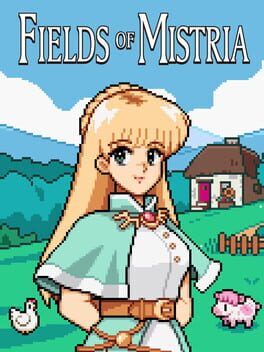

Critics are circling Fields of Mistria as the cozy farming RPG Stardew Valley fans should watch, thanks to stronger town writing, flexible daily play, and a 1.0 launch after early access.
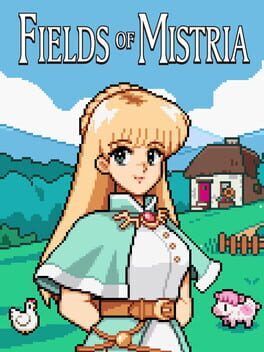
Image: IGDB
Store links: Fields of Mistria on Steam
Fields of Mistria leaves early access with a rare kind of farming-sim momentum
Fields of Mistria has reached 1.0 after roughly two years in early access, and the early critical line is unusually clear: reviewers are treating NPC Studio’s farming RPG as one of the strongest post-Stardew Valley contenders in the genre. That is the concrete shift behind the current Fields of Mistria review conversation. This is no longer a promising Steam curiosity being judged on potential. According to Eurogamer and GameSpot, the game has now launched out of early access, and critics are measuring it against the standard that Stardew Valley set over the last decade.
That comparison is not casual name-dropping. The Guardian frames Fields of Mistria as part of a farming-sim wave shaped by Stardew Valley’s success, noting that Eric Barone’s game has sold more than 50 million copies and became the template for many indie life sims. GameSpot goes further, arguing that many players have had little reason to leave Pelican Town because Stardew Valley has benefited from 10 years of updates on top of an already strong base.
The tension for Fields of Mistria is obvious: a cozy farming RPG can look like Stardew at first glance and still fail to justify the switch. Critics are saying Mistria earns the comparison because it pushes on areas where Stardew’s formula can feel thinner today: a more reactive town, stronger ensemble writing, broader character dynamics, and daily progression that discourages players from turning the farm into a pure money machine.
The Stardew Valley comparison starts with familiarity, then shifts quickly
The shared foundation is well documented across the reviews. GameSpot describes Fields of Mistria as using core elements associated with Harvest Moon and refined by Stardew Valley: moving into an abandoned farm, meeting roughly two dozen townspeople, farming through four 28-day seasons, attending events, giving gifts, mining for ore, fighting monsters, and pursuing romance. Eurogamer similarly says the opening premise recalls the classic Harvest Moon structure, with the player arriving to help revive a struggling town.
The difference critics keep returning to is what happens after that recognition fades. Eurogamer says Fields of Mistria quickly becomes a different beast because it is comparatively relaxed about farming as the central grind. The review argues that Stardew Valley and similar games can slide into a profit-maximizing routine, where the pastoral fantasy becomes about squeezing maximum output from land and machines. In Eurogamer’s reading, Mistria resists that pressure by giving meaningful incentives to spread time across farming, fishing, mining, crafting, and town work.
That point matters for players searching for Stardew Valley like games because the best cozy farming RPG for them may not be the one with the most systems. It may be the one that keeps those systems from collapsing into one optimal routine. Eurogamer points to Caldarus, the dragon statue, as one mechanism behind that balance: perks are exchanged for essence gathered through different efforts, which encourages varied days rather than one dominant money strategy. The same review gives examples ranging from mining late into the night to clearing farm debris for animal spaces, and says the game treats those activities as similarly worthwhile.
Critics are singling out the town, not the turnips
The strongest thread in this Fields of Mistria review roundup is not crop math. It is character writing. PC Gamer’s review verdict calls it “a fresh face for farm sims” with “the best-written cast” the reviewer had seen in the genre. The same review says that in many farm sims, talking to neighbors can become another chore, while in Fields of Mistria the neighbors became the reason to start each in-game day.
GameSpot’s article makes a similar case through small examples of reactivity. The outlet describes donating a worm to the museum, then hearing a villager comment on that odd choice the next day. It also describes completing a copper ore delivery for the blacksmith, then later being thanked by the blacksmith’s older brother. GameSpot uses those moments to argue that Mistria’s town feels connected because NPCs respond to events and to one another, rather than existing mainly as separate relationship meters orbiting the player.
That is where Fields of Mistria’s story pitch becomes sharper. According to The Guardian, Mistria is a small town recovering from an earthquake, and the player helps restore structures such as a bridge and the Sleeping Dragon Inn by donating supplies and funds, raising renown and town rank along the way. Game8’s review says the narrative expands beyond that initial premise, with character motivations, relationships, and personal reasons for wanting Mistria to recover feeding into the larger story. Game8 scored the story 9 out of 10 and said some developments were predictable, but still satisfying because of the build-up.
For Stardew fans, that is the cleanest reason critics are positioning Mistria as a serious recommendation. Stardew Valley remains beloved, but GameSpot specifically identifies story, surface-level relationships, diversity, and a world that can feel less connected as weaknesses Mistria tries to address. That is GameSpot’s interpretation, not an objective measurement, but it matches the wider critical emphasis: reviewers are responding to the way Mistria lets a town feel socially alive before the player finishes optimizing the farm.
Life-sim improvements come from flexibility, not complexity for its own sake
A farming RPG can drown in side activities if they compete for attention without feeding each other. Game8’s review argues that Fields of Mistria avoids that problem by letting farming, RPG progression, relationships, crafting, and exploration complement one another. The site scored gameplay 8 out of 10 and praised the freedom in how each day can be spent, while noting that no single activity felt mandatory in the way progression systems can sometimes demand.
The Guardian’s overview supports that picture by laying out the activity spread: grow crops, raise barn animals, attend seasonal events, visit Saturday markets, fish, catch bugs, explore mines, donate to a museum, craft furniture, choose a cat or dog, and collect toys and accessories for animals. It also points to annual events such as the Shooting Star festival and everyday charm like ducks and rabbits playing together on a seesaw. Eurogamer, with similar affection, mentions the silliness of animal play spaces while still emphasizing that the underlying structure rewards varied play.
The fantasy wrapper also helps Mistria stand apart visually and tonally. GameSpot describes the game’s anime-inspired look, comparing the town leader’s pastel hair and glittery accessories to Sailor Moon. Eurogamer’s review leans into the same magical energy, mentioning dragon magic, a dragon statue, witches, mines, and a “Sailor Senshi” flavor around the farming routine. The result, as critics frame it, is a farming sim that can feel familiar in its schedule but distinct in its texture.
There are caveats. Game8’s 90 score comes with specific complaints about rough edges in combat, resource RNG, and quality-of-life. Those are the kinds of friction points that matter in a long-haul life sim, where small annoyances can repeat across dozens of hours. The supplied reviews do not frame those issues as dealbreakers, but they do keep the game from being portrayed as frictionless.
The practical case for playing now is stronger on PC than anywhere else
For readers deciding whether to try Fields of Mistria now, the confirmed platform information in the provided sources points to PC. The Guardian says the game debuted in early access for PC players on Steam in August 2024. PC Gamer’s review lists NPC Studio as both developer and publisher, says the game has no multiplayer, gives an expected price of $14 / £11.79, and marks Steam Deck support as Verified. Those are useful buyer details, especially for players who treat farming sims as handheld comfort games.
The sources provided here do not confirm console versions, cross-save, or multiplayer plans. They also do not provide a formal roadmap after 1.0. That does not mean those things will never exist. It means this article can only confirm the PC and Steam context reflected by the cited outlets. If you are primarily a Switch, PlayStation, or Xbox farming-sim player, the safe reading is that PC is the supported path documented in these sources.
The early-access history also changes the risk calculation. The Guardian reports that Fields of Mistria accumulated more than 4 million player hours in its first month of early access, which suggests the game had already found an audience before 1.0. Eurogamer and GameSpot both say the 1.0 launch follows two years in early access. That does not guarantee polish in every system, but it does mean critics are not evaluating a game that appeared fully formed overnight. They are responding to a project that has had a long public runway.
Who should try Fields of Mistria, and who may want to wait
Fields of Mistria looks like the easiest recommendation for Stardew Valley fans who loved Pelican Town but wished the social web had more movement. If your favorite life-sim moments come from overheard conversations, town events, character arcs, romance possibilities, and small NPC reactions that make a community feel aware of itself, the critical consensus around Mistria is unusually favorable. PC Gamer emphasizes the cast. GameSpot emphasizes relationships between townspeople. Game8 emphasizes story and character motivations. Those are three separate signals pointing in the same direction.
It also sounds well suited to players who enjoy farming but resist turning every cozy game into an efficiency spreadsheet. Eurogamer’s review is valuable here because it identifies a design choice beneath the charm: Mistria gives players reasons to diversify across activities, which can keep the game from becoming a single-profit-route farm. If your Stardew saves always become ancient-fruit empires and you are tired of doing that to yourself, Mistria may gently push back.
Players who mainly want refined combat, deep automation, multiplayer farms, or a console version should be more cautious based on the current source material. Game8 flags combat rough edges and resource RNG. PC Gamer lists multiplayer as “No.” The provided reporting confirms PC and Steam Deck details, but not other platforms. That makes Fields of Mistria a strong “play now” candidate for solo PC players and Steam Deck owners, and a “watch for announcements” candidate for everyone waiting on platforms or features the sources do not yet confirm.
The larger takeaway from this review roundup is that Fields of Mistria is being praised because it understands the Stardew Valley itch without simply chasing Stardew’s shadow. The crops, mines, seasons, gifts, and festivals are there. The reason critics are leaning in is the added density around them: a town recovering together, characters with visible bonds, daily routines that reward curiosity, and a fantasy-cozy identity bright enough to stand on its own.