
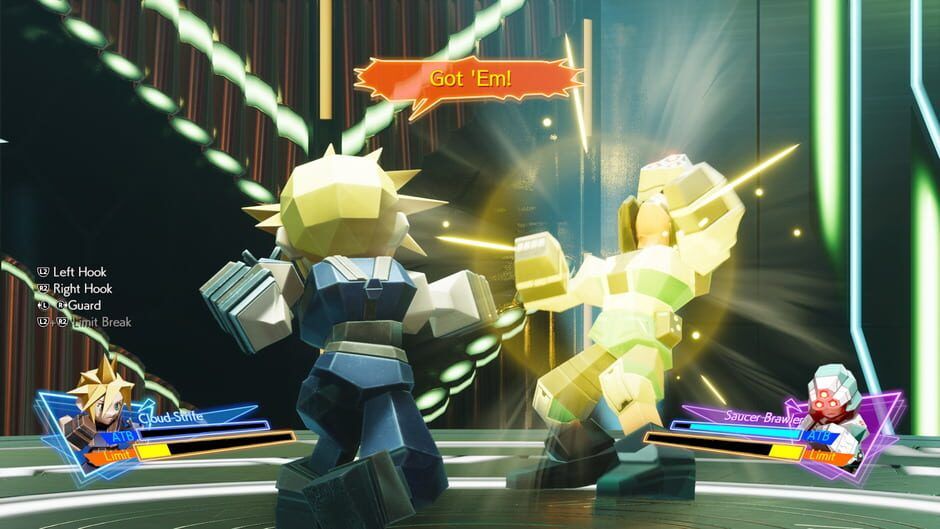
Rocket Town, Wutai, the Highwind, and a possible trip to space turn Final Fantasy VII Remake Part 3 from a simple closer into a statement on scope, traversal, and how far Square Enix is willing to push this reimagining.
Naoki Hamaguchi has started talking about Final Fantasy VII Remake Part 3 in specifics, and the details he is willing to share say more about the project than any trailer could right now. Rocket Town is finally back on the itinerary. Wutai is no longer optional, it is “one of the main locations.” The Highwind will let you freely travel the world map. And, hanging over it all, is the not‑so‑subtle tease that if Rocket Town is in, a trip beyond the planet’s atmosphere might be too.
On paper those sound like simple callbacks to late‑game beats from the 1997 original. In practice they are a mission statement. Part 3 is not just cleaning up cut content from Rebirth. It is pivoting the trilogy into a true world‑spanning finale that has to satisfy purists, pay off two games of character work, and still feel like a modern, authored Square Enix RPG that respects your time.
Rocket Town and Cid’s Second Chance
Of all the places that got shuffled around for the remake project, Rocket Town might be the most symbolic. In the original FF7 it is a snapshot of a world that tried to touch the stars and failed. The rusting Shinra No. 26 looming over a town that never moved on from launch day gives Cid immediate texture: a guy literally living in the shadow of the dream that broke him.
Rebirth made the choice to introduce Cid without Rocket Town, folding him into a brisk, almost comedic rescue sequence. It worked in the moment, but it also meant he arrived without that aching context. Confirming Rocket Town for Part 3 is Square Enix basically admitting that you cannot finish this story without confronting what that rocket meant, both for Shinra’s ambitions and for Cid’s fractured life.
As a location, Rocket Town is perfectly placed for the kind of expanded storytelling the remake has specialized in. Expect the town to be more than a short tour and a boss fight. We are likely getting domestic scenes with Shera that dig into Cid’s cruelty and regret, more explicit history about Shinra’s abandoned space program, and direct ties to the planetary crisis that defines the trilogy. In a project that keeps reframing old beats through a more character‑driven lens, Rocket Town is an ideal stage for showing who Cid is beneath the bluster before he has to decide whether to light the fuse again.
Wutai Steps Out Of The Optional Corner
If Rocket Town is about one man’s broken dream, Wutai is about a whole nation that lost its future. In 1997 it functioned as an optional detour, a quirky Yuffie side story that hinted at the scars of a war Shinra had already won. Hamaguchi now says Wutai will be one of the main locations in Part 3, and that simple change rewrites the weight of the entire conflict.
Thanks to Intergrade and Rebirth, Yuffie is no longer a late recruit but a core pillar of the cast whose homeland has been name‑dropped for two games straight. Fans were already expecting Wutai to matter; putting it in the main path confirms that the remake is committed to making the Wutai–Shinra war more than lore in the margins. That has big implications for pacing too. Instead of a brief comedic detour centered on stolen materia, Part 3 can use Wutai as a fulcrum where the personal and political finally collide.
Wutai also answers one of the big open questions about scope. When you tell players they will be flying the Highwind across a full world map, the fear is that everything between story dungeons will feel thin. Turning Wutai into a major, fully realized region signals that Square Enix is choosing a smaller number of dense, authored hubs over a sea of copy‑pasted towns. Think Junon or Costa del Sol in Rebirth, but reimagined as a centerpiece instead of a stopover.
The Highwind As A Promise Of True Freedom
For many fans, the biggest news is not a town or a nation but a ship. Multiple interviews now lean on the same phrase: flying the Highwind will be “a very large part” of Part 3, and you will be able to freely travel around the world map aboard it. After two entries that deliberately limited traversal in favor of guided routes, this is a major shift.
The original Highwind was a simple menu‑based transport that symbolized freedom more than it simulated it. The remake project has been steadily moving toward something closer to an explorable overworld: Midgar’s segmented wards in Remake, the interconnected regions and Chocobo routes in Rebirth. Giving players real control of the Highwind looks like the final step in that evolution.
The challenge is scale. A fully explorable world map risks bloating the finale with empty space or busywork, undercutting the razor‑sharp momentum late‑game FF7 needs as it barrels toward Meteorfall and Sephiroth’s final moves. Hamaguchi’s repeated insistence that the Highwind will be a “very large part” of the game can be read as reassurance that it will not just be a cutscene reward. The more interesting question is how Square Enix will design that freedom so it feels meaningful, not mandatory.
The safest bet is a structure that stays close to Rebirth’s philosophy. Regions connected by Highwind travel could still be carefully carved playgrounds rather than a single continuous open world. Landing zones instead of truly anywhere, major side content concentrated around bespoke hubs like Wutai or a rebuilt Rocket Town, and optional diversions that branch off the main path without derailing it. The Highwind becomes a way of framing choice, not a demand to check every map icon before you dare move the story forward.
A Planet Under Siege, And Maybe A Sky Above It
When Hamaguchi dodges a direct answer on space travel with a coy “I’ll keep that a secret, but considering Rocket Town is a yes…,” he is not just teasing a cool set piece. In Final Fantasy VII, going into space is the moment when the story literally pulls back far enough to show the planet as a fragile sphere hanging in a void. It is a blunt visual metaphor that still works: you see the scale of what Sephiroth and Jenova are threatening to destroy.
The remake trilogy is in a slightly different place. With Whispers, alternate timelines, and Rebirth’s increasingly reality‑bending imagery, the narrative has already been stretching beyond the planet’s surface. A space sequence in Part 3 would now be charged with meta‑text. Are we looking down at the same world we saved in 1997, or something that has diverged? Is Shinra’s abandoned dream of the stars part of a larger pattern of humanity reaching beyond its place in ways the planet cannot sustain?
From a pure gameplay perspective, a trip beyond the atmosphere is an opportunity to shift gears late in the game. Short, tightly scripted sequences in zero‑G or on the shell of a failing rocket could echo Rebirth’s knack for memorable one‑off mechanics while preserving pacing. The obvious temptation is to turn it into another lengthy dungeon. The smarter move would be using it as a pivot point, like the Nibelheim flashback in Rebirth, where narrative revelation and mechanical novelty hit in a sharp burst before handing control back to the more open structure.
Whatever shape it takes, space travel reinforces what Rocket Town already implies: Part 3 is not interested in a smaller, safer finale. It wants images that can stand alongside Aerith’s death and the Northern Crater in the series memory, and looking down on the planet from orbit remains one of the few visual cards FF7 has not fully replayed yet in the remake timeline.
Traversal As Storytelling, Not Just Checklist
All of these locations and vehicles come with a heavy burden of fan expectation. Players want to soar freely in the Highwind, breed and race Chocobos, revisit every odd corner of the world map, and still get a story that hits as hard as the original ending. Something has to give, and Square Enix is already signaling where lines might be drawn.
Questions about classic features like Chocobo breeding have been met with studied vagueness. That does not mean they will not appear, but it does suggest they may be trimmed or repurposed. Given how Rebirth folded exploration, combat challenges, and minigames into its regional boards, it is easy to imagine breeding as a streamlined side system that supports traversal rather than a sprawling standalone grind. Legendary Chocobo routes could tie into hidden materia caves or superboss arenas without requiring hours of repetitive RNG.
The Highwind faces a similar compromise. Letting you “fly anywhere” in a literal sense sounds great, but it also risks trivializing terrain and Chocobo‑based route design. The likely solution is layered traversal. Early in Part 3, grounded movement and Chocobos still matter for reaching remote objectives. Once the Highwind comes online, it becomes your macro‑level hub, but meaningful content remains tied to landing sites, side quests, and late‑game challenges that demand specific preparations rather than pure altitude.
Handled well, traversal can enhance the emotional arc. Boarding the Highwind after the events at the Northern Crater should feel like a hard‑won widening of your perspective, not just a fast‑travel unlock. Flying over a Wutai that is actively rebuilding or bracing for war, or circling Rocket Town before committing to whatever fate awaits Shinra’s old rocket, turns movement itself into a quiet form of storytelling.
Balancing Nostalgia With A New Ending
Beneath all the hype about new regions and bigger skies is the tougher question: how much of the original finale does Square Enix actually intend to keep? Remake and Rebirth have already proven that the project is not bound to a one‑to‑one retelling. Zack is alive somewhere out there, Aerith’s fate is more complicated than a single cutscene, and the Whispers’ destruction means that the canon we knew is no longer guaranteed.
That uncertainty is exactly why Rocket Town, Wutai, the Highwind, and any possible trip to space matter so much. They are anchors. When fans see those names confirmed, they are being told that the emotional spine of late‑game FF7 is still intact, even if the details twist. Cid will still have to choose whether to finish what he started in Rocket Town. Yuffie will still have to confront what Wutai became after the war. The party will still need a ship that can cross a dying world. The planet will still be seen, at least once, from a distance that makes everything feel small.
Reconciling that nostalgia with modern pacing is the central design problem of Part 3. Cramming every side quest, weapon hunt, and minigame from 1997 into a single closer would smother the new narrative threads the remake has spent two games building. Cutting too much risks breaking the fragile trust of a fanbase that has followed this project for nearly a decade.
The encouraging sign in Hamaguchi’s interviews is that the team seems to understand this. By foregrounding a handful of big, meaningful locations and traversal ideas, they are setting expectations early. Part 3 may not be a museum of every lost feature, but it is shaping up to be a focused world tour of the places and moments that define what Final Fantasy VII is about: broken dreams, wounded nations, fragile planets, and the terrifying freedom of deciding what to do once you finally have the sky.