
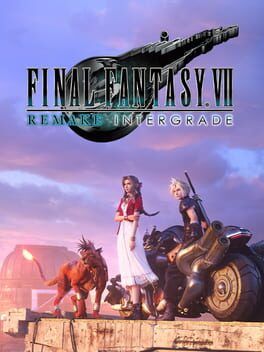

What FF7 Remake Intergrade’s UK chart success tells us about demand for ambitious third‑party ports on Switch 2, how it sets the stage for Part 3, and why sticking with Unreal Engine 4 could actually be a blessing for Nintendo’s new hardware.
Final Fantasy VII Remake Intergrade has done more than just arrive on Nintendo’s new hardware. In its first UK week, the game has immediately staked a claim as one of Switch 2’s flagship third‑party releases.
GfK’s latest UK physical chart has the game debuting at number 2 overall, behind only Mario Kart World. More telling than the rank, though, is the split: according to the breakdown reported by Nintendo Everything and Nintendo Life, 100% of Intergrade’s boxed sales for the week were on Switch 2, with PS5 not registering in that specific data set. For a 2020 PS4 original that has already had a PS5 upgrade, PC release and years of discounts elsewhere, that is a striking result.
It suggests something very simple but very important about Switch 2’s early lifecycle: there is clear pent‑up demand for “real” big‑budget third‑party experiences on Nintendo’s new machine, and players are willing to buy them in retail form.
A different kind of hit for Switch 2
Nintendo’s first‑party grip on the UK top 10 is still ironclad. Mario Kart World holds the crown at number 1, Animal Crossing: New Horizons only slips to number 3, and perennial sellers like Mario Kart 8 Deluxe and Pokémon Legends: Z‑A round out the top five. FF7 Remake Intergrade is the lone non‑Nintendo game in that upper tier, which only makes its showing more interesting.
Compare this to other major third‑party launches on Switch 2. Cyberpunk 2077 and Star Wars Outlaws, both cited as exemplar ports in pre‑launch coverage, posted respectable openings but never quite muscled into the Mario‑and‑friends club at the very top of the physical chart. Final Fantasy VII Remake Intergrade has done it in week one, and it has done it with a game that:
- Is six years removed from its original PS4 launch.
- Has been heavily promoted on PlayStation and PC for years.
- Lands day‑and‑date on Xbox Series systems.
In other words, this is not a “timed exclusive” or a mystery quantity. Players on Nintendo’s new handheld already know exactly what Intergrade is, and they are still buying it in large enough numbers to push evergreen first‑party software down a spot.
That should be encouraging for any publisher wondering whether a high quality bespoke Switch 2 conversion can justify the effort and manufacturing costs.
What the 100% Switch 2 split really says
The 100% Switch 2 share for Intergrade’s boxed sales has been a talking point in itself. The context matters: the chart is physical only, there is no Xbox disc version, and PS5’s FF7 presence is now largely tied up in twin packs with Rebirth or digital bundles that sit outside the specific SKU being tracked.
Even with those caveats, however, the signal is clear. When you put a marquee, complete JRPG package on Switch 2 and give it proper shelf space, it behaves like a de facto new release for that audience. For many Nintendo‑first players, this really is the first time they can play FF7 Remake without buying into another platform, and they are treating it that way.
It also reflects something unique about the Switch ecosystem that has carried forward into Switch 2: physical retail still matters. Intergrade is a huge download by Nintendo standards and one of the system’s largest games by file size, yet it is still shifting a material number of boxed copies in its first week. That hints at a sizeable cohort of players happy to buy big third‑party titles on cartridge or game key card if they feel the conversion is “proper.”
Early commentary from outlets like IGN, Shacknews and others has consistently framed Intergrade as one of Switch 2’s best third‑party ports to date, sitting alongside the likes of Cyberpunk 2077 and Star Wars Outlaws as proof that modern home console games can be made to run convincingly on the hybrid hardware. The UK chart simply adds a hard commercial datapoint to match the technical praise.
A rising tide for big third‑party ports
FF7 Remake Intergrade’s performance comes at an important moment for Switch 2. The launch window has already seen a handful of strong multi‑platform efforts that scale down from PlayStation 5 and Xbox Series hardware. Cyberpunk 2077’s long road to redemption now includes a surprisingly capable portable version. Ubisoft has made clear it sees Star Wars Outlaws on Switch 2 as a key part of that game’s tail.
What Intergrade adds is a clear success story from a Japanese publisher whose core business includes sprawling RPGs and visually dense action titles. Square Enix has always had a complex relationship with Nintendo hardware, alternating between bespoke exclusives and cautious late ports. Here, the company has committed to a substantial, content‑complete conversion, and the UK numbers show there is an audience that will reward that investment.
It also matters that Intergrade is aimed squarely at the enthusiast, higher‑spend end of the Switch 2 market. This is not a family platformer with broad crossover appeal. It is a 40‑plus hour cinematic RPG aimed at players who are comfortable paying full price for a deep single‑player experience. That such a game can go toe‑to‑toe at retail with Animal Crossing and Mario Kart in the UK suggests Switch 2’s user base is more multi‑genre and multi‑platform than ever.
For other third‑party publishers looking in from the sidelines, that should help answer a lingering question from the original Switch era: will core players who prefer PlayStation or Xbox for their TV gaming still buy “second copies” on Nintendo just to have the portable option? With Intergrade, the answer looks closer to yes, especially when the port is positioned as a top tier version rather than a compromised fallback.
Laying the groundwork for Final Fantasy VII Remake Part 3 on Switch 2
Intergrade’s debut is not just about this release. It doubles as a real‑world test case for whether the final act of the FF7 Remake project can launch on Switch 2 as a first‑class citizen.
Eurogamer’s recent reporting confirms that Final Fantasy VII Remake Part 3 is locked to Unreal Engine 4, just like Remake and Rebirth, and that the team’s “multiplatform approach” now bakes in portable hardware like Steam Deck and Switch 2 as core targets. That means Part 3 is being built with scalability at the forefront, not retrofitted after the fact.
Intergrade’s strong Switch 2 performance gives Square Enix two key data points.
First, it demonstrates that there is real commercial upside to doing the work. Bringing Part 3 to Switch 2 will not just be an act of goodwill; it could be a meaningful piece of the game’s global revenue mix. A platform where a late port of Part 1 can debut at number 2 in a major market is a platform where a day‑and‑date conclusion to the trilogy has room to grow.
Second, it builds brand presence inside the Nintendo ecosystem right when Part 3 is in production. For players whose only current Final Fantasy experience on Nintendo hardware is retro collections or pixel remasters, Intergrade is a modern statement piece. If Square Enix follows Intergrade with a Switch 2 version of Rebirth and then lands Part 3 within a reasonable window, Nintendo’s console suddenly becomes a complete home for the entire Remake trilogy.
That possibility matters in catalogue terms too. Switch 2 looks likely to enjoy a very long tail, just as the original Switch did. Being able to point to a full, self‑contained FF7 Remake trilogy that can be played portably and on TV could make Nintendo’s ecosystem one of the definitive ways to experience this arc long after the PS5 and Xbox generation has moved on.
Why Unreal Engine 4 is a feature, not a bug, for Switch 2
On paper, the headline that Part 3 is still on Unreal Engine 4 might sound like a step backwards in an era where many studios are moving to Unreal Engine 5. In practice, for Switch 2 owners, it could be one of the best things that could have happened.
Unreal Engine 4 is a known quantity on Nintendo hardware now. The original Switch was pushed hard by UE4 games, and the learnings from those years feed directly into how teams are approaching the new system. FF7 Remake has already shipped on PS4, PS5 and now Switch 2, all on that same tech stack. Every optimisation, every workaround and every clever content cut that made Intergrade viable on Nintendo’s hybrid can be carried forward to Part 3.
Staying on UE4 also avoids the teething problems that often accompany early Unreal Engine 5 projects. Many of the most demanding UE5 features, such as Nanite and Lumen, are either impractical or heavily cut down for mobile and handheld‑class GPUs. By sticking with a mature UE4 toolchain, Creative Business Unit I can focus engineering effort on targeted optimisations for the hardware it actually needs to hit, rather than wrestling a bleeding‑edge feature set into submission.
From a parity perspective, that is significant. If Part 3 is authored with “PS5‑plus‑Switch‑2” as the baseline, rather than “PS5‑only” with handheld versions treated as an afterthought, then content and systems design can be planned around Switch 2’s capabilities from day one. That makes it far more likely that feature parity between platforms is maintained and that concessions on Nintendo’s system are restricted to resolution, some effects and frame rate, rather than entire mechanics or set‑pieces.
We are already seeing this philosophy in the way Intergrade performs on Switch 2. Analysis from outlets like Digital Foundry describes the port as something closer to a PS5/PS4 hybrid build, further augmented by DLSS. The result is that Switch 2 does not feel like it is running a bespoke “low‑end” branch; it feels like it is sharing much of the same logic and content with its home console siblings.
If Part 3 is built under the same assumptions, the prospects for near‑simultaneous releases and meaningful content parity are strong.
A healthier, more balanced Switch 2 ecosystem
The original Switch was an outlier. It had exceptional first‑party output, a thriving indie scene and a patchy but improving record with big third‑party titles. Switch 2’s early catalogue hints at a more balanced ecosystem where blockbusters from outside Nintendo can sit comfortably beside Mario and Zelda.
FF7 Remake Intergrade’s early UK success is a practical demonstration of that shift. It shows that Nintendo’s latest hardware is not just a home for colourful platformers and evergreen life sims, but also for sprawling, technically ambitious RPGs that are used to being the centrepiece of Sony and Microsoft line‑ups.
For Square Enix, it is a proof of concept that the FF7 Remake saga can thrive in that environment, especially if the studio leans into the strengths of Unreal Engine 4 and keeps Switch 2 in mind as a first‑tier platform. For other publishers watching from the sidelines, it is an invitation. The audience is here, the hardware is ready, and if the ports are good, players are willing to vote with their wallets.
The next few years will reveal whether this becomes the norm rather than the exception. For now, Cloud and company have sent a clear message: bring your biggest games to Switch 2, and they will not be lost in the shadow of Nintendo’s own heavy hitters.