
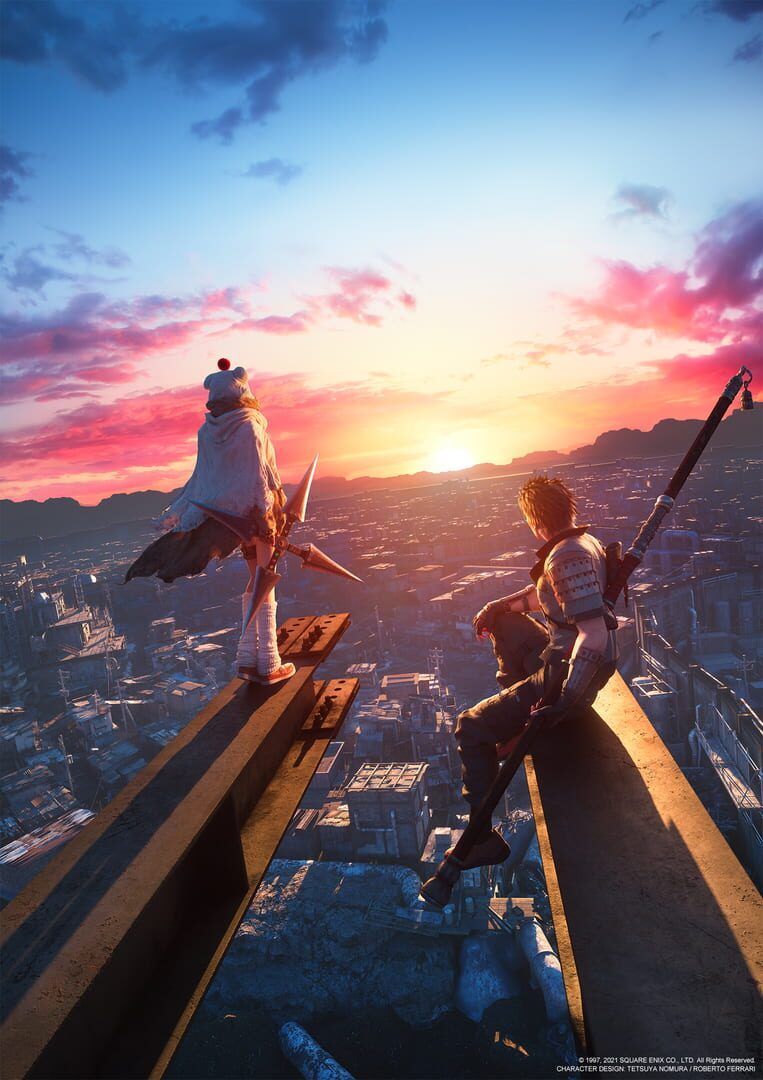

A detailed look at Final Fantasy VII Remake Intergrade’s new Streamlined Progression update across PS5, PC, Switch 2, and Xbox Series X|S: what the ultra-easy toggles actually change, how they’ll reshape trophy and achievement hunting, and whether they undermine or enhance the game’s combat design.
Square Enix is about to turn Final Fantasy VII Remake Intergrade into a very different kind of RPG, at least for players who want it that way.
To coincide with the Nintendo Switch 2 and Xbox Series X|S releases, a free patch is hitting PS5 and PC that adds the Streamlined Progression feature set. Officially described as a way to help players "enjoy the story" and cut down on grind, it effectively builds a suite of powerful cheats directly into the game.
This update doesn’t touch the story or add new chapters, but it has huge implications for how people will play, replay, and Platinum the game going forward.
What Streamlined Progression Actually Does
On all platforms, Streamlined Progression appears in the options menu as a set of independent toggles. They’re not a separate difficulty level and they’re not locked behind a clear save. Once patched, they’re simply there for anyone to flip on.
Across PS5, PC, Switch 2, and Xbox Series X|S, the core options are:
HP always full: Your party’s HP is constantly topped up. Regular chip damage and even most big hits become irrelevant because you snap back to full health almost instantly. Healing materia and items are basically redundant.
MP always full: Your magic and ability economy disappears. Spells like Thundaga, Curaga, and powerful offensive abilities can be spammed endlessly with no concern for MP conservation or Ether stock.
Limit gauge always full: Limit Breaks are ready to fire at the start of every encounter, and you can chain them liberally during longer fights. Cloud’s Cross-Slash, Tifa’s Dolphin Flurry, and Aerith’s Planet’s Protection go from rare trump cards to routine openers.
Always deal 9,999 damage: Every hit lands for the traditional Final Fantasy damage cap, regardless of your actual stats, weapon level, or materia setup. Even without optimal builds, bosses melt in seconds.
Reporting from outlets like VGC, Eurogamer, and GameSpot, plus trophy-focused sites, all converges on the same picture: these four are the headline features, and they can be toggled individually or all at once. Combined, they create what is functionally a built-in God Mode that sits alongside the normal difficulty options rather than replacing them.
How They Change The Feel Of FF7R’s Combat
Final Fantasy VII Remake’s combat design is built on three pillars: ATB management, resource tension, and stagger play.
Under normal rules, even on Classic or Easy, you still need to dodge, block, and build ATB to trigger abilities, watch your MP, and use the right elemental or pressure tools to stagger enemies. Early game trash fights are forgiving, but mid and late game encounters punish autopilot.
Streamlined Progression undercuts nearly all of that if you opt in.
With HP and MP always full, damage and resource tension vanish. You don’t care about incoming hits because you can never be chipped down, and you don’t weigh whether to spend MP on offense or save it for healing. The Limit gauge being permanently full tips the scales further, since you can open every fight with your strongest moves.
The 9,999 damage toggle is the final break in the system. FF7R’s stagger dance is tuned so that the payoff for understanding enemy patterns and exploiting weaknesses is a big, satisfying burst window. If every hit is already capped, learning that dance stops mattering.
In practical terms, the patch introduces two distinct ways to play:
Traditional mode: All toggles off, where the combat system remains intact, Hard mode still demands build knowledge and execution, and stagger optimization is meaningful.
Story-skipping mode: One or more toggles on, reducing fights to short, low-risk interludes between cutscenes. You still press buttons and choose abilities, but the margin for error is so generous that encounter design is largely backgrounded.
Whether that is a problem depends entirely on what the player wants from FF7 Remake Intergrade today. As a combat experience, the game is best with the assists off. As a narrative tour for people with limited time, the assists finally put FF7R in the same camp as the boosted Final Fantasy IX and XII remasters, where "fast-forward" and "max stats" exist to let you see the story on your own terms.
Trophies And Achievements: What Changes For Hunters
The big question hovering over this patch is simple: will Streamlined Progression affect trophies and achievements?
At the time of writing, Square Enix has not publicly confirmed hard restrictions. Coverage from Eurogamer, VGC, and trophy sites flags this uncertainty, and that alone tells you how much this matters to the community.
There are three key angles to consider.
First, the Platinum journey. On PlayStation and Steam, the full list for Intergrade expects you to:
Complete the story once on Normal or Easy.
Replay chapters, sometimes multiple times, to see different choices and dresses.
Beat the game again on Hard mode.
Clear out the battle simulator’s toughest VR fights, such as Top Secrets.
Under the original rules, that meant a genuine 70 to 100 hour investment for most players, plus some knowledge of optimal builds and materia synergy. Ultra-easy toggles dramatically compress that. If they remain enabled in Hard mode and don’t disable trophies, a large chunk of that grind turns into a guided tour, especially for late-game clean-up.
Second, specific skill checks. FF7R’s list isn’t stuffed with execution-heavy achievements in the way a character-action game might be, but it still leans on challenge content. Beating Top Secrets, for instance, is designed as a capstone that demands you understand stagger setups, defensive play, and group composition.
With 9,999 damage and full HP/MP, these challenges become accessible to far more players. That has two consequences: long-time trophy hunters may see the Platinum’s prestige diminish, while lapsed or time-poor fans might finally feel like the trophy list is within reach.
Third, platform ecosystems. Xbox and Switch 2 are launching with these assists built in, and there’s no historical precedent on those platforms for difficulty-linked achievement locks in a JRPG. If Square Enix keeps trophies/achievements fully enabled there, it would be odd to impose harsher rules only on PS5 and PC.
The likeliest outcome is that Streamlined Progression will be usable in at least some contexts without disabling achievements, especially for story completion and chapter-based requirements. Developers have increasingly leaned toward letting players customize challenge without threatening their ability to see everything, and FF7R’s design leadership has explicitly framed these features as time-savers, not cheat codes meant to segregate progress.
For dedicated hunters, that will change how guides are written. Expect future trophy roadmaps to include routes like "Hard run with assists toggled on at pinch points" and "Use God Mode for clean-up on Chapter Select" as standard advice once the community stress-tests the patch.
Replay Value: Boosted Or Hollowed Out?
From a pure systems design standpoint, Streamlined Progression short-circuits FF7 Remake’s carefully tuned difficulty curve. From a player habit standpoint, it might actually increase how often people return to Midgar.
Before this patch, replay value rested on two motivations.
One was mastery. Hard mode, with its no-items rule and heavier-hitting enemies, gave combat-focused players a reason to dig into materia synergies, ATB cycling, and AI control. Getting through that and beating the hardest simulator fights felt like a genuine achievement.
The other was completion. Dress permutations, missed manuscripts, and side-quest branches all encouraged using Chapter Select to see everything. For many, the friction was time. A full replay before Rebirth or Part 3 was a serious commitment, especially if you had drifted away from the combat meta.
Streamlined Progression speaks almost entirely to that second group.
Being able to blow through fights at 9,999 damage and infinite resources makes chapter replays dramatically faster. You can revisit the Wall Market arc to grab a missing dress scene, clean up odd jobs you skipped in Sector 7, or experience the Yuffie episode again without needing to "re-learn" the battle system. It becomes easier to treat FF7R as a favorite season of TV you rewatch every few years, rather than a test you must re-pass.
For mastery-driven players, the impact will depend on personal restraint. The original Hard mode remains intact. Turning off the assists preserves the combat puzzle box and the carefully crafted difficulty spikes. The question is whether knowing there is a one-switch escape hatch will tempt players away from banging their head against a tough fight long enough to really learn it.
In that sense, Streamlined Progression is similar to Elden Ring’s Spirit Ashes or Story Mode toggles in action games. The hard content is still there and still works. The game just gives you a powerful parachute.
Do The Assists Undercut The Design Or Broaden Accessibility?
There are two competing narratives forming around this patch.
One is that Streamlined Progression "kills the vibe" of FF7R, a phrase already surfacing in achievement communities. The fear is that by baking in God Mode, Square Enix is signaling that its own combat doesn’t matter, or that it’s comfortable letting players skip what fans once praised as the Remake’s strongest pillar.
The other is that this is a reasonable evolution for a long, story-heavy RPG in 2026.
Director Naoki Hamaguchi has repeatedly talked about modern players having less time and wanting to consume games more like streaming shows. Viewed through that lens, the assists are not a repudiation of the combat, but an admission that not every run needs to be a trial. Your first clear can still be on Normal or Hard, learning the intricacies of Punisher stance, ATB weaving, and stagger exploitation. Your second or third can be a laid-back tour with everything cranked.
Accessibility is part of this conversation, too, even if Square Enix doesn’t frame it explicitly as such. For players with motor impairments, chronic fatigue, or limited ability to sustain focus over long encounters, traditional Hard mode may simply be unreachable. Streamlined Progression gives them a way to experience Yuffie’s DLC, the late-game story twists, and the full epilogue arc without having to watch a compilation on YouTube.
The critical distinction is that these are opt-in toggles. They aren’t the new default. FF7 Remake Intergrade still boots up on the same difficulty curve and expects the same fundamental understanding of its systems if you ignore the new options.
From a design purist’s standpoint, built-in cheats are always a compromise. From a broad-audience standpoint, they can be the difference between someone shelving the game forever and someone actually finishing it.
Where This Leaves FF7 Remake Intergrade Across Platforms
The Streamlined Progression patch does one other quiet but important thing: it cements full feature parity across PS5, PC, Switch 2, and Xbox Series X|S.
Earlier Final Fantasy releases often treated non-PlayStation platforms as afterthoughts, arriving late or missing minor features. Here, the "new" versions on Switch 2 and Xbox Series X|S are the catalyst for a meaty update that comes back to PS5 and PC for free. It sends the signal that this trilogy is now a true multi-platform pillar for Square Enix.
For returning players on PlayStation and PC, the calculus is simple.
If you bounced off the original Hard mode or never quite got around to 100 percenting the game, this patch is almost an invitation to come back. You can finish the story before the next sequel, fill in your missing trophies or achievements, and re-experience fan-favorite chapters without the grind.
If you care about the combat and the satisfaction of overcoming its hardest fights, nothing is being removed. You can simply pretend the toggles don’t exist. The game you mastered in 2020 and 2021 is still under the hood.
The real test will be how the community uses these tools. Will guides normalize God Mode as the recommended way to play, or will they continue to steer first-timers toward a more authentic run and reserve the toggles for cleanup? That cultural layer, more than the raw code changes, will decide whether Streamlined Progression becomes an accepted quality-of-life baseline or a shortcut that divides the player base.
What’s unmistakable is that FF7 Remake Intergrade is entering a new phase. With Streamlined Progression, it stops being just a challenging reimagining of a classic and becomes something more flexible: a story you can engage with on your own schedule, whether that means sweating every stagger window or cruising through Midgar with 9,999 glowing over every hit.