
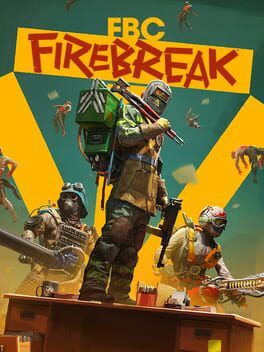

Remedy has shipped the last major update for FBC: Firebreak, cutting the price, adding Control-inspired maps, and introducing a Friend’s Pass to keep the servers alive. Here’s what the update really does for the game, what Remedy likely learned from its first self-published live-service project, and whether Firebreak can still find a long-tail audience.
Remedy has drawn a line under FBC: Firebreak. The Open House update is the game’s final major content drop, and with it comes a quiet shift in expectations. Firebreak is no longer a live-service hopeful chasing growth. It is a contained co-op spin-off that Remedy wants to keep playable for a few loyal squads.
That makes this last update less a content beat and more a postmortem in motion. You can see the lessons in what Remedy chose to ship, what it chose to stop doing, and how it is trying to give Firebreak a small but sustainable afterlife.
The Open House update: One last push into the Oldest House
Open House is framed as a send-off, and it leans hard into the one thing Firebreak had that most co-op shooters do not: Control’s setting.
The update adds new maps and scenarios rooted in familiar Oldest House locations, finally closing the gap between how Firebreak was marketed and how it actually felt to play. Earlier seasons pushed broader procedural arenas and abstract spaces; Open House pivots back to tighter, more authored environments that resemble Control’s memorable sectors. It also deepens Endless Shift, the game’s repeatable mode, with more variety and better pacing.
In practice, that matters more than a list of patch notes suggests. Firebreak’s strongest moments were always those where its weird architecture, shifting rooms and hostile objects created tension beyond simple horde defense. Open House doubles down on that identity at the exact moment Remedy has decided to stop chasing new audiences. The goal is not to reinvent the game, but to leave it in a state that feels closer to the fantasy fans imagined when they heard “co-op Control spin-off.”
Friend’s Pass and the new price: Fixing the funnel too late
Alongside that content, Remedy has restructured how people get into Firebreak. The game’s standard price has been cut to around $19.99 / €19.99, with the Deluxe Edition dropping as well and an extra launch discount on PC platforms. On top of that, a Friend’s Pass and a new trial client let paying players invite others to jump in for free.
On paper, this is exactly what Firebreak needed at launch. A co-op shooter lives or dies on friction. Every barrier between a curious friend and a full squad translates directly into lost sessions. Firebreak launched as a premium, relatively expensive multiplayer game in a space dominated by free to play titles and subscription library staples. It never hit escape velocity past its most dedicated Remedy fans, and its revenues reportedly fell so far below expectations that they helped push former CEO Tero Virtala out of the role.
Friend’s Pass tackles that problem at the root. One owner can seed multiple fireteams, and the trial client gives lapsed or skeptical players a low-commitment way back in. Combined with the price cut, the game shifts from a “maybe one day in a sale” proposition to something closer to: if one person in your group is curious, the rest can just download and see.
The catch is timing. These are acquisition tools arriving at the same moment Remedy has confirmed there will be no more new playable content. That signals to a wider audience that Firebreak is finished. In a live-service market where perceived longevity is a key part of value, that makes the Friend’s Pass more about stabilizing a modest concurrent player count than driving long-term growth.
What Remedy likely learned from Firebreak
Remedy has been clear that Firebreak was a learning experience. It was the studio’s first online multiplayer project, its first self-published release, and its first real flirtation with live-service structure. That is a lot of firsts to stack on a single game. Looking at how Firebreak launched, struggled and is now winding down, a few hard lessons stand out.
First is the risk of bolting live-service ambitions onto a premium co-op game without a truly compelling hook. Firebreak had Control’s world, but it did not fully leverage that tone and narrative texture out of the gate. Early impressions focused on repetition and thin progression rather than the strange, textured storytelling Remedy is known for. When you occupy the same shelf space as Left 4 Dead successors, extraction shooters and a dozen free to start co-op titles, you need either a distinct mechanical twist or a clear identity. Firebreak offered glimpses of both, but not consistently enough.
Second is the importance of aligning business model and audience expectations. Remedy tried to sell Firebreak as a paid, smaller scale co-op title that would grow. The audience that loves Control is used to dense, authored single-player campaigns, not season passes and endless grinds. Meanwhile, the broader live-service crowd is trained by free entry and battle passes. Firebreak landed awkwardly between those poles, which left it vulnerable when early word of mouth centered on its repetition and lack of content.
Third is the operational strain of running a live-service on a studio that built its reputation on single-player experiences. Balancing new maps, meta tweaks, backend stability and a content pipeline is complex even for teams born into the live-service era. Remedy was learning this while also juggling Alan Wake 2’s post-launch support and its future projects. The decision to cap Firebreak’s content updates suggests a sober assessment of where the studio’s strengths and resources are better spent.
Finally, Firebreak underlines how unforgiving the live-service market has become. Even known studios with respected IP cannot assume a floor of success. With major publishers sunsetting underperforming shooters within months of launch, the bar has shifted from “solid” to “must-play” almost overnight.
Can Firebreak still build a long-tail audience?
So what future is there for FBC: Firebreak now that Open House has landed and content development is effectively over?
In a narrow, realistic sense, it can still carve out a long tail. Remedy has committed to keeping servers up for years. Co-op shooters with a limited but stable audience can tick along if matchmaking remains functional and the experience is reasonably polished. The new maps make the game closer to the Control-flavored fantasy players wanted, the Friend’s Pass helps fill lobbies, and the lower price makes it viable as an impulse purchase for fans of Remedy’s universe who skipped it at launch.
Where it is unlikely to succeed is as any kind of comeback story. The live-service narrative arc of an embattled game turning things around through relentless updates does not apply here, because those updates are not coming. Open House is a closing chapter, not the start of a redemption season.
Instead, Firebreak’s best-case scenario is as a niche co-op side story that sits alongside Control in Remedy’s catalog. As future single-player projects revisit the Oldest House or reference Firebreak’s events, some players will inevitably backfill the spin-off to see more of that world. For those people, a relatively small but complete co-op package at a low price, with a frictionless way to bring friends, is actually a decent value.
If that happens, Firebreak might quietly achieve what many live-service games never manage: a graceful plateau instead of a hard shutdown. It will not be the future of Remedy’s output, but it may yet be a small, persistent corner of the Control universe that keeps a few corridors of the Oldest House lit.
In that sense, this final update is less a farewell and more a controlled containment. Firebreak’s ambition has been scaled down, its risks have been quarantined, and what remains is a more modest co-op shooter that understands what it is. That is not the outcome Remedy hoped for when it pitched an evolving service, but as a lesson for the studio’s next steps, it might be exactly what it needed.