
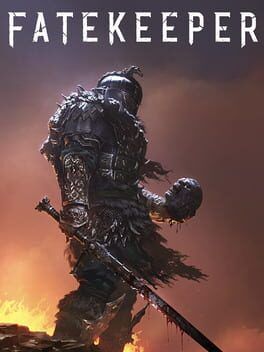
Breaking down Fatekeeper’s new eight-minute gameplay reveal: how its brutal first-person combat, mystic Bavarian mountain setting, and flexible action-RPG systems could carve out a distinct place in THQ Nordic’s lineup.
Fatekeeper’s newest eight-minute gameplay showcase is the clearest look yet at Paraglacial’s debut, and it immediately answers one question: this is not a floaty spell-flinger or a laid-back hiking sim with swords. It is a dense, physical first-person action RPG that wants you to feel every impact of steel, stone, and storm.
Set above the real-world German town of Garmisch-Partenkirchen, Fatekeeper trades familiar fantasy castles for a jagged, paraglacial mountain range threaded with ruined fortresses and caverns. The new footage is a single, uninterrupted slice of exploration and combat through one of these strongholds, and it quietly lays out how the Druid, the world, and the systems might set this project apart inside THQ Nordic’s already crowded portfolio.
A mystic mountain that feels lived-in, not just painted on
The most striking thing in the showcase is how grounded the mysticism feels. Fatekeeper’s mountain range is not a distant backdrop. It presses in from every angle, with ridgelines, frozen scree and hanging fog that turn the level into a believable high-altitude fortress rather than an abstract dungeon.
Within that space, Paraglacial leans hard into atmosphere. Shortlings stalk the ruins in furtive clusters, chittering around campfires, and the architecture suggests an older, more disciplined warrior culture that has long since vanished. That contrast between feral scavengers and disciplined ghosts of a former army gives the area a layered history without spelling anything out.
The mysticism comes through in quieter touches. Shrines tucked behind collapsed staircases. Carved stone circles half-buried in snow. Caverns that drip with age and seem to hum faintly with leftover ritual power. None of it looks like pure set dressing. The camera lingers just enough on altars, relics, and banners that you can imagine Paraglacial tying them into lore discoveries, stat-granting artifacts, or branching dialogue elsewhere.
If THQ Nordic’s catalog often leans on big, broad fantasy worlds, Fatekeeper instead feels narrow and intimate. It is less about racing across continents and more about chewing through a single mountain that remembers everything that happened on it.
The Druid as a living build, not a preset class
You play as the Druid, but the title is more concept than class. The footage shows a character that can be tuned into a heavy bruiser, nimble skirmisher, or full-blown caster by changing gear and investments, not by picking a rigid archetype.
We see the Druid wielding axes and swords with a deliberate heft. Swings are not spammy. They commit you to an angle and distance, and whiffing at empty air looks like a genuine mistake, not a minor inconvenience. In the next exchange, the same character is slinging storms and fire from mid-range, staggering enemies before closing in to finish them with steel.
That fluidity hints at systems built around experimentation rather than class loyalty. Loadouts and relics seem designed to push you into respec behavior inside the level. Spot a corridor stuffed with shielded Shortlings and you might lean on crackling area spells and a fast weapon. Wander into a cavern haunted by a towering warrior and the same character might swap to a heavier blade and defensive charms.
If Paraglacial can make that kind of mid-run adaptation frictionless, Fatekeeper could appeal to players who like the responsiveness of games like Darksiders or ELEX while still scratching a more build-driven RPG itch.
First-person combat with real weight and readable intent
The eight-minute slice is almost entirely combat, and that focus pays off. Fatekeeper’s first-person fighting looks closer to a physical brawl than a flashy combo showcase.
Melee attacks have a clear start and stop. You can see the shoulders wind up, the blade commit, and the recovery that follows. That animation priority communicates intent in a way that many first-person RPGs struggle with. A missed swing does not just mean lost DPS. It is a window the enemy can punish.
Shortlings in particular are a smart test of the system. They are small, fast, and fond of swarming. If hit detection or animation timing were off by even a little, the encounters would devolve into chaos. Instead, you can track individual threats, time wide sweeps to catch multiple foes, and use quick spells to peel off attackers before they surround you.
Magic, meanwhile, is not treated as an untouchable sniper tool. Elemental spells travel through space, interact with the environment, and seem to respect the same commitment as melee. Casting requires a clear decision, and you remain vulnerable while the Druid channels storm or flame. That keeps the power fantasy in check and preserves the duel-like rhythm of each fight.
In THQ Nordic’s broader lineup, Fatekeeper’s first-person emphasis gives it a distinct identity. Where Darksiders prefers exuberant third-person combos and Titan Quest turns combat into isometric build calculus, Fatekeeper asks you to stare your enemies down from a few feet away and earn each hit with positioning and timing.
Systems that reward curiosity as much as aggression
Combat might sell the trailer, but Fatekeeper’s RPG ambitions are visible in how the showcase handles space and rewards. The fortress is not a straight corridor. It curls back on itself with side paths into collapsed halls, optional caverns, and hidden sanctuaries.
Each offshoot seems to carry some form of payoff, whether that is a relic tucked behind a crumbling statue, an armor piece at the end of a precarious ledge, or a lore fragment that clarifies who built these battlements in the first place. The game quietly teaches you that every unusual rock formation or suspicious gap in the masonry might hide something worth risking health or resources for.
Gear appears to be more than a mere stat bump. Weapons and armor sets alter how the Druid stands, swings, and survives. Artifacts and relics likely plug into deeper systems that reshape your playstyle, and the footage suggests that swapping these on the fly is encouraged rather than penalized.
This philosophy fits with Paraglacial’s description of a handcrafted, narrative-driven world. Instead of scattershot open world checklists, Fatekeeper looks closer to a dense mountain labyrinth where each route, secret, and relic contributes to both your build and your understanding of the setting.
Standing apart within THQ Nordic’s portfolio
THQ Nordic publishes a wide spread of action and RPG titles, from retro-inspired hack-and-slash to expansive open world adventures. Fatekeeper has to justify its place alongside projects that already cover many fantasy angles.
The eight-minute showcase suggests three ways it can stand out.
First, its sense of place. Pegging the game to a stylized version of the Bavarian Alps gives it a distinctive tone compared to more generic fantasy realms. The mountain is not just scenery. It is the game’s spine, with every fortress, ravine, and forest hanging off its slopes.
Second, the commitment to physical first-person combat. Very few titles in THQ Nordic’s catalog put such a premium on intimate, timing-heavy fighting viewed through the character’s own eyes. That camera choice reinforces the weight and danger of every engagement.
Third, the flexible Druid identity and build system. By avoiding strict classes and letting gear, relics, and spell choices define who you are, Fatekeeper promises a style of RPG tinkering that feels closer to immersive sims or systemic fantasy sandboxes, all while staying within a focused, handcrafted structure.
For a 12-person team, that is an ambitious pitch. If Paraglacial can keep this level of atmosphere and combat quality across the full game, Fatekeeper could become one of THQ Nordic’s more distinctive fantasy pillars rather than just another entry in the publisher’s crowded library.
Early Access on the horizon
The showcase closes without a hard date, but Paraglacial is targeting a 2026 Early Access launch on PC. Wishlist support on Steam is already live, and the studio has begun releasing dev diaries that expand on the creatures and history revealed in this first major slice.
Fatekeeper’s eight minutes of uninterrupted playtime suggest a confident core loop: explore a treacherous stretch of mountain, read the signs of what came before, then carve your own path through steel, storm, and stone. If the rest of the ascent holds together, this could be one of the more intriguing first-person action RPGs to watch within THQ Nordic’s upcoming slate.