
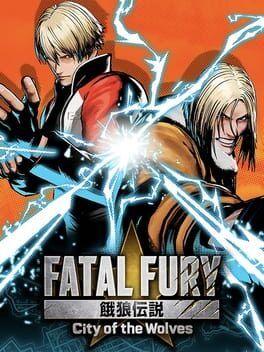
SNK’s Fist of the North Star teaser is more than a cool cameo. Here is what Kenshiro implies for City of the Wolves Season 2, how Hokuto Shinken could work with REV, and where it sits in the long history of anime x fighting‑game crossovers.
SNK has barely said a word, but the message could not be louder. A grimy alley, a pair of doomed kids, some suitably punchable thugs, and a single, clinical pressure‑point strike accompanied by a very familiar sound. The new animated short for Fatal Fury: City of the Wolves never names him, yet anyone who has glanced at a 1980s anime VHS rack knows what it is teasing.
Kenshiro is walking into South Town.
This short is likely our first Season 2 character reveal for City of the Wolves, and it carries bigger implications than “another cool guest.” It hints at how aggressively SNK wants to keep COTW in the conversation, how flexible the game’s REV system can be, and how anime crossovers are quietly becoming one of the genre’s main tools to pull in fresh eyes.
A quick breakdown of the Kenshiro teaser
The new video follows up on SNK’s Christmas short, but this time it ditches holiday vibes for something closer to Fist of the North Star’s wasteland. We see a polluted, almost post‑apocalyptic cityscape that blurs the line between South Town and a Hokuto no Ken ruin. A young girl and boy are cornered by thugs; the framing, the predators and the helpless kids feel straight out of classic Kenshiro intros.
Just as the situation is about to get ugly, a lone figure intervenes. No face shot, no title card. Instead we get a close‑up on a hand and a fast, surgical finger strike, complete with that staccato pressure‑point sound that fans associate with Hokuto Shinken. The goon freezes. For anyone who has seen the series, the only thing missing is the “Omae wa mou shindeiru” line.
SNK’s official channels post the short with a title that is basically just an emoji and an empty description. That coyness is deliberate. The visual language screams Kenshiro, but leaving room for “speculation” buys SNK time to stretch out Season 2 marketing while the community does the hype work for them.
Taken together with earlier statements that Season 2 plans would be shared early in the year, this teaser is effectively confirmation that Kenshiro is the first Season 2 DLC fighter, even if the press release is not out yet.
What Kenshiro says about Season 2’s roster and guest philosophy
City of the Wolves spent its first year leaning hard on fighting‑game royalty. Ken Masters and Chun‑Li from Street Fighter joined the roster alongside internal SNK staples like Andy Bogard, Joe Higashi and Mr. Big. That lineup telegraphed a pretty straightforward strategy: use legends that immediately make sense in a traditional 2D fighting crossover.
Kenshiro is different. He is not a fighting‑game guest. He is a manga and anime icon with a legacy that is mostly adjacent to, not inside, the FGC.
That shift tells us a few things about how SNK is thinking about Season 2.
First, Season 2 is about broadening the funnel. Street Fighter guests mostly target people who are already deep in modern fighters. Fist of the North Star speaks to a different demographic: older anime fans, people who remember the PS2 and arcade Hokuto no Ken game, and even folks who only dabble in fighters but grew up on the meme. Pulling him into COTW extends the game’s reach beyond the usual “my main from another fighter is here” hook.
Second, SNK is willing to lean into fantasy power scaling. City of the Wolves takes place in the grounded world of South Town, a place built on street brawls and mafia wars. Kenshiro comes from a setting where people detonate like water balloons. SNK choosing him anyway suggests they are fine letting guest characters bend the world’s internal logic as long as they look and feel right in motion.
Third, the teaser hints that Season 2 might not be one‑and‑done for anime. For Year 1, the pattern was clear: SF6 guests plus beloved SNK regulars. With Kenshiro as the first real look at Season 2, it is easy to imagine a roadmap where at least one other anime or manga guest shares the pass with more traditional picks. Even if that does not happen, the door is now wide open for future seasons to explore properties that fit Fatal Fury’s grit, like other 80s action legends.
Finally, from a business standpoint, this lines up with SNK’s recent messaging about long‑tail support. Between interviews around Ken’s inclusion and the pacing of Year 1 DLC, SNK has framed COTW as a platform it wants to keep active for years, not a one‑and‑done nostalgia play. High‑impact guests like Kenshiro are marketing beats as much as balance questions; they are the kind of thing that can get a second‑year game back on front pages.
How Hokuto Shinken could actually work in City of the Wolves
Teasers are easy. The real question is how you turn Hokuto Shinken into a functional move list inside City of the Wolves’ very specific system.
COTW’s whole identity revolves around REV. You spend REV gauge on offense through REV Arts and REV Accels, and you manage heat and risk since overheating locks you out of your best tools. A good guest has to feel like themselves while still playing by those rules.
Hokuto Shinken almost designs itself around that tension. It is a pressure‑point art that rewards calculated, precise offense and then pays it off in an explosive finisher. That maps surprisingly well onto what REV is trying to do.
Pressure points as REV management
One smart direction would be to make Kenshiro the king of limited but terrifying pressure sequences. Imagine that many of his special moves are fast, short‑range pokes that apply invisible “marks” or states onto the opponent. Each mark represents a hit on a different pressure point; they do decent damage on their own but the real reward is in how he cashes them out.
For example, a forward dash string could apply a chest mark, an anti‑air palm could apply a shoulder mark and a Rekka‑style follow‑up might apply a stomach mark. On their own, these moves are safe but not overwhelming. However, spending REV on a dedicated Hokuto Shinken finisher might check your current marks and convert them into a cinematic explosion, wall bounce or extended juggle.
Suddenly Kenshiro is a character who lives on the razor’s edge of REV usage. Overheat too early and you are left with a stack of marks and no way to cash out. Use your REV wisely and a single corner touch can blow through half a life bar in the most Fist of the North Star way possible.
“You’re already dead” as a win condition
The old Hokuto no Ken arcade fighter is famous for its Seven Star gauge and touch‑of‑death sequences. City of the Wolves cannot go that far without destroying competitive viability, but it can play with the fantasy.
A plausible middle ground is a round‑specific win condition tied to Health and REV. Below a certain life threshold, after landing a particular chain or command grab, Kenshiro could trigger a unique REV Blow that locks the opponent in a “you are already dead” state. They keep fighting briefly, but a timer or condition quietly ticks down. When Kenshiro lands the confirming hit, the game freezes and the classic delayed explosion finish kicks in.
Mechanically, this would behave like a powered‑up super or an ultra kill confirm, not an instant death. But visually and thematically, it would give Kenshiro the thing fans want most: the feel that the round was decided a few hits ago and the opponent just did not know it yet.
Neutral, defense and how you keep him fair
Hokuto Shinken practitioners in canon are practically unapproachable, but COTW thrives on scrappy footsies, jump arcs and burst offense. Kenshiro needs weaknesses or he becomes a meme pick that ruins ranked.
Distinct tradeoffs that would fit:
He should be terrifying up close but only average in neutral. His fireball, if he even gets one, should be more of a hit‑confirm tool than a zoning monster. That forces him to walk or dash into the right range instead of turtling behind projectiles.
His anti‑airs could be strong but tightly angled, built to reward prediction over autopilot guard rails. A Hokuto uppercut that crushes jump‑ins right above him but whiffs if the opponent jumps early would feel strong yet fair.
On defense, Kenshiro should not match top‑tier reversal characters. A single invincible REV Art or a guard‑point stance that leads to a mark instead of massive damage could let him steal turns without letting him mash out of everything.
The key is that when he does touch you with REV stocked, it should feel like getting tagged by Hokuto Shinken: brief, clinical hits that escalate into terrifying, often round‑swinging sequences.
Why Kenshiro is a perfect fit for City of the Wolves’ tone
If you strip away the exploding heads, Fist of the North Star and Fatal Fury actually share a surprising amount of DNA. Both are stories about drifters and martial artists wandering through violent spaces ruled by gangs and corrupt powers. Kenshiro roams the wasteland, Terry walks South Town, and they both have long histories of stepping between ordinary people and the monsters that prey on them.
The teaser understands that overlap. It does not throw Kenshiro into a big arena fight. It shows him doing the thing he always does: punishing the kind of casual cruelty that defines his world. COTW’s high‑contrast art style, with its comic‑book ink lines and sweaty lighting, is a natural home for his silhouette. You can almost picture a full in‑engine intro where he steps out of the shadows, jacket torn, eyes glowing just enough to remind you this is not just some street brawler.
Aesthetically that matters, because guest characters can quickly feel like content packs in search of a game. Kenshiro walking into an alley in a ruined district of South Town feels like a scene that could exist in either series. That shared tone is what makes the crossover feel organic instead of like a collab gacha banner.
Anime crossovers and the modern fighting‑game arms race
Kenshiro in City of the Wolves is not happening in a vacuum. The last decade has been slowly but steadily moving towards shared universes and cross‑media guests as a core part of how fighting games stay visible.
We have seen it across the board. Tekken brought in Noctis, Negan and even Akuma, blurring the lines between platform fighter, anime, horror and 3D bruiser. Mortal Kombat leaned on movie icons. Arc System Works has balanced its own anime roots with crossovers like RWBY in BlazBlue Cross Tag Battle. JoJo, Dragon Ball and Demon Slayer have their own dedicated fighters, which means popular anime is now directly competing with classical franchises for attention.
Within that context, SNK using anime guests to bolster a legacy brand makes perfect sense. Street Fighter guests provided instant FGC credibility; Kenshiro signals that City of the Wolves is comfortable sitting alongside pure anime fighters on modern storefronts. It is no longer just “the new Fatal Fury” but the place where classic manga legends can trade REV Blows with Terry.
It also reflects a broader shift in how licensing is used. Instead of crossovers being once‑in‑a‑lifetime, Marvel vs. Capcom‑style events, they are becoming structural. Season passes are often built around one or two highly marketable guests that anchor a year of updates. Kenshiro is primed to be that anchor for COTW’s second year, the name that headlines every roadmap slide and EVO trailer even while less flashy but mechanically rich characters quietly fill out the cast.
Where this could lead Season 2 and beyond
Assuming Kenshiro is indeed the first Season 2 fighter, the rest of the roster will reveal how bold SNK wants to be.
One path is a “balanced” Season 2: Kenshiro as the big anime crossover, surrounded by two or three SNK regulars or deep cuts that fans have been requesting since launch. That keeps the core Fatal Fury identity intact while giving the marketing team their headline.
A bolder path is to make Season 2 the experimental pass. Kenshiro could be paired with at least one more left‑field pick, maybe another manga martial artist or even a guest from a non‑fighter game series that still fits the urban brawler aesthetic. This approach leans into COTW as a crossover hub without turning it into a pure guest circus.
Regardless of the exact lineup, Kenshiro’s teaser answers one big question: SNK is willing to take risks with who gets to stand next to Terry Bogard. The company is not just raiding rival rosters; it is now reaching into the broader pop‑culture canon that shaped fighting games in the first place.
Closing thoughts: a love letter to the roots of the genre
Fist of the North Star helped define the visual language that early fighting games fed on. The screaming, the shattered cliffs, the impossible martial arts, the lone warrior walking away from a collapsing villain. Fatal Fury and its peers translated that into quarter‑circle motions and KO screens in the 1990s.
Bringing Kenshiro into City of the Wolves in 2026 feels less like a brand deal and more like a loop closing. The anime that inspired so many arcade cabinets is now stepping onto their stages, with modern systems like REV ready to reinterpret Hokuto Shinken in a way that respects both canon and competition.
When the dust settles and the official trailer arrives, the details will matter. Frame data, hitboxes, whether his “you are already dead” super is actually practical. But the teaser already did its job. It told long‑time fans that SNK remembers where this genre came from, and it invited a whole new crowd to walk into South Town and see what happens when a wasteland legend meets a city of wolves.