
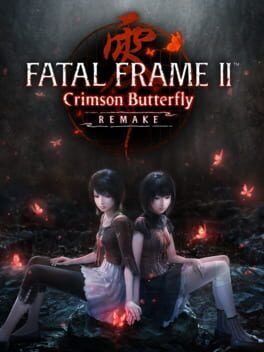

A newsy preview of Fatal Frame 2: Crimson Butterfly Remake ahead of its March demo, covering confirmed launch features, Silent Hill F collaboration details, and what veteran survival horror fans should focus on when the demo arrives.
Fatal Frame 2: Crimson Butterfly is one of the most beloved entries in classic survival horror, and Koei Tecmo is giving it a full modern return with Fatal Frame 2: Crimson Butterfly Remake on Switch 2 and other current platforms. With a free demo arriving on March 5, 2026, and launch set for March 12, this remake is positioned as more than a visual touch‑up. It adds new systems, areas and lore hooks while trying to preserve what made the 2003 original so unnerving.
Ahead of the demo, Koei Tecmo has also revealed a Silent Hill F collaboration that should catch the eye of anyone watching the current revival of Japanese horror games. Here is what is confirmed for launch, what the crossover entails and what long‑time fans should pay attention to once they finally step back into Minakami Village.
What’s confirmed for the March launch
Fatal Frame 2: Crimson Butterfly Remake is confirmed for Nintendo Switch 2, PlayStation 5, Xbox Series X|S and PC, with a worldwide release date of March 12, 2026. The March 5 demo will be available on Switch 2 at minimum, with save data carrying over to the full game so early play sessions can flow directly into launch week.
Koei Tecmo is pitching this as a ground‑up remake that respects the structure and mood of the original while layering in new progression systems and story threads. The core remains the same. Twin sisters Mio and Mayu wander into a fog‑shrouded village locked in a ritualistic tragedy, and players use the Camera Obscura to fend off vengeful spirits, trading ammunition and guns for film types, lenses and timing windows.
Where the remake diverges is in how it reworks exploration and combat incentives. Broken Spirit Stones are scattered through Minakami and act as keys to optional vignettes that show the pasts of villagers and side characters. Interacting with these does not just add flavor text, they unlock side stories that reframe events and rituals that returning players thought they understood. For a series built on tragic backstory, that promises a denser, more interconnected narrative.
The map has also grown. Two new locations are confirmed at launch. Umbral Mound is described as a rope‑bound burial site hidden within dense bamboo, leaning into the series’ fascination with bindings and sacrifice. Eikado Temple is a candlelit hall with twin statues lashed by sacred cords, reinforcing the twin motif at the heart of Mio and Mayu’s story. Both spots are designed to fold into the existing route through Minakami rather than feel like bolt‑on side areas.
Combat depth is being pushed through a clearer upgrade economy. Prayer Beads are a new resource used to enhance the Camera Obscura. They improve things like the number of focus points and how quickly the camera reloads between shots, effectively letting players tune how aggressive or reactive they want their playstyle to be. Reversion Beads are the safety valve, allowing a full respec so experimentation does not feel punishing.
On top of that, special “filter” mechanics give the Camera Obscura situational tools. The Paraceptual Filter unlocks a Blinding shot that briefly robs spirits of their senses and creates an opening to run or reposition. The Radiant Filter unlocks Purging, a high risk option that drains Mio’s willpower to deliver heavier damage. It fits the series’ tradition of trading security for power, and should matter more on higher difficulties.
Even outside direct combat, the remake adds meta goals. A Twin Dolls system asks players to photograph paired dolls throughout Minakami Village and “purify” them. Each completed pair opens up more items in a Point Exchange, turning careful exploration and memory for landmarks into tangible rewards.
Finally, Launch will include a full Photo Mode. It is not just a throwaway filter suite. Players can compose scenes with frames, stickers and visual effects and potentially even catch hidden spirits that only appear in photos, which dovetails cleanly with Fatal Frame’s core concept.
What the Silent Hill F collaboration actually is
Koei Tecmo also confirmed a collaboration with Konami’s Silent Hill F, the upcoming new mainline Silent Hill title with its own Japanese horror focus. The partnership takes the form of free DLC releasing after launch for Fatal Frame 2: Crimson Butterfly Remake.
The collab centers on costumes for Mio and likely other characters that are inspired by Silent Hill F’s visual style. Expect outfits that lean into its distinct floral body horror aesthetic and 1960s Japanese setting, instead of something like weapon crossovers or shared monsters. Current information from Koei Tecmo and Konami only mentions collaboration costumes and describes them explicitly as free DLC, so players will not need to buy a deluxe edition or season pass to access them.
There is no confirmed in‑game event, crossover story chapter or shared enemies at this point, so expectations should stay grounded. This is primarily a cosmetic link rather than a full content mashup. For fans tracking the broader resurgence of Japanese psychological horror though, it is still notable that two historically important series to the genre are being openly aligned even in a small way.
What long‑time survival horror fans should look for in the demo
For returning Fatal Frame fans and genre veterans, the March 5 demo is not just a quick sampler. Because progress carries into the full game, it is a chance to stress test how this remake treats pacing, control feel and tension before committing to a purchase. Several systems in particular are worth focusing on.
The first is the overall movement and camera balance. The original Crimson Butterfly walked a line between deliberate tank‑like controls and suffocating framing that made every encounter feel claustrophobic. Pay attention to whether the remake preserves that sense of vulnerability or sands it down for modern smoothness. Turn speed, how quickly Mio raises and lowers the Camera Obscura and how often you are forced into tight angles will tell you a lot about the team’s priorities.
Next is how Broken Spirit Stones are integrated into early chapters. If the demo includes even a couple of these, they should hint at whether optional lore is presented organically or if it pulls you into side menus that stall pacing. Long‑time fans will want to see if these stones meaningfully expand the tragedy of Minakami or simply restate information already known from the original.
Combat tuning will be another key point. The redesigned ghosts that evolve as you progress can sprout wings, radiate crimson malice, regenerate health faster and attack more frequently. In the demo, watch how quickly the difficulty ramps and whether heightened aggression makes encounters feel frantic in a good way or simply cheap. The window for “Fatal Frame” shots and how clearly it is communicated visually will be crucial for readability.
It is also worth experimenting with the Camera Obscura upgrade loop as early as the demo allows. Try different allocations of Prayer Beads to see if you can support distinct playstyles. A more methodical approach might focus on faster reloads so that you can stand your ground, while bolder players might push damage and rely on the Blinding shot to escape bad situations. If Reversion Beads are available, test how freely you can respec and whether the game encourages tinkering.
Exploration fans should take time to poke at side content such as any accessible Twin Dolls. Check if they are cleverly hidden and contextually placed or if they feel like simple collectible checklists. The health of that system will say a lot about how the remake handles optional objectives in later chapters.
Finally, do not ignore Photo Mode in the demo if it is included. For a game built around looking at what you do not want to see, the mode’s framing tools and possible hidden spirit appearances can either complement the horror or undercut it. Spend a few minutes testing how easy it is to access during play and whether it preserves atmosphere instead of breaking it.
If the demo can reassure long‑time players that Crimson Butterfly’s oppressive mood survives these new additions and that the systems deepen rather than dilute its identity, Fatal Frame 2: Crimson Butterfly Remake could end up as one of 2026’s defining survival horror releases. All eyes now turn to March to see if Minakami Village is as terrifying as fans remember.