
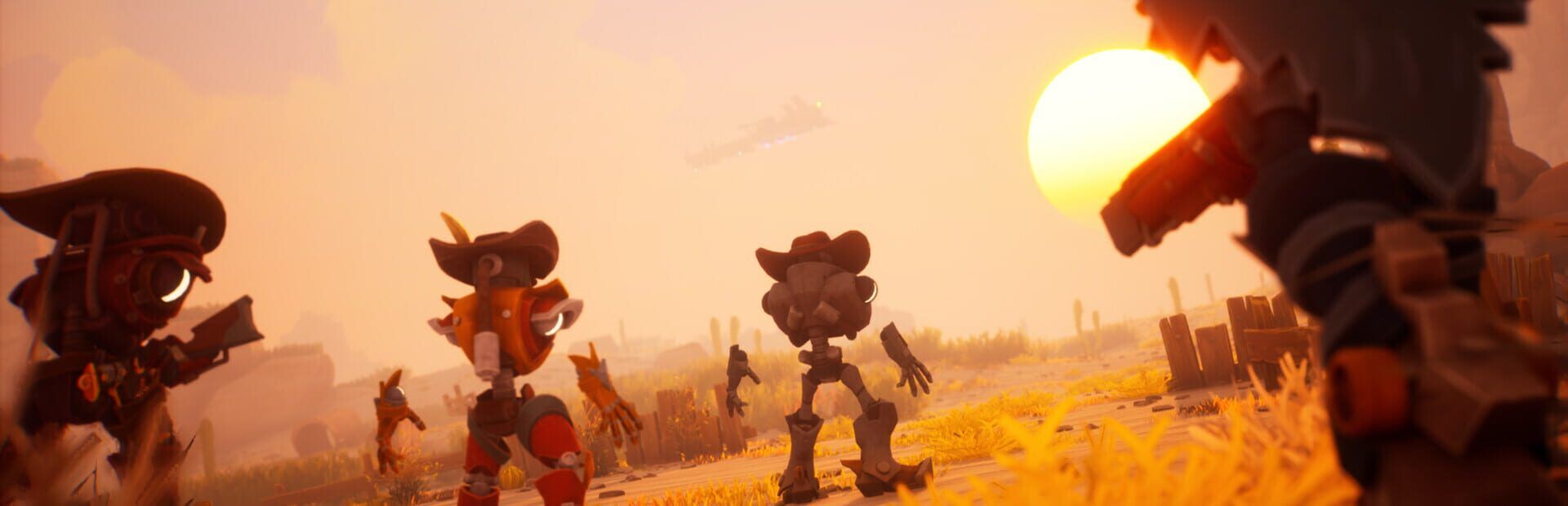
Evil Raptor’s chaotic Wild West co‑op shooter has cleared a million sales in Early Access, while publisher Fireshine Games publicly rejects partners that lean on generative AI. Here is how a focus on tight design, smart publishing and human‑driven creativity turned Far Far West into an Early Access breakout.
A surprise million‑seller on Steam
Far Far West did not arrive with the kind of marketing blitz usually attached to million‑selling shooters. It launched quietly in Steam Early Access on April 28, 2026, billed as a scrappy 1–4 player co‑op shooter where cowboys sling spells and shotguns in a monster‑infested frontier. Within three weeks, publisher Fireshine Games and developer Evil Raptor were announcing a milestone that would make AAA marketers jealous: more than one million copies sold on PC alone.
That puts Far Far West squarely in the company of breakout Early Access hits like Deep Rock Galactic and Risk of Rain 2, rare cases where a small‑team co‑op project catches fire long before a 1.0 release. According to coverage from Eurogamer and GamesIndustry.biz, the game is still far from finished, with Evil Raptor openly treating Early Access as a long runway for new missions, balance passes and systems.
So how did a stylised cowboy shooter become one of 2026’s biggest PC success stories, and why is its publisher using this moment to loudly reject generative AI in commercial partnerships?
Why Far Far West clicked so quickly
At a glance, Far Far West looks like familiar comfort food: a colourful third‑person shooter where four players tear through missions, collect loot and extract before things go sideways. Underneath that simple pitch, though, are several design choices that make it particularly well suited to the current co‑op landscape on Steam.
First is focus. Far Far West is not chasing the live‑service dream. There is no battle pass, no maze of overlapping currencies, and no expectation that players will log in every day to protect a seasonal investment. Instead, sessions are built around discrete missions that can be completed in a sitting. This makes it easy to get friends on board and even easier to recommend: buy the game, jump in, shoot monsters, grab your bounty, get out.
Second is the blend of setting and readability. The Wild West meets arcane fantasy hook gives the game immediate identity among a sea of near‑future military shooters. Cowboys in dusters, glowing spell effects and gnarly creatures are all stylised enough to read clearly in the chaos, which is crucial for a co‑op game where situational awareness can be the difference between a clean extraction and a total wipe.
Third is that it is built from the ground up as a co‑op experience rather than a solo game with matchmaking bolted on. Abilities, enemy behaviors and objectives are tuned to reward coordination. Revives, crowd control and positioning matter. This helps Far Far West slot neatly into the same "Friday night with friends" category that has sustained titles like Vermintide 2 and Helldivers 2.
All of this comes in at a mid‑tier price, which has become an increasingly powerful lever on Steam. In a year when many full‑price releases have struggled to find an audience, a lower barrier to entry, strong word of mouth and a clear pitch were enough to cut through the noise.
The Early Access advantage
Far Far West is a reminder of what Early Access can still do when handled with intent. Rather than treating it as a half‑hidden pre‑order, Evil Raptor and Fireshine are using it as a live, visible development phase. The version that hit Steam in April was already coherent and content rich enough to feel like a real game, not a prototype. That built trust; players could see the core loop, understand the fantasy and start to imagine how it might grow.
The studio has been clear that the game will expand substantially during Early Access. New missions, enemies, balance changes and quality‑of‑life improvements are all on the roadmap. Every patch has the chance to be a fresh talking point, a new wave of clips on social media and another hook for streamers and content creators.
Crucially, Far Far West launched at a moment when players were hungry for something that respected their time. There is an audience on PC that wants a co‑op game they can dip into weekly without learning a sprawling progression system or tracking seasonal FOMO. By focusing on tight, repeatable fun rather than long‑tail retention mechanics, Evil Raptor turned Early Access into a strength instead of a caveat.
Fireshine’s role: backing the right kind of co‑op
Fireshine Games is not the largest name in publishing, which makes its involvement here particularly interesting. The company has carved out a niche as a partner for mid‑scale PC and console projects, and Far Far West is quickly becoming its flagship success story.
In interviews around the milestone, Fireshine leadership has been candid that the bet on Far Far West was not about chasing the latest monetisation blueprint. It was about finding a co‑op concept that was immediately legible, mechanically strong and feasible for a small team to execute. Rather than inflating budgets in search of cinematic spectacle, Fireshine backed a project that could afford to be fun first.
That focus on scoped ambition pairs neatly with the team’s willingness to let Early Access do its job. Marketing beats did not hinge on promising a decade‑long roadmap or cross‑media ambitions. The sales pitch was straightforward: here is a strong co‑op shooter that will keep getting better, and your purchase helps shape that process.
Drawing a public line on generative AI
Alongside the celebratory sales headlines, Fireshine has been unusually direct about another part of its strategy. In a GamesIndustry.biz interview, CEO Brian Foote states that Fireshine does not work with partners that rely on generative AI for core creative work. The company describes this as a clear red line when evaluating projects.
In practice, that means Fireshine is not looking to publish games built on AI generated art, characters, writing or other prominent front facing content. The publisher is not alone in this. Others in the mid‑tier PC space, such as Hooded Horse, have voiced similar policies. What makes Fireshine’s stance notable is the timing. It is making this commitment while basking in the glow of a million‑selling hit, when investor pressure typically leans toward automation and cost cutting.
Fireshine does distinguish between generative AI and more mundane AI assisted tooling. Code completion, debugging helpers and productivity scripts are viewed as part of the modern software landscape. The concern is not that a programmer uses Copilot to suggest a for loop. It is that a game’s visual identity or narrative voice is handed off wholesale to an algorithm trained on uncredited human work.
Why the stance matters for Far Far West
Far Far West is not successful because it avoided generative AI, but Fireshine’s policy shapes how the game is positioned and perceived. The breakout co‑op shooter looks and feels like the product of a small team with a specific vision. Its Wild West fantasy is coherent, its enemies are hand crafted to serve particular roles, and its environments have a deliberately chunky, readable style.
When a publisher publicly says it will not back projects that lean on AI art and writing, it is making a statement about where value lies. In the case of Far Far West, that value is in how it plays with your friends, in the timing of enemy waves, in the clarity of visual effects and in the way weapons sound and respond. These are the kinds of details that currently benefit most from human iteration, playtesting and intuition.
Players have grown wary of games that feel pasted together from AI generated assets. Reviews and social feeds regularly call out marketing materials that look off in subtle, uncanny ways. Against that backdrop, a hit like Far Far West backed by a publisher that talks openly about human created content becomes a useful contrast point. It suggests that there is still commercial upside in resisting the wave of disposable, algorithmically assembled releases flooding digital storefronts.
Tapping into player sentiment around AI
Fireshine’s policy is not just philosophical. It is also a read on where the audience is. The current PC market is full of skepticism around generative AI. Players worry about data theft, about the erosion of jobs, and about a flood of low effort titles burying more carefully made work.
Far Far West’s success provides evidence that you do not need generative AI to launch a hit in 2026, even in a competitive genre like co‑op shooters. A clear hook, strong execution and a price that feels fair still do the heavy lifting. That gives Fireshine the freedom to frame its anti generative AI stance not as a handicap, but as part of what makes its portfolio attractive to both players and developers.
The message to studios is equally clear. If you want Fireshine to back your project, come with a tangible artistic identity and a plan built around human craft. Use AI where it quietly speeds up the plumbing work, not where it defines the personality of your game.
What this means for the wider industry
The industry conversation around AI is not going away. Major publishers and platform holders continue to explore ways to use generative tools for everything from NPC dialogue to asset upscaling. Some of these experiments will likely stick. Others will spark backlash and quietly disappear.
Far Far West sits on the other side of that debate. Its first big headline is not about a proprietary AI pipeline or experimental systems. It is about a million players buying into a straightforward, hand built co‑op shooter still in development. Fireshine’s choice to tie that achievement to an explicit rejection of generative AI partnerships gives smaller publishers and developers a reference point. You can say no to AI driven shortcuts and still ship a commercial hit.
As Evil Raptor continues to build out Far Far West during Early Access, the game will become a case study watched from multiple angles. Designers will pay attention to how its missions evolve and how it maintains replayability. Publishers will look at how much additional upside remains after such a strong start. And everyone wrestling with the role of AI in production will have one more data point suggesting that, for at least some corners of the market, human centric co‑op chaos is still the best selling feature.