
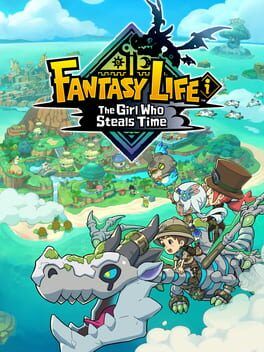

Post‑2.0.0, Fantasy Life i: The Girl Who Steals Time evolved from a promising cozy RPG into a long‑tail hit. Its flexible Life system, island‑building, and late‑game roguelite twists like Snoozaland and Bazario’s Schemes turned it into Siliconera’s Switch Game of the Year and a defining comfort title for both Switch and Switch 2 players.
Fantasy Life i: The Girl Who Steals Time did not arrive with the inevitability of a Tears of the Kingdom or a mainline Pokémon. It stumbled through delays, carried the baggage of Fantasy Life Online, and launched into a year stacked with bigger, louder releases. Yet by the end of 2025, it had quietly claimed a crown: Siliconera’s Switch Game of the Year, a spot in year‑end awards conversations, and a devoted audience across both Switch and Switch 2.
The secret was not just that Level‑5 revived a cult‑favorite 3DS formula. Post‑launch updates, culminating in the 2.0.0 patch, transformed Fantasy Life i from a nostalgic return into one of the most flexible, reactive cozy RPG sandboxes on Nintendo hardware. Between its Life system, island building, and late‑game roguelite‑style additions like Snoozaland and the free Bazario’s Schemes DLC, it became the kind of game players lived in instead of simply finishing.
A GOTY Built On Three Interlocking Games
Siliconera’s glowing review described Fantasy Life i as feeling like three complete games woven into one. That structure is crucial to understanding its long‑tail appeal.
In Mysteria, the past‑era continent, Fantasy Life i plays like an action RPG that will feel familiar to fans of the 3DS original. Enemies roam open fields and caves, bosses guard progression gates, and your choice of Life defines how you engage. Hunter, Magician, Mercenary, and Paladin give combat‑centric players distinct ways to fight, while Angler, Miner, Woodcutter, and the new Farmer Life turn the world itself into a resource‑rich playground.
Jump to the present‑day island hub and the tone shifts. Here, Fantasy Life i turns into a life sim closer to Animal Crossing than Dragon Quest. You terraform, place homes and facilities, decorate interiors, and watch as time of day and the real‑time clock govern crop growth, flowers, and resource respawns. Strangelings you rescue in the field settle down as townsfolk, shops, and support characters, tying your adventuring runs directly into the feeling of watching a community grow.
Then there is Ginormosia, the expansive zone that completes the trio. It borrows more than a little structural inspiration from Breath of the Wild style design, with towers to claim, shrines with compact combat or puzzle challenges, and small settlements that branch the story in sideward ways. Toggling tower difficulty lets you upscale foes for better rewards when you are overleveled, meaning the region stays relevant even deep into the post‑game.
Most games would be content to have these modes sit side by side. Fantasy Life i’s trick, and the thing that makes it a perfect fit for cozy RPG fans, is that every action in one layer matters in the others. Ore from a high‑rank mining node in Ginormosia becomes the ingots a Blacksmith uses to forge a spear your Mercenary wields to clear a shrine that earns the Strangeling who later boosts your crafting success rate. The loop rarely feels like obligation because it always resolves somewhere tangible and visible, usually on the island you are building up by hand.
The Life System As A Living Routine Instead Of A Grind
Fantasy Life’s Lives have always been its hook, but Fantasy Life i refines them into something that feels less like a class menu and more like a set of parallel lifestyles you slide between depending on your mood.
There are 14 Lives in total, spanning combat, gathering, and crafting roles. Level‑5 added Farmer and Artist to the original roster, and both are emblematic of what makes this sequel work. Farmer dovetails neatly into the island’s real‑time agriculture and lets players lean almost entirely into slow, methodical play. Artist emerges as a creative Life that connects cosmetic catalogs, town flavor, and gear customization rather than raw combat power.
Crucially, the game is built so that switching between Lives is frictionless. Interact with a tree as a Paladin and a prompt lets you instantly switch to Woodcutter to harvest it. Approach a crafting bench and you can access any of your crafting Lives, not just the one thematically tied to that station. Even the onboarding respects your time; if you are on your third or fourth Life, you can skip repeat tutorial quests and go straight to playing.
These touches are small individually but add up to a design that turns what could have been busywork into routine. Players log in, check crops and livestock as a Farmer, flip to Miner for a targeted ore run, then unwind by auto‑crafting gear or furniture they have already mastered. As Siliconera’s review pointed out, the game is grind‑heavy on paper, but smart conveniences and party support mean it rarely feels grindy.
This rhythm is exactly what a long‑tail cozy RPG needs. It does not demand you clear a dungeon or push a plotline every session. It simply offers a wide set of productive, interconnected things to do, each feeding into the others without punishing you for drifting between them.
Island‑Building As The Emotional Center
All of that systemic glue would not work without a focal point, and Fantasy Life i’s island is that anchor. It is the place where players see concrete proof that their hours in Mysteria and Ginormosia matter.
Early on, the island is little more than ruins and wilderness. Post‑2.0.0, it feels alive in ways most life sim towns only manage after months of play. Terraforming tools let you meaningfully reshape the layout so you are not simply slotting preset plots into predetermined grids. Crop fields, workshops, and houses sit alongside more whimsical structures, many of which only appear if you have rescued specific Strangelings or advanced certain Lives.
Every new building or decorative set is the result of a chain of activities. Carpentry and Tailoring Lives turn raw materials into the furniture and clothes that personalize your home. Blacksmith and Alchemist runs convert resource hauls into equipment that enable deeper dives into late‑game content. Artist, a Life that could have been a throwaway novelty, instead threads new aesthetic options into catalogs and commissions, essentially making your character and town more expressive as you commit to that path.
The present‑day island is also where relationships converge. Allies you meet through story chapters or shrine runs become neighbors, coworkers, or party members. Bond levels tie directly into combat perks, crafting bonuses, and gathering efficiency, but they also add personality beats that make you care about who you are bringing along on a Snoozaland run or a Ginormosia expedition.
For many players, especially on Switch and Switch 2, this town became the thing they checked on during commutes or before bed. The game’s design embraces that short‑session cadence: your island is always waiting for a quick round of planting, a furniture rearrange, or a visit to trade in Celestia flowers before you log off.
Snoozaland And The Turn Toward Roguelite Comfort
By the time the 2.0.0 update rolled around, Fantasy Life i had already secured a loyal core. The Snoozaland addition is what turned it into a true long‑tail hit.
Snoozaland reframes Fantasy Life i’s friendly systems inside a dreamlike roguelite framework. Accessed as a late‑game activity, it drops your party into self‑contained runs that remix enemies, layouts, and rewards. Instead of grinding the same few fields for rare drops, you opt into compact, high‑intensity loops that fit the pick‑up‑and‑play structure of the rest of the game.
Because your progression in the base game feeds directly into your loadouts and options in Snoozaland, it avoids the friction many roguelites have for cozy‑leaning players. You are not starting from scratch. Your well‑loved Mercenary with that handcrafted axe, your favorite support Strangelings, your carefully specced Farmer passives that keep you flush with materials, all of it carries psychological weight into each run.
The real cleverness lies in pacing. Snoozaland runs are short enough to fill a lunch break or commute, yet rewarding enough to feel like an alternative to more traditional grinding. You walk away with upgrade materials, cosmetic items, and occasionally new hooks back on the island. Instead of competing with the main game, it slots in as a parallel track for nights when you want a clear objective and a defined endpoint.
For cozy RPG fans, that is powerful. Roguelite structure often clashes with the desire for stability and ownership. Snoozaland threads the needle by letting you experiment within bounded, repeatable challenges while knowing that every success feeds back into your permanent town and Lives.
Bazario’s Schemes And The Free DLC Pivot
If Snoozaland made Fantasy Life i feel fresh again for invested players, the free roguelike DLC, The Sinister Broker Bazario’s Schemes, was the moment it reappeared on the broader Switch radar.
Siliconera’s coverage made a point of the DLC’s generosity. Launching as a free add‑on across Switch, Switch 2, and other platforms near the end of 2025, Bazario’s Schemes landed just as year‑end lists were solidifying. It introduced a new, more menacing riff on Snoozaland’s structure framed around Bazario, an antagonist who turns your island‑building success into leverage for riskier, high‑stakes contracts.
Mechanically, Bazario’s Schemes sharpens the roguelite edge. Contracts push you into variations on Snoozaland‑style runs with stricter conditions and more dangerous modifiers. Enemies hit harder, hazards stack in unpredictable ways, and success often hinges on how well you have tuned your Lives and party synergies.
Yet it still respects Fantasy Life i’s cozy foundation. Failing a contract does not erase your town or negate previous progress. Instead, it nudges you back toward your routines. Maybe the lesson is that your Paladin build needs that extra Blacksmith tier you have been putting off, or that you should finally level Artist to unlock a catalog that slightly boosts crit chances on a favored weapon skin. The DLC deepens the fantasy of living with these systems instead of just clearing them.
From a community perspective, the timing and price point mattered as much as the content. A substantial, free, cross‑platform DLC drop at the holidays sent lapsed players back to their islands and convinced curious onlookers to finally pick the game up, especially on Switch 2 where performance and loading saw notable improvements. Buzz from Bazario’s Schemes dovetailed directly into Siliconera’s Switch Game of the Year feature, painting a picture of a title that had not only launched well but steadily earned its position over months of thoughtful updates.
Why It Resonated On Both Switch And Switch 2
A lot of games straddle the late‑Switch and early‑Switch 2 window, but few feel as perfectly suited to both as Fantasy Life i.
On the original Switch, it fills a niche in the library that is surprisingly underrepresented: an RPG that is genuinely comfortable to play in ten‑minute bursts without losing the feeling of progression. Logging in to check crops, knock out a shrine, or run a quick Snoozaland attempt fits into the handheld’s aging but still active ecosystem.
On Switch 2, the upgrades make this style of play even more appealing. Better performance smooths out the occasional frame hiccups and cutscene slowdowns that reviewers noted on other platforms, and the higher resolution makes busy island layouts and crafting menus easier to parse at a glance. For a game that lives or dies on whether people want to keep dropping in weeks or months after release, that kind of friction reduction matters.
Just as important is how Fantasy Life i quietly aligns with where a lot of Switch and Switch 2 owners are now. The hardware sits alongside phones, PCs, and other consoles. Games that demand long, uninterrupted sessions fight an uphill battle for attention. Fantasy Life i, especially in its 2.0.0 and Bazario era, is built out of modular pieces instead. A Lunchtime Snoozaland run, a quick contract from Bazario, a lazy half hour of re‑tiling your farm, or a targeted Ginormosia trip for a single rare drop all feel like valid, complete play sessions.
From Cult Revival To Long‑Tail Anchor
The story of Fantasy Life i is less about shocking innovation and more about quiet, persistent refinement. At launch it was already a remarkably full package, enough for Siliconera’s review to declare it one of the best games on the system. Over the following months, quality‑of‑life updates, the big 2.0.0 patch, Snoozaland’s dreamlike roguelite runs, and the holiday surprise of Bazario’s Schemes collectively nudged it from
“beloved by fans of the original”
to
“a defining cozy RPG of the Switch era.”
In a year where headline awards were dominated by flashier action titles and prestige indies, Fantasy Life i carved out a different sort of victory. It became a game people recommended not because it was the loudest or most technically impressive release, but because it slid so comfortably into everyday life on both Switch and Switch 2. The fact that it ended the year as Siliconera’s Switch Game of the Year feels less like an upset and more like an acknowledgment of where many players actually spent their time.
For Level‑5, it is a proof of concept that their particular blend of systems‑driven RPG design and warm, domestic fantasy still has legs well beyond nostalgia. For cozy‑RPG fans, it is a reminder that the games we keep coming back to are often the ones that give us room to breathe, tinker, and occasionally dive into a roguelite dreamland before returning to water the crops.