
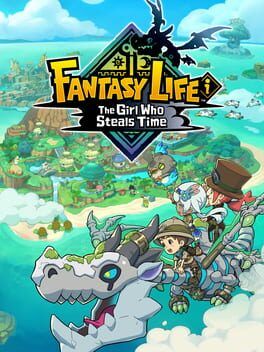

After delays, doubts, and a bumpy launch, Fantasy Life i: The Girl Who Steals Time has quietly climbed past 1.5 million copies. Here is how patches, updates, and word of mouth turned a troubled project into a modern cozy staple and a vital comeback for Level-5 on Switch and the upcoming Switch successor.
Fantasy Life i: The Girl Who Steals Time was never supposed to be Level-5’s big redemption arc. Announced in 2023 as a nostalgic follow-up to the 3DS cult classic, it looked like a safe play: a cozy life sim with light action RPG combat, cute art, and the promise of building a town across time. Instead, it stumbled through delays, production shakeups, and skeptical previews before launch.
Yet by the end of 2025, Level-5 confirmed that Fantasy Life i has sold over 1.5 million copies worldwide, after previously celebrating 500,000, 800,000, and then 1 million units in quick succession. That trajectory has turned a once-wobbly project into both a commercial win and a proof of concept that there is still room for mid-budget, deeply cozy RPGs on Switch and soon on its successor.
This is how a rocky development, focused post-launch updates, and slow-burn word of mouth turned Fantasy Life i into a surprise staple of the cozy scene and a genuine Level-5 comeback story.
A sequel that almost missed its moment
On paper, Fantasy Life i had everything going for it. The original Fantasy Life on 3DS built a loyal fanbase with its mix of jobs, crafting, gentle exploration, and shared online play. A true follow-up arriving in the middle of the cozy boom should have been an easy win.
Instead, the game slipped its window more than once. Originally revealed for a 2023 release, it was pushed into 2024, and then again into April 2025. Along the way, the project changed shape. Plans for Nintendo to publish it in the West faded, producer Keiji Inafune departed in 2024, and Level-5 president Akihiro Hino stepped in to steady the ship while the title shifted to a broader multiplatform strategy.
Delays are not unusual, but Fantasy Life i’s were visible enough that fans started to question whether the game was in trouble. The market around it shifted too. By the time it actually launched, Fantasy Life i entered a Switch ecosystem stacked with life sims, farming games, and open-ended comfort titles. Against that backdrop, its old-school, slightly clunky charm risked looking dated rather than nostalgic.
A bumpy but solid launch
When Fantasy Life i arrived in May 2025, reaction was positive but cautious. Reviews and early impressions tended to highlight the same split: the game captured the heart of the 3DS original with its flexible Life system and whimsical tone, but it also carried performance issues and rough edges that made it feel behind the times.
Technically, the Switch version was the clear focal point. While the game was available across multiple platforms, Level-5’s own sales breakdowns and celebratory updates repeatedly called out the Nintendo ecosystem as the primary driver. The Deluxe Edition climbed to the top of the Switch eShop, while the standard version sat comfortably just behind it.
That early performance came in spite of problems rather than because the release was flawless. Performance dips in busy town areas, odd bugs tied to quest triggers, and some online connectivity quirks showed the game’s tumultuous production history. For a studio that had once been synonymous with polish in series like Professor Layton and Inazuma Eleven, Fantasy Life i looked scrappy.
Yet underneath those issues, the core loop worked. Players could swap between combat-focused Lives, gathering roles, and support professions at will, slowly turning their island town into a reflection of their play style. The time travel hook, which let you influence the island across multiple eras, added a gentle long-term puzzle to the laid-back routine of crafting, fishing, and dungeon crawling. It was not revolutionary, but it was uniquely specific in how it combined an offline JRPG structure with cozy-town rhythms.
Post-launch updates that respected the audience
The difference between Fantasy Life i being written off as a rough nostalgia play and becoming a sustained success came after launch. Level-5 treated the initial months as a second phase of development rather than a hard stop.
Patches targeted performance and stability first, smoothing out frame pacing, tightening loading, and tackling mission bugs that disrupted progression. These are not the sort of changes that headline trailers, but they dramatically improved the moment-to-moment friction for players who were already invested.
Alongside those fixes came feature-focused updates that made the island feel more like a place to live rather than just a series of checklists. A Photo Mode update, highlighted in coverage around the 1.2 million sales mark, was especially important. It sounds minor, yet in a cozy-focused community, the ability to compose screenshots, show off outfits, and frame up the island’s best vistas is marketing fuel.
Level-5 paired game-side updates with smart communication. Each major sales milestone arrived with public statements and celebratory artwork, creating a feeling of ongoing momentum. Instead of quietly patching the game and hoping someone noticed, the studio took every opportunity to remind lapsed observers that Fantasy Life i was not only alive but thriving.
This ongoing cadence transformed the narrative around the game. What began as a question of whether Level-5 could still deliver turned into a quieter story of a studio iterating, listening to feedback, and steadily elevating a niche project into something that felt cared for.
From 500,000 to 1.5 million: the slow-burn climb
Level-5’s own updates give a clear picture of Fantasy Life i’s growth. Shortly after launch, the company confirmed that the game had passed 500,000 copies sold worldwide. That announcement carried a hint of surprise, noting a response that exceeded expectations and spotlighting especially strong digital performance.
Within days, that total climbed to 800,000, as charts across multiple platforms reflected the game’s staying power. Just a little later, Level-5 announced that Fantasy Life i had crossed the 1 million mark. These jumps were not driven by heavy discounting or blockbuster marketing beats. Instead they reflected steady pickup, especially among players already tuned into the cozy and life sim space.
The end-of-year update on December 29 closed the loop. Fantasy Life i had passed 1.5 million copies sold worldwide, a figure that would have been unthinkable for a project that looked structurally dated and commercially uncertain during its long delay cycle.
What happened in the middle was less about a single spike and more about accumulation. The game’s design encourages long-term play, inviting players to settle into multiple Lives, cultivate relationships, and slowly transform the island across time. That sort of engagement, combined with a constant trickle of patch notes and incremental improvements, produced a natural word-of-mouth engine.
Word of mouth and the cozy niche on Switch
Switch has been the natural home for cozy sims for years, and Fantasy Life i benefited directly from that ecosystem. The original 3DS game’s fans were already on Nintendo platforms, and the new title’s mix of handheld-friendly sessions and low-pressure progression made it an easy recommendation for players who enjoy Animal Crossing but want just a bit more structured questing and combat.
Crucially, Fantasy Life i found an identity that is adjacent to but distinct from core competitors. It is cozier than a traditional action RPG, yet more mechanically dense than many farming-first games. The Life system gives it a natural vocabulary for social sharing. Players post their builds, combinations of Lives, and elaborate town layouts as much as they share cute outfits or scenic screenshots.
That kind of shareable specificity is ideal for organic discovery. When players on social platforms talk about how they balanced a combat Life with a crafting role, or how time travel changed a particular island district, they are advertising a fantasy that is hard to replicate elsewhere.
Because Switch is often the default platform for this audience, recommendations organically pointed other players there first. Level-5’s public updates repeatedly described the Switch digital charts as a leading indicator. The Deluxe Edition taking the top slot on the eShop was less a one-day novelty and more an anchor that kept the game visible for curious buyers browsing the storefront. Once it was consistently in the “Top Sellers” lists, Fantasy Life i effectively turned chart presence into ongoing discoverability.
Why Fantasy Life i matters for Level-5’s future
For Level-5, this success is about more than one game. The studio spent much of the late 2010s and early 2020s in a difficult spot, with stalled franchises, quiet Western output, and a perception that its heyday was fading. Fantasy Life i’s 1.5 million milestone is significant because it demonstrates that a modestly scoped, cross-generational project can still deliver strong returns if it is tightly aligned with a passionate niche.
The development challenges, including delays and leadership changes, could have permanently damaged the brand. Instead, the choice to stick with the project, broaden its platform reach, and invest in post-launch support turned Fantasy Life i into a living proof that Level-5 can survive and adapt to the realities of modern game production.
The announced version for Nintendo’s next system, often referred to as Switch 2, reinforces that point. A cozy sim with long-term engagement is a natural candidate for a second life on new hardware. Features like better performance, higher resolution, or expanded online options can meaningfully enhance a game that is already tuned for daily play. If Level-5 can carry over existing goodwill and, potentially, save data or cross-buy behavior, Fantasy Life i could be one of the early comfort titles players pick up with the new console.
In that sense, Fantasy Life i has become a bridge. It connects Level-5’s 3DS-era strengths in bite-sized, characterful RPGs with a future where cozy, community-driven games live for years across multiple hardware generations.
A quiet but important comeback story
Fantasy Life i: The Girl Who Steals Time did not arrive as a flawless, generation-defining blockbuster. It launched late, slightly rough, and into a market saturated with similar vibes. Yet by focusing on the fundamentals of a cozy RPG, listening to feedback, and steadily improving the experience, Level-5 guided it past 1.5 million sales and turned it into a modern staple of the genre on Switch.
In doing so, the game has become one of the clearest arguments that slow-burn success still exists in a market dominated by launch-week metrics. For Level-5, that slow burn is more than a happy accident. It is a template for how the studio can thrive again in an industry that once seemed to have moved on without it.