
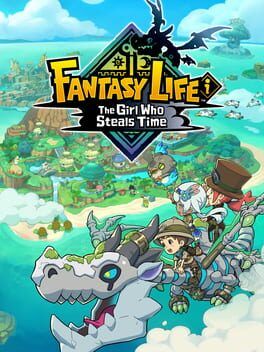

Breaking down how post-launch support, word of mouth, and a smart multi-platform rollout turned Fantasy Life i into Level-5’s big comeback, and what that means for its next wave of RPGs.
Fantasy Life i: The Girl Who Steals Time was not supposed to be Level-5’s victory lap. For a while it looked like the exact opposite.
Delayed multiple times from a 2023 window into 2024 and then again into 2025, losing high-profile producer Keiji Inafune partway through development, shifting publishing plans and platforms several times; on paper this was the kind of project that quietly limps out and disappears.
Instead, seven months after launch, Level-5 reports that Fantasy Life i has now sold over 1.5 million copies worldwide. That number is impressive on its own for a cozy, mid-budget “slow-life RPG,” but the trajectory behind it is the real story. Fantasy Life i is the clearest sign yet that Level-5 has figured out how to turn its messy comeback into a sustainable new phase.
This is how a troubled project became a commercial redemption arc.
From rocky reveal to slow-burn hit
Fantasy Life i’s path to shelves was bumpy. Originally announced for Switch and framed almost like a first-party-adjacent revival of the 3DS cult classic, it slipped out of its original 2023 window, then 2024, before finally arriving in May 2025. Inafune’s exit during development and the shift away from Nintendo publishing in the West added more uncertainty, along with the surprise move to target basically every modern platform.
The result was a launch surrounded by skepticism. Fans of the 3DS original worried about scope cuts and monetization, while some reviewers noted technical rough edges and structural annoyances like the single save slot. For a lot of studios that combination of delays, mixed first impressions and diffuse marketing would have been fatal.
Yet within days of release, Level-5 announced that Fantasy Life i had already cleared 500,000 copies globally. By early June it hit 800,000, then crossed 1 million barely three weeks after launch across Switch, Switch 2, PlayStation, Xbox and PC. By December, the game sat at 1.5 million units sold.
Those numbers did not come from a giant advertising blitz. They grew out of three pillars that Level-5 leaned on more aggressively than it has in the past: consistent post-launch support, community-driven word of mouth, and a deliberate multi-platform rollout.
Post-launch support that actually responds to players
Level-5 has a history of supporting its games, but Fantasy Life i marks a sharper, more modern strategy: fix pain points quickly, add content regularly, and use each update as a marketing beat.
In late May and early June, as the game climbed past 800,000 and then 1 million copies sold, Level-5 accompanied each milestone announcement with details about requested changes hitting the game. The studio specifically framed early patches as answers to the most common community asks, acknowledging that certain systems needed tuning and quality-of-life work.
Over the months that followed, Fantasy Life i received a string of free updates. The most visible example was the Photo Mode and camera-feature update that arrived around the 1.2 million mark. For a game built on chill exploration, decorating and sharing your town, a robust camera system was a natural fit and an easy way to re-engage lapsed players.
More importantly, each update did double duty as a mini-PR beat. Every big patch tied to a transparent sales update and a fresh piece of celebratory artwork shaped the narrative around the game: this is a living project, it is selling better than expected, and the director is listening. That tone stands in contrast to the more opaque post-launch handling of some of Level-5’s past releases.
By the time the game crossed 1.5 million units, patch notes had become a talking point in fan communities instead of a point of frustration. Single-save complaints and balance gripes still surfaced, but they lived alongside conversations about new content drops, rebalanced lives, new quests and seasonal events. The cadence gave Fantasy Life i multiple mini-launches over its first seven months rather than a single burst of attention.
Word of mouth carried the cozy “slow-life RPG” fantasy
Even with solid updates, Fantasy Life i still needed players to evangelize it. That is where its genre blend and tone did heavy lifting.
On paper, Fantasy Life i occupies the same space as Story of Seasons, Animal Crossing and Rune Factory. It is cozy and low-pressure, but it layers a surprisingly dense class system on top, with twelve “Lives” that can change how you play: combat-focused roles for those who want dungeons and bosses, gathering and crafting roles for the life-sim crowd, and town-building loops for decorators.
That mix is hard to convey in trailers, but incredibly easy to sell in conversation. The early sales milestones lined up with a wave of player-created content that did what marketing could not: forum posts explaining how the Life system lets you swap from “monster hunter” to “tailor” on a whim, social media clips of elaborately built islands, and tips threads dissecting efficient progression.
Crucially, the game also benefited from being positioned as a feel-good comeback story. Level-5 spent the better part of a decade slipping out of the global spotlight as Yo-kai Watch cooled off and several projects stumbled or stayed Japan-only. The idea that Fantasy Life i might be their return to form helped it trend in enthusiast spaces, where players were eager to find and champion “the new Level-5 game that actually hits.”
Because the early adopters skewed heavily toward fans of the 3DS original and cozy-life communities, the sentiment was forgiving. Critics noted technical and structural flaws, but the dominant grassroots message was that the game was both relaxing and surprisingly deep, and improving quickly with each patch. Online discussion often framed it as a game you can grow with over months, a key ingredient in the slow-burn sales curve that carried it from 1 million to 1.5 million.
Multi-platform release turned a niche sequel into a global slow-life hit
The original Fantasy Life was a Nintendo 3DS exclusive and largely a cult favorite. Fantasy Life i, in contrast, launched across Nintendo Switch, Nintendo Switch 2, PlayStation 4 and 5, Xbox Series X|S and PC via Steam. That decision looked risky during development, but it is hard to imagine the 1.5 million milestone without it.
First, a broad footprint changed the perception of the game. Instead of feeling like a one-off handheld sequel, Fantasy Life i suddenly sat alongside other cross-platform RPGs and life sims. Sites that might have skipped covering a Switch-only follow-up ran news stories about milestones, patches and platform parity. That broader visibility matters for a studio trying to reestablish itself outside Japan.
Second, the platforms complemented each other’s strengths. Nintendo’s ecosystem, particularly on Switch, provided the perfect home base: digital charts in Japan and abroad quickly showed the Deluxe Edition hitting number one and staying there for days, while the standard edition also placed near the top. That early Switch momentum gave Level-5 confident numbers to share publicly.
At the same time, PC and Xbox created a second wave once word of mouth solidified, especially among players who treat Steam wishlists and sales as discovery engines for smaller RPGs. Discount periods later in the year, including the first sale noted on the game’s Steam page, gave curious players a lower barrier to entry at precisely the moment when the game’s reputation had shifted from “delayed sequel with issues” to “surprisingly robust RPG-sim hybrid that keeps getting better.”
Finally, the presence of a Switch 2 version and planned physical releases extended the sales tail. Instead of a single 2025 spike, Fantasy Life i is positioned more like an evergreen cozy title that can be rediscovered each hardware cycle, closer to how Story of Seasons or Stardew Valley live on through ports and updates.
Why Fantasy Life i matters for Level-5’s broader comeback
The raw 1.5 million figure is important, but Fantasy Life i’s real value to Level-5 is strategic. It shows that the studio can now:
Deliver a global, multi-platform RPG again after a period of regional fragmentation.
Ship a live-service-adjacent title that uses updates and communication to build long-term trust rather than erode it.
Grow a game beyond launch even when the marketing spend is modest and the early technical reception is mixed.
For a company trying to reassert itself in the RPG space, those are foundational skills.
In the 3DS and early PS3 era, Level-5 was associated with inventive mid-budget hits like Ni no Kuni, Professor Layton and the original Fantasy Life. As the market consolidated around giant AAA projects and live services, Level-5’s attempts to chase phenomena like Yo-kai Watch’s explosion led to misfires and overextension. Western releases became sporadic, and the studio’s visual identity no longer guaranteed success.
Fantasy Life i signals that a different strategy is emerging. Instead of banking on one mega-franchise, Level-5 is building a portfolio of distinct but complementary RPGs: slow-life, mascot-driven mystery, turn-based adventure, action-leaning fantasy and more. The success of a cozy, systems-heavy sim like Fantasy Life i gives the studio room to be a little weirder and more experimental with what comes next.
Setting the stage for Level-5’s next wave of RPGs
The timing of Fantasy Life i’s success matters because it arrives just as Level-5 is ramping up a new slate of titles positioned for global audiences. A strong, steady performer at 1.5 million sales acts as a financial and reputational anchor.
Financially, it validates the decision to invest in multi-platform pipelines, which should make it easier to justify bringing future RPGs to PC and non-Nintendo consoles out of the gate. The incremental gains from selling in multiple ecosystems compound over time, as engines, pipelines and localization processes get reused.
Reputationally, Fantasy Life i’s journey helps rebuild trust with both fans and platform holders. When Level-5 now talks about ongoing support or ambitious cross-platform plans, it can point to an actual slow-life RPG that weathered delays, launched in decent shape, and measurably improved post-release. That gives players more confidence to buy in early the next time the studio announces a big RPG.
Perhaps most importantly, it proves that there is still a sizable global audience for mid-scale Japanese RPGs that lean into warmth, routine and community rather than pure spectacle. That niche is exactly where many of Level-5’s upcoming projects live. Fantasy Life i’s 1.5 million sales are not just a win for one game; they are a data point that can guide how the studio scopes and positions its future lineup.
A comeback built on patience, not hype
Fantasy Life i: The Girl Who Steals Time is not a flawless game, and its road to release highlighted many of the pressures facing mid-sized Japanese developers in 2025. But its commercial performance and the way it got there offer a blueprint.
A rocky development cycle did not lock the game into failure. Consistent, responsive updates made the launch version feel like a starting point rather than a final verdict. A genre mix that thrives on sharing turned early adopters into advocates. And a multi-platform strategy transformed what might have been a nostalgic niche sequel into a globally relevant slow-life RPG.
For Level-5, crossing 1.5 million units with Fantasy Life i is less about a single milestone and more about momentum. After years of uncertainty, the studio finally has a modern success story that reflects the kind of games it still wants to make: colorful, mechanically rich, character-driven RPGs that can quietly grow over time instead of burning bright and fading.
If Level-5 can apply the same patience, community focus and cross-platform thinking to its next wave of role-playing games, Fantasy Life i may end up being remembered not just as a good sequel, but as the pivot point where the studio’s long-awaited comeback really began.