
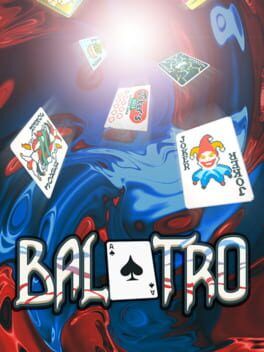

Integrated Media Company, owner of Fandom and GameSpot, is moving to acquire Balatro publisher Playstack. Here is what the proposed deal says about Playstack’s growth, its indie-first strategy, and the future of hits like Balatro and Abiotic Factor.
A breakout publisher just got much bigger backing
Playstack has quietly become one of the most successful indie-focused publishers in the business. That success, led by runaway deckbuilder hit Balatro and survival sandbox Abiotic Factor, has now attracted the attention of Integrated Media Company (IMC), the investment group that owns Fandom, GameSpot, Fanatical and other entertainment brands.
IMC is set to acquire TruFin’s 84.5% stake in Playstack in a deal that values the UK publisher at around £132 million (reports vary slightly on the exact dollar figure but place it in the $150–170m range). TruFin expects roughly £112.4m in cash proceeds, and its board has recommended shareholders approve the transaction.
If it closes, Playstack will sit in the same portfolio as some of the biggest games media and community platforms on the internet. That raises big questions about how a once-scrappy indie label scales up, how its catalogue will be used inside a bigger ecosystem, and what that means for ongoing hits like Balatro and Abiotic Factor.
Why IMC wants Playstack now
From an investment angle, Playstack is being bought off the back of sustained, compounding momentum rather than a one-off lottery win.
TruFin’s latest figures show Playstack generated about £55.3m in gross revenue in 2025, up 24% year-on-year, and accounted for roughly 84% of TruFin’s total revenue. Earlier disclosures from TruFin also highlighted that more than 85% of Playstack’s releases deliver a positive return. That hit rate is rare in indie publishing, and it explains why IMC is willing to pay a premium.
Balatro is the poster child for that success. The roguelite deckbuilder from solo dev LocalThunk exploded via word of mouth, streamers and social media to become one of 2024’s defining indie stories. But Balatro arrived after years of Playstack building up a catalogue of tightly scoped, high-return projects including The Case of the Golden Idol, The Rise of the Golden Idol, and more recently Abiotic Factor.
To IMC, buying Playstack is a way to bolt a proven, data-driven publishing operation onto a network of audience platforms. Fandom’s wikis, GameSpot’s editorial reach, Fanatical’s storefront and other properties give IMC distribution and discovery muscle. Playstack brings content that keeps those audiences engaged and, crucially, can be commercialised across multiple channels.
Playstack’s indie strategy in the spotlight
Playstack CEO and founder Harvey Elliott has framed the deal as a change in ownership, not a change in identity. The team, leadership and focus on “premium indie games” are expected to remain intact under IMC.
That lines up with how Playstack has operated to date. The publisher’s strategy has leaned on three major pillars.
First is a portfolio built around systems-heavy, replayable games rather than one-and-done narratives. Balatro’s endless deckbuilding loops, Abiotic Factor’s co-op survival sandboxes and the Golden Idol games’ puzzle-box investigations are all designed for long-tail engagement and strong word of mouth.
Second is rigorous curation. With only a handful of releases per year relative to some rivals, Playstack has avoided the “sign everything on Steam” approach. TruFin’s claim that over 85% of titles recoup suggests a greenlight process that weighs scope, unique hooks and audience fit very carefully.
Third is strong support for small or unconventional teams. Balatro came from a solo developer, Abiotic Factor from small studio Deep Field Games, and Playstack has often stepped in to provide funding, marketing, platform relations and live-ops expertise that those teams could not easily build alone.
These pillars are part of what IMC is buying. In theory, keeping the existing management and publishing philosophy in place allows IMC to scale what already works rather than forcing a top-down reset.
How a media-and-games ecosystem could change the playbook
Where things get interesting is how Playstack’s games plug into IMC’s broader ecosystem.
Fandom and GameSpot already sit at crucial points in the player journey. Fans discover games through previews and reviews, dive deeper via wikis, then bounce out to streams, social feeds and storefronts. By owning both a slice of that media funnel and a publishing label, IMC can in theory connect those dots more tightly around its own catalogue.
For Playstack, that might translate into more predictable reach for new launches. A future Balatro-scale game could expect coordinated beats across GameSpot coverage, Fandom features, Fanatical discounts and perhaps bespoke community events, all amplifying awareness without necessarily increasing marketing spend at the same rate.
It also opens up data synergies. Fandom’s wikis and GameSpot traffic provide a constant signal of what players read about, search for and stay engaged with. If that data can be surfaced to Playstack’s scouting and greenlight teams in a privacy-respecting way, it could inform which subgenres or themes are under-served yet highly searched, guiding the hunt for the next Balatro or Abiotic Factor.
The flip side is that this creates a strong incentive for Playstack to favour games that play well inside IMC’s ecosystem. Titles with high wiki and guide potential, strong theorycrafting communities or heavy replayability might be easier to justify than smaller, linear experiments that are harder to monetise via media and community channels. How rigorously Playstack defends its taste-driven curation against those pressures will be key over the next few years.
What this could mean for Balatro
Balatro itself is already out in the wild and successful, so the acquisition will not rewrite the fundamentals of the game. But it could change the way Balatro lives as a long-term platform.
With IMC’s backing, Playstack suddenly has more options for keeping the game in the cultural spotlight. It becomes much easier to imagine:
Large, cyclical content updates or DLC positioned as tentpole events across GameSpot and Fandom, with strategy guides, deck theory features and community competitions.
Deeper merchandising and cross-promotion via Fanatical or other IMC storefronts, especially if LocalThunk and Playstack decide to explore cosmetic packs, expansions or even tabletop spin-offs.
Increased competitive and community activity driven by IMC’s audience channels, such as themed challenge runs or high-score events that receive coverage instead of sitting purely within Discord communities.
On the development side, more capital and platform leverage could give Playstack and LocalThunk room to experiment with ports, quality-of-life revamps, accessibility updates and post-launch balancing at a scale that would have been harder without a deep-pocketed parent.
The risk is that Balatro’s appeal rests heavily on its clean design and focus. If monetisation or content cadence are pushed too aggressively to justify the acquisition price, there is a danger of feature creep or player fatigue. That said, IMC’s stated approach is to partner with existing management rather than dictate product beats, which should help keep Balatro’s evolution aligned with what its core audience actually wants.
What this could mean for Abiotic Factor and live games
Abiotic Factor is in a different phase entirely. As a co-op survival game with a strong Early Access trajectory, it is built for long-term live support and community-driven growth. Being under IMC’s umbrella could accelerate several key aspects of that roadmap.
Discovery is the first. Survival sandboxes live or die on how quickly communities form around them. If IMC leans into Fandom-hosted wikis, GameSpot coverage and social pushes at each major update, it can help Abiotic Factor punch above its weight in a crowded genre.
Funding and stability are the second. A bigger parent company gives Playstack more freedom to support multi-year Early Access development without needing immediate, outsized returns from each beat. That should be good news for Deep Field Games if IMC focuses on long-term value rather than short-term cash extraction.
Finally, there is the potential for cross-pollination inside Playstack’s own catalogue. Lessons learned from Balatro’s explosive viral loop, for example, could inform Abiotic Factor’s event design or content cadence. Shared resources in analytics, backend technology and community management can also travel between teams now that there is more capital to invest in central services.
Again, the tension lies in how far growth expectations are pushed. Survival games can turn sour if updates start to feel like grindy engagement traps. The best-case scenario is that IMC’s resources are used to make patches more substantial, more polished and better communicated, rather than simply more frequent.
A turning point for mid-sized indie publishers
Beyond individual titles, the proposed Playstack acquisition is another data point in a wider trend. As development costs rise and digital stores grow more crowded, mid-sized publishers that can consistently find and scale breakout indies are becoming prime acquisition targets.
For private equity-backed groups like IMC, owning such a publisher is a way to turn audience attention into direct game revenue without taking on full triple-A risk. For developers, it can mean signing with a label that has both financing and access to huge earned-media channels.
In the near term, Playstack says it is “business as usual.” That message is clearly aimed at reassuring partner studios that existing deals, roadmaps and support structures will not be thrown into chaos. If IMC follows through and keeps Playstack’s leadership and processes intact, the label could become an even more powerful ally for indies who want publisher support without losing their identity.
Longer term, the industry will be watching to see whether this kind of media-plus-publishing model reshapes the discovery landscape. If future Balatro-scale hits from Playstack start to dominate coverage across Fandom and GameSpot, smaller rivals may need to rethink how they reach players, and platform holders may feel pressure to highlight a broader range of voices.
For now, what is clear is that Balatro and Abiotic Factor have helped propel Playstack from ambitious upstart to a linchpin of a much larger entertainment strategy. Where that strategy goes next will shape not just Playstack’s portfolio, but perhaps the next generation of indie breakouts too.