
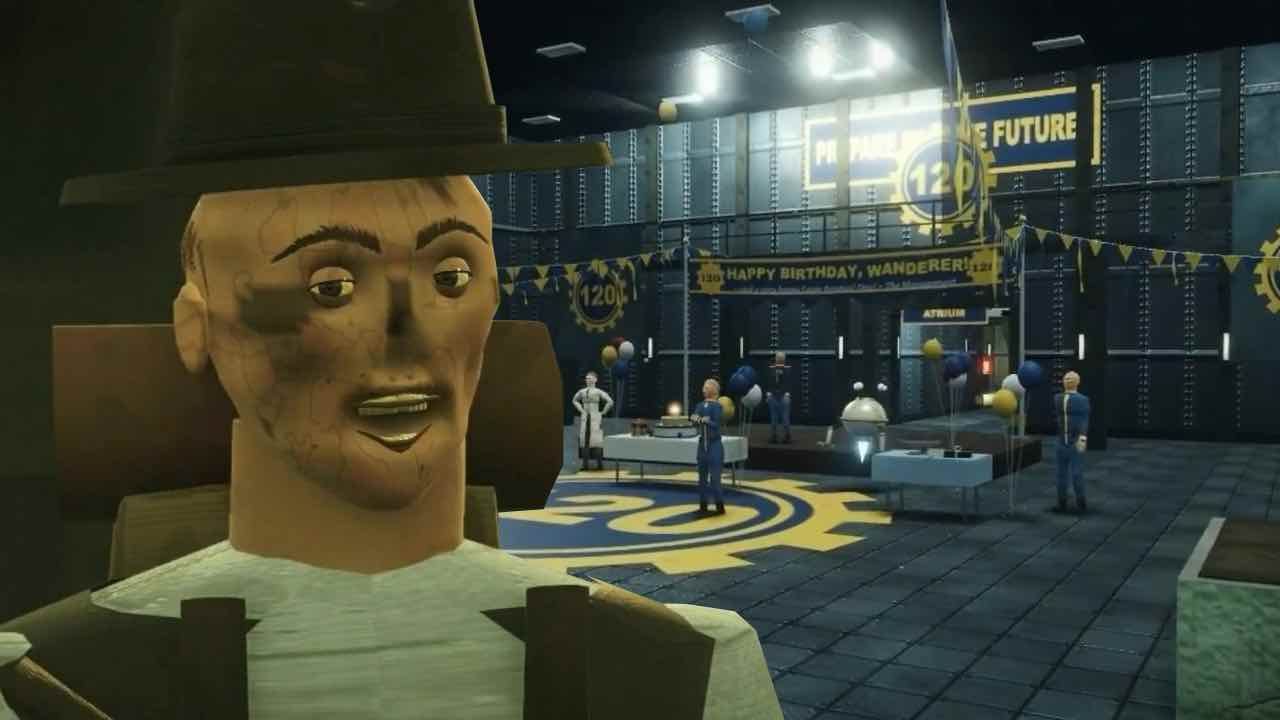
The viral Fallout: New York AI browser game is offline after its creator said ZeniMax sent a cease and desist. Here is what happened, what is confirmed, and why the case is a warning for fan projects built on major game IP.
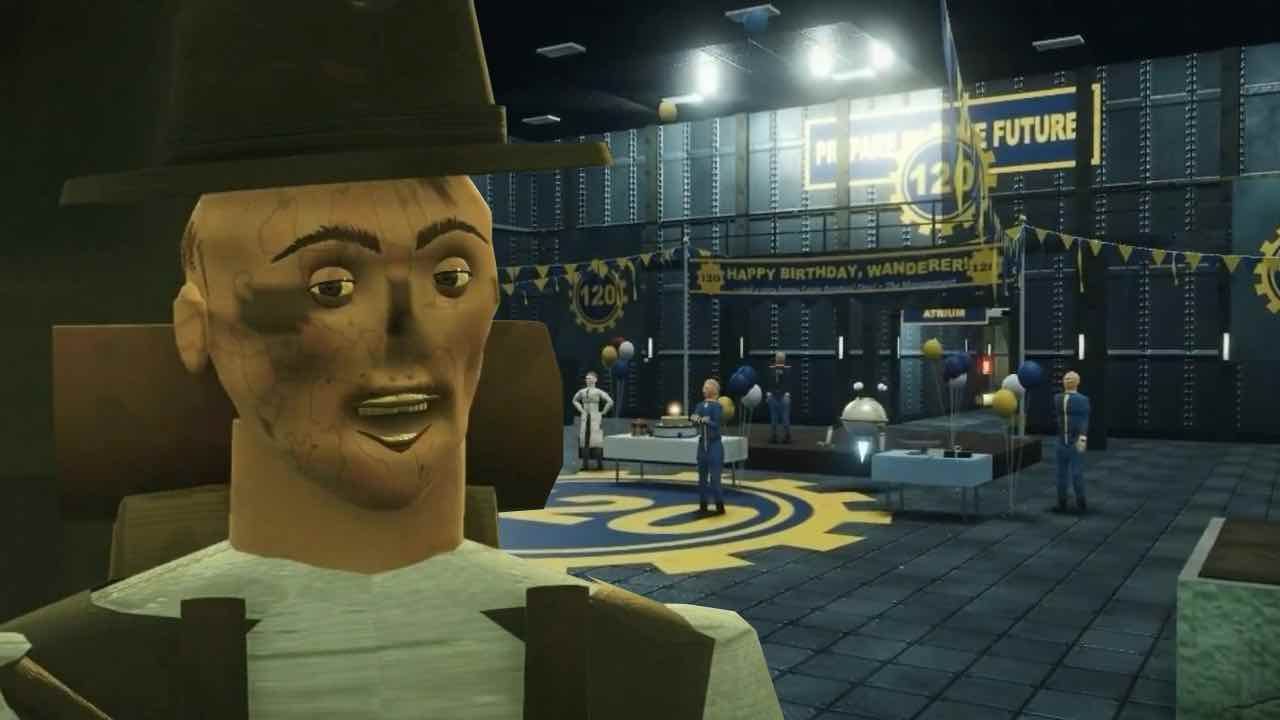
Image: frvr.com
A viral AI Fallout browser game has already hit the legal wall
The Fallout: New York AI game that spread across X this week has been taken offline after its creator said Bethesda parent company ZeniMax Media sent a cease and desist notice. The project, promoted by a self-described “AI creative” using the handle CHRIS FIRST, was presented as a playable browser game built with Claude Opus 5.5 and using Fallout’s name, V.A.T.S., Pip-Boy-style interface elements, quests, companions, and dialogue trees.
That is the concrete development at the center of the story: a fan-made, AI-generated Fallout browser game appeared, went viral, and then disappeared after an apparent legal demand from the company that owns the IP. IGN reported that CHRIS FIRST pulled the game offline after receiving the notice. Rock Paper Shotgun described the posted document as appearing to be a cease and desist from ZeniMax. Both outlets said they had asked Microsoft or Bethesda for comment, and the provided source material does not include a response from either company.
The tension is obvious and useful for anyone watching fan projects evolve in the AI era. CHRIS FIRST framed Fallout: New York as a free tech demo made out of affection for the series. The legal claim, according to the notice image described by IGN and Rock Paper Shotgun, centered on trademark infringement tied to the “fallout.nyc” domain name and the use of copyrighted material. In other words, the project’s biggest marketing advantage, looking and sounding like an unofficial Fallout game playable in a browser, is also what made it easy to challenge.
The project was marketed as a full Fallout experience, not a loose homage
The original pitch mattered. CHRIS FIRST’s viral post described Fallout: New York as “a full Fallout game you play in your browser,” built with Claude Opus 5.5. The same post claimed the game had quests, dialogue trees, V.A.T.S., a working Pip-Boy, and no texture or sound files, with buildings, weapons, faces, and sounds generated by code. IGN reported the video had reached 3.5 million views on X. GamesRadar also cited that view count and reported additional claimed scale figures for the project, including 117 unique locations, 112 characters, and 46 weapons.
FRVR reported that CHRIS FIRST claimed the project took “about five days” and involved directing Claude and “a studio of AI agents” to recreate Fallout in New York. FRVR also quoted the creator as saying the project was not merely “inspired by” Fallout but “exactly like Fallout” because New York “never had its turn.” That framing is strategically important. A creator trying to minimize legal exposure usually creates distance from the source material. Fallout: New York did the opposite in its title, domain, systems, terminology, and public sales pitch, even if no money was being charged.
CHRIS FIRST also tried to answer the predictable backlash before the notice arrived. As quoted by IGN and Rock Paper Shotgun, the creator wrote that the game was free, that they made “0 money” from it, and that they hoped Bethesda would not ask them to take it down. That may explain intent, but it does not turn an unauthorized Fallout-branded game into an authorized one. From a risk-management perspective, “free tech demo” is a weak defensive position when the entire discovery loop depends on the borrowed brand.
The notice appears to have focused on the name, the domain, and protected material
The public record available here is still limited. We have CHRIS FIRST’s post showing what they said was a legal notice, and multiple outlets reporting from that post. IGN wrote that the apparent cease and desist from ZeniMax Media Inc. pointed to trademark infringement over the “fallout.nyc” domain name as well as copyrighted material. Rock Paper Shotgun similarly reported that, if the document is what it appears to be, the domain name looked like the strand ZeniMax chose to pull in order to protect its material.
FRVR used slightly different language, saying ZeniMax and Bethesda “filed a DMCA takedown” and quoting the shared email as saying the domain included “copyrighted material produced by ZeniMax Media.” FRVR also quoted the notice’s broader trademark rationale: ZeniMax said it had an obligation as a trademark owner to monitor and enforce against unauthorized and infringing use of its trademark in a way likely to cause consumer confusion. The source material therefore contains a wording gap. IGN and Rock Paper Shotgun describe an apparent cease and desist; FRVR refers to a DMCA takedown. The consistent fact across the reports is that ZeniMax objected to the project and Fallout: New York was removed.
That distinction matters because readers should not treat this as a final court ruling or a detailed public legal precedent. There is no lawsuit in the provided material, no public Bethesda statement, and no full legal analysis from ZeniMax beyond the reported notice language. What is confirmed is narrower but still significant: a major rights holder moved quickly once an AI Fallout browser game using the Fallout name and a Fallout domain went viral.
AI generation did not lower the IP risk, it likely raised the visibility
The creator’s central technical claim was that Fallout: New York was generated through code and AI rather than assembled from traditional texture and audio files. That is interesting as a production claim, but it does not solve the brand problem. The project was called Fallout: New York, used a Fallout-related domain, and advertised Fallout-specific systems such as V.A.T.S. and the Pip-Boy. The alleged notice described by IGN and Rock Paper Shotgun did not need to prove that CHRIS FIRST copied a specific texture file in order to object to a product being presented to the public as a Fallout game.
This is where fan-project strategy changes. Older fan projects usually take years, build communities slowly, and often live inside existing modding ecosystems. An AI-made browser game can appear in days, ride a viral post, and reach millions before the creator has worked through the boring but essential questions: Who owns the name? Who owns the setting? Will the domain confuse players? Is the project using protected terminology as a feature list? Is the work being distributed as a standalone game rather than a mod?
None of the provided reports says Bethesda has changed its policy toward fan works in general. The lesson is more targeted. AI tools may accelerate prototype creation, but they also accelerate exposure. If a project’s growth plan relies on telling everyone it is a full Fallout game in a browser, it invites the rights holder to respond on trademark and copyright grounds before quality, intent, or monetization become the central discussion.
The community argument was already split before the takedown
The reaction was not a clean fight between players and lawyers. IGN reported that the viral video sparked debate, with some viewers calling it AI slop and others impressed by the gameplay. Rock Paper Shotgun described the NPC faces as distorted and undercooked. FRVR wrote that players who tried it found numerous bugs, including broken animations, hard-locking after leveling up, and player fists mutating into oversized shapes. Those descriptions are harsh, but they also show why the project spread: it was novel enough to watch, messy enough to mock, and branded strongly enough for Fallout fans to notice.
CHRIS FIRST’s response after the notice kept that conflict alive. As quoted by IGN, Rock Paper Shotgun, and GamesRadar, the creator addressed Bethesda directly and wrote, “How about you make a Fallout game instead so I don’t have to?” They also apologized to players who enjoyed it and said “the suits got involved and the fun is over.” IGN’s report included examples of social media replies that were largely unsympathetic, with commenters arguing that copying an existing IP was always going to draw a takedown and that the project lacked original mechanics.
For a strategy-minded read, the project overextended. It tried to win attention by occupying the most valuable territory on the map: the official name, recognizable systems, and a clear claim to being a browser-playable Fallout. That makes for rapid reach, but it also removes ambiguity. A smaller original wasteland RPG built with similar technology would have had a different risk profile. Fallout: New York chose maximum recognizability, and recognizability is exactly what IP owners are incentivized to police.
Fallout: London shows tolerance is possible, but not guaranteed
The most important comparison in the source material is Fallout: London. Rock Paper Shotgun pointed readers toward the large community-made mod as an example of a Fallout fan project made by humans, with its team now pursuing indie development while continuing work around DLC. FRVR also noted that Bethesda has historically been comparatively permissive with some Fallout fan usage, citing fan-made games and expansions, audio dramas, fan films, and Fallout: London, which FRVR said has been allowed to exist and is hosted on official PC storefronts.
That context cuts against the idea that this takedown proves Bethesda automatically crushes every Fallout fan effort. It also cuts against the opposite idea, that past tolerance gives every fan project safe passage. Fallout: London operates as a massive mod project associated with an existing Fallout game ecosystem. Fallout: New York was promoted as a standalone browser game using the Fallout name in its title and domain. Those are different positions on the board.
For creators, the practical guidance is blunt. If you are making a Bethesda fan project, using the official franchise name in the title or domain is a major red flag. Advertising protected series mechanics as headline features increases attention from fans and rights holders alike. Free access and lack of monetization may help the community understand your intent, but the reports around Fallout: New York show they do not prevent enforcement. If the real goal is to test AI-generated RPG systems, an original setting and original branding give the technology room to be judged on its own merits.
The open questions now sit with Bethesda, ZeniMax, and future AI fan projects
As of the provided reports, Fallout: New York is offline, CHRIS FIRST says the takedown followed a Bethesda or ZeniMax cease and desist, and the apparent notice points to the “fallout.nyc” domain and copyrighted material. There is no provided official comment from Bethesda, ZeniMax, or Microsoft explaining the company’s broader stance on AI-generated fan games. There is also no confirmed path for the project to return under a revised name or with original assets, and readers should treat any reuploads or mirrors cautiously unless the creator or rights holder says otherwise.
The broader signal is already clear enough for the next wave of fan projects. AI can compress production time from years to days, but it cannot compress the rights-clearance problem. The faster a project copies a famous game’s surface language, the faster it becomes visible to the people paid to protect that property. That is especially true for a franchise like Fallout, where the name, interface language, setting expectations, and role-playing systems carry commercial weight.
Fallout: New York may be remembered less as a playable game than as an early stress test for the AI fan-project era. The technology angle made it viral. The Fallout branding made it legible. The combination made it vulnerable. For players, the answer is simple: the AI Fallout browser game is gone for now. For creators, the lesson is harder but more useful: build the parts you want to prove, then give them a name and world you can actually defend.