
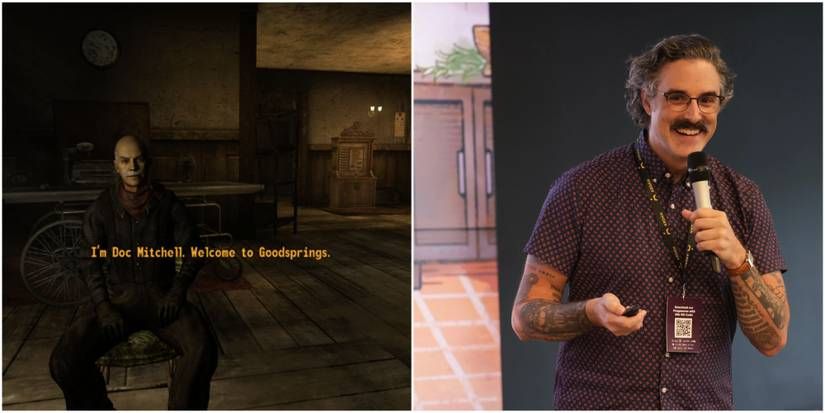

Josh Sawyer’s preferred Fallout New Vegas ending points to the RPG’s real design priority: no clean winner, only a Mojave shaped by faction power, quest consequences, and player judgment.
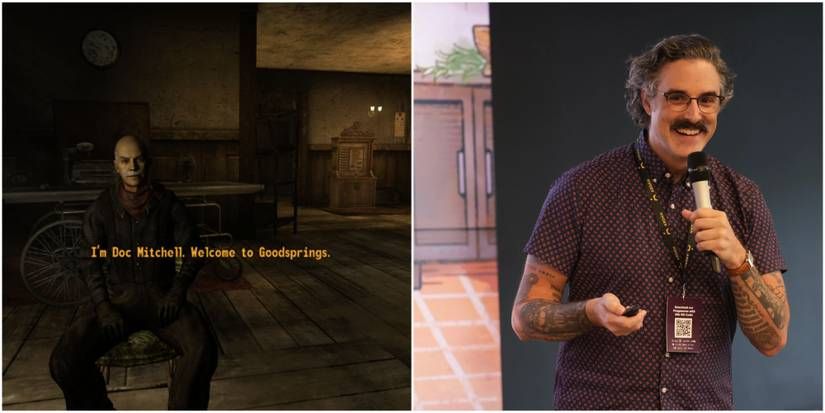
Image: thegamer.com
Josh Sawyer’s preferred ending is an argument, not a canon answer
Josh Sawyer has named his preferred outcome for the Mojave Wasteland, and the interesting part is how little it settles. According to PC Gamer’s report on a recent conversation with The Examined Game, the Fallout: New Vegas director’s optimal route leans toward an NCR victory, but only as part of a broader Courier-shaped outcome where the player has already done the work to leave the Mojave’s communities in better condition.
That distinction matters for anyone searching for the best New Vegas ending. Sawyer’s answer, as presented by PC Gamer and the YouTube listing titled “I Asked Fallout: New Vegas Director Josh Sawyer Which Faction He’d Choose,” is not a Bethesda canon ruling, an Obsidian sequel tease, or a declaration that every other finale is wrong. It is a designer talking about the outcome he personally sees as strongest for the Mojave, inside a game built to make every answer carry a cost.
The tension is familiar to New Vegas players. The New California Republic offers institutions, supply lines, laws, and a recognizable democratic structure, but the game repeatedly frames it as overextended, bureaucratic, and imperial in practice. Mr. House offers technological continuity and strategic focus, but under one man’s control. Caesar’s Legion is openly brutal. The independent route promises local autonomy, but its stability depends heavily on what kind of Courier the player has built through quests, alliances, and reputation. Sawyer’s preference lands inside that mess rather than above it.
The NCR route only works because New Vegas treats endings as accumulated quest debt
The most useful way to read Sawyer’s preferred Mojave Wasteland outcome is as a systems answer. Fallout: New Vegas does not reduce its ending to a single final button press. The final faction choice matters, but the ending slides also reflect dozens of earlier decisions, including which local groups survive, who is persuaded, who is ignored, and whether the Courier solved problems through violence, diplomacy, sabotage, or compromise.
That is why an NCR-leaning answer can still be debated. A thin NCR victory, where the Courier has left local factions alienated or destroyed, is not the same moral object as an NCR victory after the player has negotiated better conditions across the map. New Vegas uses its quest structure to make the main ending feel like the sum of a build, not only the conclusion of a plot. Your Speech investment, faction reputation, companion outcomes, and willingness to complete local quest chains all change the texture of the Mojave after Hoover Dam.
For a completionist-minded player, this is the game’s central trick. New Vegas does not ask whether the NCR is pure. It asks whether a flawed institution, constrained by the Courier’s interventions and surrounded by stronger local communities, produces a better future than the alternatives. Sawyer’s reported preference makes the most sense when viewed through that lens: the “best” Fallout New Vegas ending is less a faction logo and more a late-game state assembled from many smaller checks.
Sawyer’s answer fits the game’s suspicion of clean ideological victories
PC Gamer’s framing is important because it describes Sawyer’s answer as an optimal outcome for the Mojave rather than a simple favorite faction pick. That is consistent with how Fallout: New Vegas is constructed. The game is full of factions that can explain themselves well enough to tempt the player, then reveal the human cost of their plans when those plans meet people who actually live in the wasteland.
The NCR’s case is practical: roads, troops, currency, water policy, military organization, and a political structure that can theoretically be challenged by citizens. The game also spends enormous time showing why those systems buckle. Its officers are tired, its bureaucracy is slow, its expansion creates resentment, and many Mojave residents experience NCR order as occupation. If Sawyer prefers an NCR-shaped outcome, that preference still sits inside a design that has already cross-examined the faction.
That is a major reason New Vegas ending debates last. The game does not reward players with a frictionless “good government” slide. It makes players argue over tradeoffs: order against sovereignty, personal freedom against long-term security, stability against self-rule, institutional reform against charismatic control. Sawyer’s answer is revealing because it points toward the faction with the most repairable structure, not the one the game presents as morally spotless.
This is not a canon announcement, and treating it like one misses the point
Nothing in the provided reports turns Sawyer’s preference into official Fallout continuity. PC Gamer reports on the director’s personal optimal outcome. The YouTube source is listed as an interview-style video asking which faction Sawyer would choose. That is very different from Bethesda, Obsidian, or Microsoft announcing the canonical Fallout New Vegas ending.
That separation is especially important because Fallout canon has historically avoided pinning down every player decision when later entries do not need to. New Vegas itself is powerful because it lets the Courier become a political actor whose choices are locally specific. Turning Sawyer’s answer into a final lore decree would flatten the very design logic that makes the discussion interesting.
The Fallout Wiki page for Joshua Eric “Josh” Sawyer lists him among Fallout: New Vegas designers and writers, and also among Fallout: New Vegas musicians, while GamesRadar reported that Sawyer described his chance to direct the RPG at Obsidian as “pure luck” and something that “almost literally fell in my lap.” Those details give his view weight as a development perspective, but they do not make it a publisher statement. His answer is best read as expert commentary from one of the game’s central creators.
The best New Vegas ending debate survives because the game respects partial solutions
Fans still debate the Fallout New Vegas ending because the game refuses to make completion feel identical to salvation. Clearing quest logs can reduce suffering, preserve communities, and strengthen the Courier’s chosen route, but it does not erase the ideological problem at the center of the Mojave. Someone will control Hoover Dam. Someone will set the terms for Vegas. Someone will be protected, taxed, displaced, ignored, or absorbed.
That is where Sawyer’s preferred outcome becomes a window into New Vegas design priorities. The game is less interested in asking players to identify the righteous banner than in asking them to manage consequences across a web of imperfect systems. A high-skill, high-reputation Courier can soften the NCR’s footprint, broker better local outcomes, and prevent unnecessary destruction. A careless Courier can hand the same faction a much uglier victory.
This is also why the independent ending remains so attractive to many players. It speaks to the fantasy of refusing every major power. Yet New Vegas is careful with that fantasy. Independence can look liberating or dangerously underbuilt depending on the Courier’s actions and the player’s interpretation of Yes Man’s role after Hoover Dam. Sawyer’s reported NCR preference does not invalidate that route. It highlights the game’s deeper question: whether self-determination without durable institutions is safer than flawed institutions with the possibility of reform.
How to use Sawyer’s preference on your next Mojave run
For players returning to Fallout: New Vegas because of Sawyer’s comments, the practical takeaway is not to rush straight to the NCR finale and call the file solved. If you want to explore the kind of Mojave outcome PC Gamer says Sawyer favors, treat the run as a long-form political build. Invest in the skills that let the Courier resolve conflicts without defaulting to extermination, pay attention to faction reputation, and finish the regional questlines that determine how towns, tribes, companions, and military groups fare after the Dam.
That approach also makes the final choice more interesting. New Vegas is at its best when the player can feel the gap between the faction they are backing and the people they are trying to protect. An NCR victory after careful diplomacy reads differently from an NCR victory bought through neglect. The game’s ending slides are a progress report on the whole campaign, not a moral receipt for one late-game alliance.
Sawyer’s preferred Mojave Wasteland outcome is valuable because it gives players another serious interpretation to test, not because it ends the argument. The director’s answer points toward the NCR as the least unstable path when shaped by a responsible Courier, while the game around that answer keeps insisting that every path is conditional. That is why New Vegas remains unusually durable as an RPG: its ending debate is not a solved puzzle, it is the final exam for everything the player chose to become.