
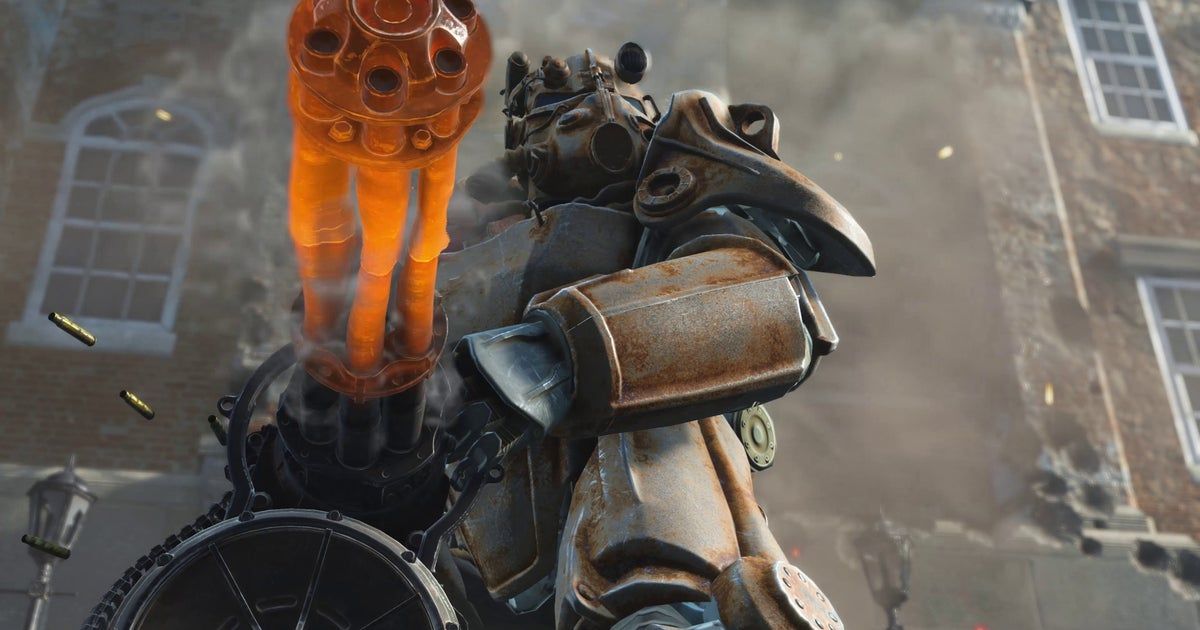

Breaking Benjamin frontman Benjamin Burnley used a concert pause to promote his Fallout 4 True First Person mod, turning an AI-assisted mod dispute into a public flashpoint for the game’s volatile mod scene.
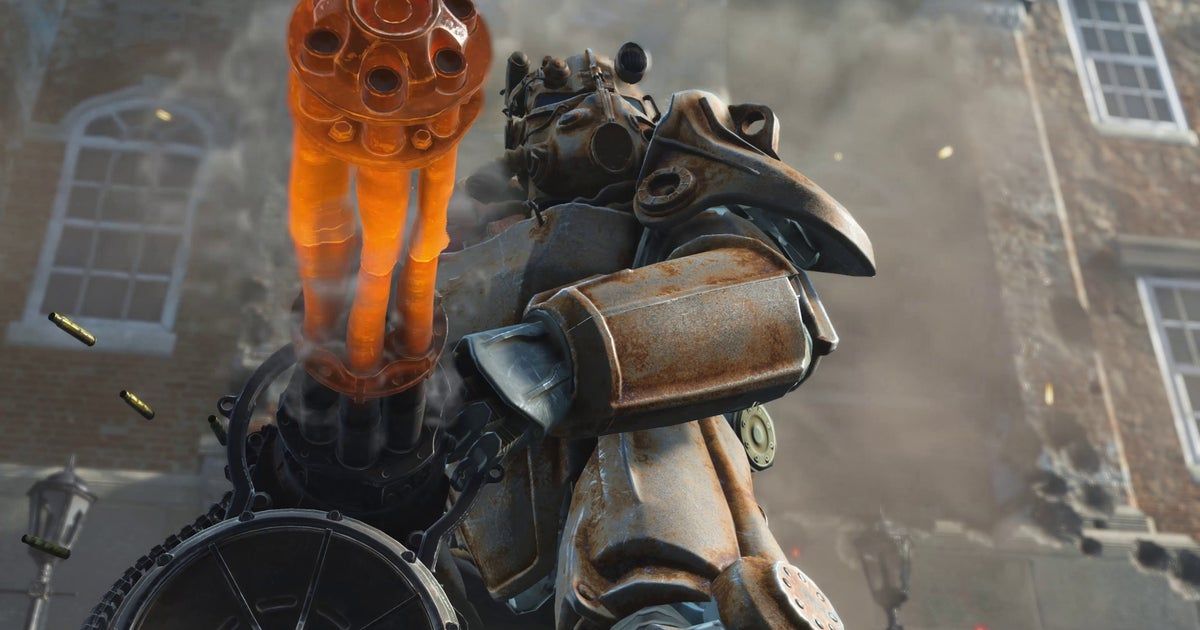
Image: eng.pressbee.net
A Fallout 4 mod feud became part of a Breaking Benjamin show
Benjamin Burnley, the lead singer and guitarist of Breaking Benjamin, spent several minutes of a recent Holmdel, New Jersey concert asking the audience to download his Fallout 4 mod and help him beat a rival modder’s download numbers. The moment was captured by Reddit user im_all_ears and has since been reported by Rock Paper Shotgun, IGN, PC Gamer, TheGamer, and shared across gaming forums.
The concrete facts are strange enough without embellishment. During a pause between songs, Burnley told the crowd, “I am an amateur modder,” said he makes mods for Skyrim and Fallout 4, and described his new Fallout 4 project as an F4SE plugin and native DLL that keeps the player in first person during situations where the game normally pulls back or changes perspective. IGN reported that production put the mod name on the big screen as “True First Person Mod” by killemloud, Burnley’s Nexus Mods username.
The tension comes from why Burnley said he was promoting it there. In the concert video quoted by multiple outlets, he said another modder in the community had been “really mean” to him, had called his mod bad, and had accused him of not knowing what he was doing. Burnley then asked the audience to download the mod so he could “destroy” that unnamed person’s download lead. According to Rock Paper Shotgun, one person in the audience eventually shouted, “Play some music!”
That makes this more than celebrity trivia. The Breaking Benjamin Fallout 4 moment is a public example of how quickly modding disputes can spill beyond Discords, Nexus comment threads, and Reddit replies. A technical project about camera perspective became a live marketing campaign, a grievance broadcast, and a stress test for a community that already treats authorship, credit, tooling, and perceived competence as high-stakes territory.
What True First Person is confirmed to do
Based on Burnley’s own description from the stage, as quoted by Rock Paper Shotgun and IGN, True First Person is a Fallout 4 mod built as an F4SE plugin and native DLL. F4SE refers to the Fallout 4 Script Extender, a widely used PC modding framework that lets mods hook into behavior beyond the base game’s standard mod tools. Burnley said the mod keeps players in first person, lets them see their character’s body when looking down, and preserves first person view while entering workshop interactions. IGN also quoted him saying third person still works.
TheGamer described the mod’s goal similarly, reporting that it improves Fallout 4’s first-person mode by letting players see their body and by keeping the camera in first person during activities such as using a workstation or entering power armor. The article also noted that other mods have attempted similar body-awareness or first-person improvements, which is important context. In Fallout 4 modding, a project is rarely judged only on its idea. Compatibility, animation edge cases, script safety, update cadence, and how gracefully a mod coexists with other popular frameworks often matter as much as the feature pitch.
There are also hard technical implications in Burnley’s own wording. A native DLL plugin is not the same category of risk as a texture replacer or a simple plugin file. It can be powerful, but it can also be sensitive to game updates, script extender versions, load order conflicts, and engine-level behavior. None of the provided source material independently tests True First Person, so there is no basis here to recommend it as stable or unstable. The verified point is narrower: Burnley is promoting a Fallout 4 first-person camera mod that relies on F4SE, and the public dispute is tied to criticism of that mod’s quality.
For players, that matters practically. If you are curious because of the viral clip, treat it like any other native-plugin mod. Read the Nexus description, requirements, changelog, bug reports, and compatibility notes before installing. If you run a heavily modded Fallout 4 setup, back up saves and avoid adding experimental camera or animation plugins mid-playthrough without checking user reports first.
The AI-assisted part is less clear than the feud
The phrase “Fallout 4 AI assisted mod” is now attached to this story largely because Rock Paper Shotgun’s headline describes Burnley’s first-person mod as AI-assisted. The supplied reporting, however, does not include a detailed explanation of what AI assistance means in this case, what tool was allegedly used, which parts of the mod were assisted, or whether Nexus Mods has labeled it that way.
That distinction is important. What is verified by the concert video and outlet reports is that Burnley publicly described himself as an amateur modder, identified the project as an F4SE native plugin, promoted True First Person from the stage, and said he had been criticized by another modder. What remains unverified from the available source text is the exact role of AI in the mod’s creation and whether the dispute was specifically about AI assistance, code quality, originality, community status, or some mixture of those.
This is where Fallout 4 modding drama can become messy fast. AI-assisted work is a live-wire topic in creative and technical communities because it raises overlapping concerns: whether code was generated safely, whether assets or writing were trained on or derived from other people’s work, whether attribution is sufficient, and whether novice creators are using tools they cannot fully audit. The sources provided for this piece do not establish that any of those issues apply to True First Person. They establish that at least one outlet framed the mod as AI-assisted, while the on-stage rant itself centered on personal criticism and download competition.
So the responsible reading is cautious. The story should not be flattened into “AI modder gets attacked” or “celebrity modder defeats gatekeepers.” The confirmed story is narrower and more useful: a public figure promoted a Fallout 4 mod from a concert stage after a dispute with an unnamed community member, and the AI-assisted label around the mod remains underexplained in the available reporting.
Download numbers became the scoreboard
Burnley framed the dispute in terms of downloads, which is why the concert rant landed so sharply in the modding community. He reportedly told the audience he would keep announcing the mod every night until it reached a million downloads, according to Rock Paper Shotgun. That is an absurdly high target for a niche Fallout 4 camera plugin, but it also reveals the logic of the moment: visibility became the weapon.
The numbers reported by outlets show how quickly a viral clip can distort the normal pace of a mod release. Rock Paper Shotgun reported that True First Person had just over 2,300 unique downloads since appearing on Nexus Mods. TheGamer later reported that the mod had 46,704 views and 3,160 downloads, and said it had been uploaded on September 1. Those figures are not in conflict so much as snapshots taken at different times while attention was accelerating.
TheGamer also reported that the mod’s Nexus posts section appeared to have been taken down after the clip spread. The outlet was careful about attribution, saying it looked like either Burnley or Nexus Mods staff had shut down comments. That has not been confirmed in the provided material, and no stated reason from Nexus Mods or Burnley is included. TheGamer’s observation still fits the broader pattern: once a mod page becomes the destination for a viral fandom event, its comment section can stop functioning as technical support and become a reaction feed.
In normal mod ecosystems, download counts are a poor proxy for quality. They reflect timing, dependencies, search placement, compatibility with popular mod lists, endorsement culture, and community trust. In this case, they also reflect a famous musician turning a concert audience into a temporary traffic engine. If True First Person’s numbers rise, that will prove the promo worked. It will not, by itself, settle the modder controversy around its implementation, its use of AI assistance if any, or its long-term place in Fallout 4 load orders.
Fallout 4’s mod scene rewards innovation and punishes ambiguity
Fallout 4 remains unusually exposed to this kind of flare-up because its mod scene is old, technically layered, and still active enough for new tools to matter. Players have spent years building load orders around script extenders, animation frameworks, settlement overhauls, weapon packs, survival tweaks, UI replacements, and camera changes. A mod that touches perspective may sound cosmetic, but it sits near the player’s constant interface with the game. If it works cleanly, it can reshape immersion. If it conflicts, it can be felt every minute.
That creates a community culture with two competing instincts. One instinct is generous: modding depends on amateurs experimenting, learning in public, and improving through iteration. Burnley made that argument from the stage when IGN quoted him saying that when someone posts a mod, they are supposed to be able to “grow and learn, and make it better.” The other instinct is defensive: experienced mod users have seen fragile plugins, abandoned projects, incompatibilities, copied work, and authors who overpromise. Harsh criticism often comes from that defensive posture, though it can easily tip into gatekeeping or personal abuse.
The AI label, even without full documentation in the available reports, adds another pressure point. AI-assisted code or assets can be viewed as a learning aid, a shortcut, a contamination risk, or an authorship problem depending on the community and the details. In a native DLL mod, the obvious player question is not philosophical alone. It is whether the author understands the code well enough to maintain it when Fallout 4, F4SE, or related dependencies change.
That is the strategic read on this Fallout 4 modder controversy. The concert rant is noisy, but the underlying issue is trust. Mod users decide what to install by weighing author reputation, transparency, responsiveness, technical competence, and community validation. Burnley’s celebrity gives the mod reach. It does not automatically grant the kind of modding credibility that usually builds through patches, bug triage, and clean compatibility behavior over time.
The unanswered questions are the story now
Several key points remain unconfirmed from the provided source material. The unnamed modder has not been identified in the reports, and Burnley did not name them in the quoted concert remarks. The specific criticism that started the feud has not been independently shown here beyond Burnley’s description of it. The extent of AI assistance in True First Person is not documented in the supplied article text beyond Rock Paper Shotgun’s headline wording. The status and reason for the apparent Nexus comment-section closure are also unclear.
Those gaps should shape how readers approach the story. It is fair to report that Burnley used a Breaking Benjamin concert to promote True First Person and rally downloads. It is fair to report that he characterized the situation as bullying by another modder. It is fair to report that outlets have described the project as an AI-assisted Fallout 4 mod. It is not fair, based only on these sources, to declare who is right in the feud or to make technical claims about the mod’s safety, originality, or quality.
For Fallout 4 players, the practical path is simple: curiosity is fine, but treat viral attention as separate from load-order trust. Check the Nexus page directly, confirm requirements such as F4SE, read recent reports rather than old comments if the posts section changes again, and wait for update notes if you rely on a stable setup. For mod authors, the lesson is harsher. Once a dispute becomes content, the original technical issue can vanish under audience tribalism.
The Breaking Benjamin Fallout 4 clip will circulate because it is funny and surreal: a rock frontman stopping a show to talk about a first-person camera plugin. The longer tail may be more serious. If AI-assisted tools keep entering veteran mod scenes, authors will need clearer disclosure and stronger support practices, while communities will need to separate hard technical critique from pile-ons. True First Person is now a mod, a meme, and a test case for how much volatility an old Bethesda modding scene can absorb when its internal arguments hit the stage.