
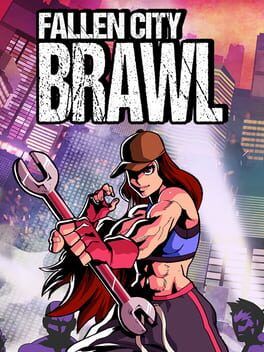

Fallen City Brawl launches digitally on Nintendo Switch on October 28, 2026, with a new trailer, local co-op, console pricing, and physical editions planned for November.
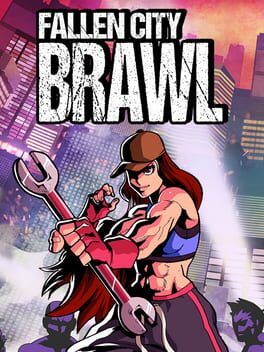
Image: IGDB
Store links: Fallen City Brawl on Steam
Fallen City Brawl finally has a Switch date
The Fallen City Brawl Switch release date is now confirmed for October 28, 2026, ending a long wait for a Nintendo Switch version first announced years ago. Nintendo Everything reports that Eastasiasoft and Fallen City Studio have locked in the date alongside a new trailer, while Eastasiasoft’s announcement through Games Press confirms the same day for the digital console launch.
The immediate tension is timing. Fallen City Brawl was announced for Nintendo Switch back in 2021, according to Nintendo Everything, so this is not a routine late-cycle eShop reveal. It is a retro beat em up finally moving from long-promised status to an actual release window with pricing, platform coverage, and physical edition plans attached.
Eastasiasoft says the digital launch covers Nintendo Switch, PS4, PS5, Xbox One, Xbox Series X|S, and Xbox on PC on October 28. The publisher lists console pricing at US$14.99 and €14.99, with a 10% launch discount available for a limited time when the game releases. For Switch players looking for a new couch co-op brawler before the holiday release crush, that puts Fallen City Brawl in the impulse-friendly tier, assuming the port holds up.
The new trailer marks the game’s move from promise to product
Nintendo Everything frames the date reveal around a new Fallen City Brawl trailer, and SelectaPlay’s earlier physical-edition announcement also directed players to a trailer for the game. The source material does not provide enough detail to fairly break down the trailer shot by shot, so the safest read is that the trailer functions as a release beat: the game now has a firm digital date and a renewed push toward console players.
That distinction matters for expectations. A trailer can sell impact, sprite scale, and tempo, but beat ’em ups live or die on contact rules, crowd control, recovery, cancel windows, and how readable threats remain when multiple enemies and players share the screen. Eastasiasoft’s description promises “heavy-hitting combos,” counters, special moves, and screen-filling RIOT Super attacks. Those are the hooks to watch in the footage, but the announcement does not confirm frame data, input latency, performance targets, or Switch-specific technical details.
For players coming from Streets of Rage 4, River City Girls, Final Vendetta, or arcade collections, the practical question is whether Fallen City Brawl has enough defensive and offensive structure to stay interesting after the first credit. The publisher is clearly positioning it as approachable for newcomers while offering challenge for genre veterans, but that balance will have to be proven through hands-on play.
A retro belt-scroller with systems to learn
Eastasiasoft describes Fallen City Brawl as a retro “belt-scroller” inspired by arcade beat ’em ups from the late 1980s and early 1990s. In plain terms, that means side-scrolling brawling across lanes, enemy waves, pickups, and stage-by-stage escalation rather than a one-on-one fighting game structure. The game’s confirmed setup includes seven stages, four playable characters, solo play, and local co-op.
The combat feature list is more interesting than the nostalgia pitch. The publisher cites destructive combos, counters, special moves, and RIOT Supers, with weapons including pipes, bats, knives, oil drums, and hammers. From a fighting game player’s angle, counters are the detail to track. A brawler with a reliable defensive answer can shift from mash-heavy crowd clearing into a spacing and timing game, especially if enemy armor, wake-up behavior, or boss patterns demand actual reactions.
That does not mean Fallen City Brawl should be treated like a competitive fighter. The announcement does not claim versus play, online matchmaking, rollback netcode, training tools, or character-specific move lists. The appeal is closer to a cooperative arcade run where clean positioning, resource timing, and character choice can separate a messy clear from a controlled one.
Couch co-op is the Switch pitch, with one important caveat
The strongest fit here is local co-op. Eastasiasoft’s materials say Fallen City Brawl is playable solo or with friends in local co-op, and Nintendo Switch remains the obvious home for that kind of pick-up-and-play session. A Nintendo Switch brawler succeeds when it can get two players moving quickly, make enemy priority readable on a shared screen, and let less technical players contribute without flattening the skill ceiling for the stronger player.
The caveat is that the source material does not state an exact local player count. The game has four playable characters, and the story follows four strangers, but that is not the same as confirmation of four-player co-op on Switch. Until Eastasiasoft, the eShop listing, or a platform holder page specifies the number of supported players, buyers should treat “local co-op” as confirmed and the exact couch capacity as unannounced.
That is especially relevant for households buying around multiplayer plans. If you want a two-player brawler, the announcement supports that expectation. If you are planning a four-controller night, wait for the eShop listing or publisher clarification before building the purchase around it.
Digital launch first, physical editions after that
The rollout has two tracks. Eastasiasoft’s October announcement says the digital release arrives October 28 and that physical editions are expected to ship in November 2026, with further details to be shared through social media. Earlier in the year, a Games Press release from SelectaPlay announced physical PlayStation 5 and Nintendo Switch editions for fall 2026, including a Standard Edition and a Limited Special Edition.
That earlier SelectaPlay announcement listed the Standard Edition as a full game on disc or cartridge with character artwork. It also described a Limited Special Edition containing a collector’s box, physical copy, iron-on patch, soundtrack CD digipack, lenticular arcade joystick keychain, and character sticker pack. The newer Eastasiasoft release does not repeat all of those edition contents, so the safest reading is that physical editions are planned, November is the current shipping target, and collectors should wait for the next official physical-order update before assuming every previously listed item, region, and retailer detail is final.
There is also a publisher split worth noting. Eastasiasoft says Fallen City Brawl was originally developed by Fallen City Studio, headed by creator Mike Wells, in close cooperation with Eastasiasoft Limited, and that Eastasiasoft is publishing the console ports worldwide. SelectaPlay’s earlier release names SelectaPlay as publisher for the physical push. Those statements are not necessarily contradictory, but they describe different parts of the release plan. Digital buyers should follow Eastasiasoft’s October 28 details. Physical buyers should keep an eye on both the Eastasiasoft update trail and SelectaPlay’s retail announcements.
Who should be watching this retro beat em up
Fallen City Brawl is best positioned for players who want a fresh couch co-op brawler with arcade pacing rather than a sprawling action RPG. The confirmed structure points to a compact, replayable format: seven stages, four characters, weapons, animated cutscenes, large pixel-art sprites, animated backgrounds, and a soundtrack credited to Daniel Lindholm. Eastasiasoft’s announcement also names locations such as city streets, subways, and snowfields, suggesting visual variety across the run.
The price helps. At US$14.99 or €14.99 before the limited 10% launch discount, Fallen City Brawl is entering a crowded retro-action lane without asking for premium-release trust. That said, Switch buyers should still wait for the eShop page if they need hard answers on download size, supported controllers, player count, handheld performance, or language options. None of those details are included in the provided announcements.
For genre newcomers, the publisher’s pitch of accessible play with combos and supers sounds like a reasonable entry point. For veterans, the real test will be whether counters, specials, and RIOT Supers create meaningful routing under pressure or simply decorate standard lane combat. The October 28 date gives the Switch version a clear opening. Now the unanswered question is whether Fallen City Brawl can convert its long-delayed arrival into the kind of reliable local co-op game people keep installed for one more run.