
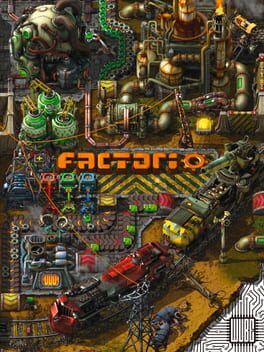

Space Age, 4K factories, mouse support and a free upgrade make Factorio’s Switch 2 jump a huge deal for factory-sim fans.
Factorio has always felt a bit like it was secretly designed for a mouse, a spreadsheet brain and a Sunday lost to logistics. Bringing that experience to consoles has been tricky, but Factorio – Nintendo Switch 2 Edition looks like the moment Wube’s factory finally clicks on a handheld. With a free upgrade for existing Switch owners and the massive Space Age expansion arriving day and date, this isn’t just a performance patch. It is quietly shaping up to be the definitive console version for factory-sim diehards.
A free upgrade that actually respects your time
The headline move is simple: if you already own Factorio on the original Nintendo Switch, the Switch 2 Edition is a free upgrade. No upgrade fee, no “next-gen pack,” no separate SKU to buy again. On a platform where some publishers are happy to re-sell enhanced ports, Wube’s approach is refreshingly straightforward.
Practically, that means long-time Switch players can bring their saves and muscle memory with them to Nintendo’s new hardware and immediately benefit from the visual and performance jump. Since the Switch version has already built up a loyal audience willing to tolerate compromises in resolution and factory scale, the promise of “same game, much better conditions” with no extra charge is a strong goodwill play.
It also future-proofs your time investment. Factorio saves are notorious for clocking in at hundreds of hours. Knowing that the hundreds more you plan to dump into Space Age will be spent on the best-performing Nintendo hardware without re-buying the base game makes it far easier to justify another megaproject.
1080p handheld and 4K docked factories
The original Switch port of Factorio is a minor miracle, but every player can point to the trade-offs: lower resolution, aggressive zooming, and technical ceilings that forced you to design smaller, more conservative layouts than on PC. Switch 2 Edition directly targets those pain points.
Wube and the eShop listing are aiming for 1080p in handheld mode and up to 2160p when docked. On a dense factory like Factorio’s, resolution matters more than almost any other visual metric. High-definition sprites and cleaner text mean you can actually read your bus lanes, belt directions and circuit conditions without zooming in and out constantly. It also makes blueprints far more legible on the couch, where shared screens and suboptimal viewing angles used to make small details disappear.
The upgraded hardware does more than sharpen pixels. Faster loading cuts down on the wait when you are hopping between megabases, and the CPU and memory headroom gives Wube room to allow significantly larger factory bases than the original Switch could comfortably handle. The studio is careful not to promise infinite-scale builds on a handheld, but the messaging around “larger factories” is clearly aimed at players who bumped into chunk limits and slowdowns on late-game saves.
Variable Refresh Rate support is another subtle but important bullet point. Factorio can be wildly smooth one moment and suddenly chug when the simulation is crunching trains, bots and biters at once. VRR helps hide those hitches by aligning output to the display’s refresh in real time, which translates to a more consistent, less distracting feel as your base grows into a monster.
Handheld controls tuned for long sessions
Control has always been the biggest question hanging over Factorio on anything that is not a PC. The first Switch version did an admirable job translating a mouse-centric interface into radial menus, shortcuts and smart cursor snapping, but anyone used to the precision of a mouse could feel the friction.
Switch 2 Edition leans into that by fully embracing mouse support via Joy-Con 2. Being able to plug in or wirelessly pair a pointer transforms how you interact with the game. Dragging blueprints across a screen full of belts, wiring up combinators or finessing train signals all become far closer to the PC experience. For factory planners who live in spreadsheets and blueprints, this is huge.
That doesn’t mean touchscreen and controller play are forgotten. Handheld sessions benefit from the sharper 1080p image, which makes cursor placement more forgiving when using sticks. UI text, icons and ghost buildings are easier to read at arm’s length, so you are less reliant on constant zoom corrections.
Wube has already shown on the first Switch that it is willing to iterate interface ideas to make console building feel less clumsy. Expect more refined radial menus, shortcut combinations mapped around the new Joy-Con layout and quality-of-life tweaks that acknowledge how people actually use a portable. Quick save and load, construction planner access and blueprint library navigation all stand to gain from the increased screen clarity and input flexibility.
The net result is a handheld version that encourages long sessions. You can jump in on the bus to tweak a smelting block using sticks, then dock at home, snap on a mouse and rework an entire logistics backbone without feeling like you are fighting the controls.
Space Age turns Switch 2 into an interplanetary factory platform
Factorio – Nintendo Switch 2 Edition is not launching alone. The Switch 2 version of the Space Age expansion releases the same day, sold separately but completely in step with other platforms.
Space Age is not a small content pack. It is a structural expansion that pushes Factorio beyond a single planet into multi-planet logistics. Instead of one sprawling map, you are orchestrating interplanetary supply chains, balancing orbital launches, surface-level extraction and off-world manufacturing. For console players, this is the first time the game’s design truly stretches beyond “big factory on one world” and into the kind of grand industrial ballet PC fans have been dreaming about since rockets first hit space.
On weaker hardware, that level of complexity would be terrifying. Multiple planets, parallel production lines and more entities per save put stress on every part of the simulation. Switch 2’s added horsepower is what makes a console version of Space Age plausible. Bigger factories, more trains and denser logistics networks sit much closer to the PC baseline here than they ever could on the original Switch.
Crucially, launching Space Age on Switch 2 at the same time as other versions keeps the platform from feeling like a second-class citizen. Console players get to participate in day-one discoveries, early meta builds and community theorycrafting around interplanetary layouts instead of waiting months for ports to catch up.
Why Switch 2 Edition could be the definitive console version
Put all of those threads together and a picture emerges of a console port that finally respects what Factorio is at its core. The free upgrade removes financial friction. The resolution bump, VRR support and faster loading address the technical compromises that made the original Switch feel like the portable compromise version. Mouse support and refined controls tackle the input problem that has dogged every non-PC edition. Space Age, launching alongside the Switch 2 version, ensures Nintendo’s audience gets the full, current design instead of a frozen snapshot.
That combination is particularly important for factory-sim diehards. Games in this genre reward long-term planning, iteration and learning the quirks of a particular platform. If a version feels compromised, the community tends to default to PC and treat everything else as a curiosity. Factorio – Nintendo Switch 2 Edition is positioned to break that pattern.
It will never fully replace keyboard-and-mouse Factorio for the most dedicated blueprint engineers, but it no longer looks like a side-grade. Instead it looks like a serious, well-supported platform for deep, multi-hundred-hour saves that you can carry with you. With Space Age on board and the hardware ceilings pushed far higher, Switch 2 might finally be the console where factory-sim fans do not feel like they are sacrificing their dream builds just to play on the couch.