
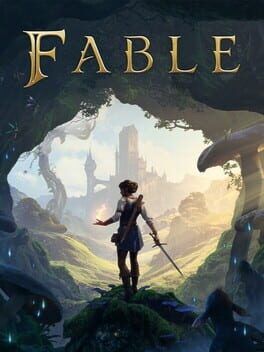
Playground Games says Fable’s long development was protected because Xbox sees the RPG as vital to its identity. That patience says plenty about Microsoft’s first-party priorities.
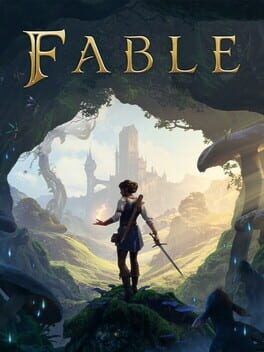
Image: IGDB
Store links: Fable on Steam
Playground says Fable’s long runway came from Xbox itself
Fable director Ralph Fulton says Playground Games’ reboot survived an unusually long and protected development cycle because people inside Xbox view the series as “vital to the DNA of the platform.” That line, given by Fulton in an interview with The Guardian and reported by Eurogamer, GameSpot and IGN, is the strongest development update the project has had in months because it explains the strategic patience behind one of Microsoft’s longest-running first-party bets.
Fulton’s full point was larger than internal nostalgia. “I genuinely think Fable is an important game,” he told The Guardian, according to Eurogamer. “What has protected us over a long development cycle is that so many people within Xbox view Fable as vital to the DNA of the platform. I would go a step further and say it’s important to video games as a whole. It offers a combination of elements that simply doesn’t exist anywhere else.”
That is an unusually direct framing for a first-party project that has been public since 2020 and, according to Eurogamer, reportedly began actual development in 2016. IGN reports that early work on building the Fable team began in 2017, the year after Microsoft closed Lionhead Studios, the original Fable developer. Either way, the picture is clear: this Fable reboot has been protected across most of a decade, through a changing Xbox leadership structure, acquisitions, layoffs, canceled projects and a first-party strategy that now stretches far beyond traditional console exclusivity.
Fable is being treated like an identity asset, not a normal production line item
The useful read on Fulton’s comment is that Fable is being managed as part of Xbox’s brand memory. In portfolio terms, that puts it closer to names like Halo, Forza and Gears of War than to newer experiments that must prove themselves before they earn another round of investment. IGN makes that comparison explicitly, arguing that Fable remains one of Xbox’s few core brands still central to the platform.
That status matters because Fable has not produced a mainline release since Fable 3 in 2010, as GameSpot notes. Microsoft also closed Lionhead in 2016, leaving the series dormant before Playground Games, then known for Forza Horizon, became attached to the reboot. The result is a project carrying two different burdens at once: it has to revive a beloved but long-quiet RPG, and it has to justify why a racing specialist was given the job of rebuilding one of Xbox’s most distinctive fantasy series.
Fulton’s remarks suggest Microsoft has been willing to absorb that risk because the franchise solves a specific gap in the Xbox first party games lineup. Fable has historically stood apart through British humor, moral choice, fairy-tale exaggeration and a refusal to play fantasy straight. That combination is precisely the kind of differentiator platform holders like to own. A Forza or Halo sequel can reinforce Xbox’s known strengths, but a successful Fable Playground Games reboot would give Microsoft a first-party RPG with a tone that is hard to confuse with Bethesda’s worlds, Obsidian’s systems-heavy writing or the broader action-adventure market.
The protected development cycle looks different beside Xbox cuts
The tension is that Fable’s protection has happened while other Microsoft gaming projects and studios did not receive the same runway. GameSpot notes that during Fable’s development period, Xbox shuttered studios, canceled games and laid off staff. It specifically cites Microsoft cuts involving 1,600 jobs with another 1,600 layoffs still to come, as well as the cancellation of the Perfect Dark reboot and the closure of its developer.
IGN gives the broader backdrop: Microsoft cut 1,900 jobs in January 2024, let go at least 650 more staff later that year, closed Arkane Austin, and in another wave saw 9,000 staff depart Microsoft as the company pivoted toward AI spending. IGN also reports that The Initiative was wiped out, Everwild at Rare was ended after more than a decade, and this year’s Xbox layoffs are expected to hit 3,200 workers. Those figures and examples come from IGN’s reporting, and they make Fulton’s “protected” description land less like a throwaway and more like a statement about internal hierarchy.
There is no sourced claim here that Fable was immune from all hardship or that every team member avoided cuts. The confirmed claim is narrower: Fulton says the project itself was protected over a long development cycle because many inside Xbox consider Fable essential to the platform’s identity. That distinction matters. The story is not that Microsoft became patient across the board. The story is that Microsoft appears to have reserved patience for projects it believes can define the platform after years of first-party turbulence.
Playground’s challenge is also organizational
GameSpot reports that Microsoft acquired Playground Games in 2018, after the studio had been known for Forza Horizon. Fable is Playground’s first non-Forza game, and GameSpot says the studio created a second internal team to work on it. Fulton described that process bluntly: “Building a team from scratch is the hardest thing you can do in video games.”
That is a key part of the Fable development update because it explains why the reboot has taken so long without reducing the delay to a single production problem. Playground was not simply iterating on an established RPG department. It was building a new team inside a studio famous for open-world racing, taking over a dormant fantasy franchise from a closed developer, and doing so during a period when Xbox’s first-party map was being redrawn by acquisitions and restructuring.
For a strategy-minded reader, this is where Microsoft’s patience starts to resemble a long-game investment rather than passive tolerance. The Forza Horizon team gave Xbox a proven open-world technology and production culture, but Fable asks for different muscles: quest structure, dialogue cadence, role-playing consequence, performance capture, comedic timing and a fantasy world that reacts to player identity. Those are not minor balance tweaks. They are genre fundamentals. Fulton’s comments imply Xbox accepted that ramp-up cost because the franchise was valuable enough to protect through it.
The reboot’s Xbox identity is complicated by PlayStation
Eurogamer reports that Fable is coming to PC, PS5 and Xbox Series X/S, and states that this will be the first Fable game to launch on PlayStation. GameSpot’s article also lists PC, PS5 and Xbox Series X/S as platforms. That creates an obvious tension with the “Fable Xbox” framing: Microsoft is presenting Fable as part of Xbox’s DNA while also bringing it to PlayStation.
Those two ideas are not necessarily contradictory under Microsoft’s current publishing direction, but they do change the old console-war reading of a first-party RPG. Fable can remain an Xbox identity asset even if Xbox treats “platform” less as a single console box and more as an ecosystem spanning console, PC and selected third-party hardware. The sources do not provide pricing, Game Pass details, PC specifications or performance targets, so players should not assume any of those pieces yet.
The practical takeaway is simpler. If you are following the Fable reboot for availability, the reported platform list now includes Xbox Series X/S, PC and PS5. If you are following it as a signal of Microsoft’s first-party priorities, the PlayStation launch does not erase the internal language Fulton used. It does, however, show that Xbox’s definition of a core franchise is no longer tied as tightly to permanent exclusivity as it once was.
Tone, ending and release timing are now the pressure points
The Guardian interview, as reported by Eurogamer, also points to the kind of Fable Playground Games is trying to deliver. Fulton referenced a cast of British comedic talent including Richard Ayoade from The IT Crowd and Natasia Demetriou from What We Do in the Shadows. He said Ayoade “virtually improvised a new script” for his scenes, while Demetriou brought a level of British swearing that surprised the team but was kept because Playground thought it worked.
Fulton also said Playground invested heavily in the finale despite completion-rate metrics showing that many players never finish large games. Eurogamer quotes him saying it is easy to see industry data where all players start a game but only 25 percent finish and then decide not to invest heavily in the ending. Fulton said Playground “relentlessly pursued quality” there, describing a final choice with personal cost.
That detail matters because it tells players what Playground believes has to survive the reboot process. Fable cannot rely only on recognition after such a long absence. It needs authored comic texture, choices that feel personal and a finale strong enough to reward commitment. Those are design promises rather than reviewable facts at this stage, but they are the clearest indicators of the studio’s priorities.
What is confirmed, and what remains unanswered
The release timing is the one area where the available source material needs careful handling. Eurogamer reports that Fable is now set for release in 2027 and also says it arrives on 23rd February for PC, PS5 and Xbox Series X/S. GameSpot says the reboot was originally scheduled for this year but was delayed to February 2027. Some attached page metadata in the source material lists other dates, but the article reporting points to February 2027. Based on the supplied sources, the safest reading is that Fable is currently expected in February 2027, with Eurogamer identifying 23rd February.
The unanswered questions are substantial. The sources do not confirm price, editions, PC requirements, console performance modes, Game Pass availability, save-transfer features, upgrade paths or the exact scope of the RPG systems. They also do not settle how much of Fable’s original morality, property, economy or world-simulation DNA has carried into Playground’s version.
What the sources do establish is enough to read Microsoft’s posture. Fable has lasted because Xbox sees it as strategically valuable, not because decade-long development has become normal. In a period when other Xbox first party games and studios have been cut loose, Playground’s RPG has been treated as a protected piece of the platform’s identity. That raises expectations as much as it explains patience. When Fable finally arrives, it will be judged as a game, but it will also be judged as proof that Xbox’s longest bets can still convert institutional memory into something players want to finish.