
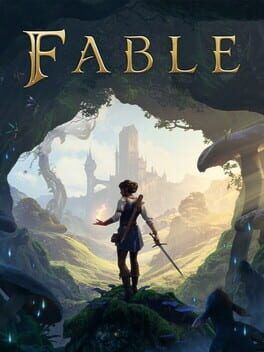

Xbox and Playground’s extended Fable demo shows Bowerstone, Humphry the Golden’s quest, blended combat, reputation systems, and the reboot’s clearest answer yet to fan concerns.
Image: IGDB
Store links: Fable on Steam
Fable finally shows the shape of its RPG loop
Xbox has released an extended 18-minute Fable gameplay demonstration from Gamescom 2026, giving the clearest look yet at how Playground Games’ reboot is trying to rebuild Albion around quests, social consequences, combat, and domestic life. According to Video Games Chronicle and RPGamer, the footage is narrated by Playground Games art director Conar Cross and follows an early quest in Bowerstone, Albion’s capital.
That is the most concrete step forward for a project that has spent years being judged through tone pieces, cinematic trailers, and the heavy memory of Lionhead’s original trilogy. The new Fable gameplay demo does not answer every systems question a returning player will have, but it does show the reboot’s priorities in motion: a dense city, a quest built around a familiar Hero archetype, social interactions tied to reputation, and combat that deliberately blends melee, ranged attacks, and Will magic rather than separating them into rigid lanes.
The immediate tension is that Fable has always sold itself on the promise of a reactive life inside a fairy-tale RPG. The Gamescom walkthrough shows many of those promises returning, but the footage also leaves the hardest questions for later: how far choices can bend quest outcomes, whether Bowerstone’s NPC simulation will matter beyond flavor, and how deep the reboot’s progression systems run once the guided demo ends.
Bowerstone is being framed as the proof of Albion’s new social scale
The demo’s strongest systems claim is Bowerstone itself. VGC reports that the city contains 400 NPCs, and that each has a home, hobbies, traits, personalities, and full voice acting. The outlet also says players will be able to talk to and interact with all of them. Gematsu, quoting Xbox Game Studios’ overview of the demo, describes Bowerstone as a living city with stories to uncover, homes and businesses to own, reputations to build, and adventures around the city.
For a Fable reboot, that is a targeted answer to one of the franchise’s longest-running expectations. Fable’s identity has never depended only on dungeon routes and loot tables. It has also depended on whether Albion feels like a place that notices you. The demo reinforces that by having the Hero visit an owned house where their spouse and child live, according to VGC. Neowin describes the same sequence as the Hero visiting her spouse and daughter before heading toward the Heroes’ Guild.
Those details matter because they put the life-sim layer back on camera. GamingOnLinux’s reproduction of official feature text says players can get rich as a landlord or blacksmith, romance villagers, have children, and see their reputation precede them. The same feature text says choices affect relationships with townspeople and have the potential to shape the world around the Hero. Confirmed by the demo and official descriptions, then, is that marriage, family, home ownership, jobs, real estate, and reputation are part of Playground’s pitch.
What remains unproven is the granularity. A city of 400 voiced NPCs sounds impressive, but the sources do not establish how many have quest roles, how schedules change over time, how property ownership interacts with local opinion, or whether reputation meaningfully changes access to areas, services, or story branches. As an RPG player, I read the Bowerstone section as a promise of density rather than proof of systemic depth. It is the right promise for Fable, but it still needs a less curated look.
The Humphry quest shows a reboot leaning into old Fable contrasts
The featured quest, identified by VGC as The Last of the Greats, centers on Humphry the Golden. Neowin describes Humphry as a former legend who is facing eviction, with the Hero drawn into helping him after reaching the Heroes’ Guild. RPGamer says the video shows an early quest in Bowerstone that includes exploration, event scenes, player choices, and combat.
That structure is very Fable in the classical sense: a grand heroic institution, a faded legend, a small social problem, and an escalation into violence. The quest is not presented in the source material as a sprawling faction arc or a morally opaque political drama. Instead, its appeal appears to come from contrast. A supposedly legendary figure is dealing with eviction. The Hero can affect how allies and random NPCs view and react to them, according to Neowin. The footage also includes the Hero handling goons and giving advice to a thug trainee.
The tone being shown here is important. Official feature text cited by GamingOnLinux describes the reboot as a new beginning for the franchise with peculiar characters, dark humor, British wit, and chickens. The quest premise fits that description: a world where heroism is public performance, absurdity sits next to danger, and reputation is social currency. It does not look like Playground is sanding Fable down into a straight-faced fantasy epic.
The open question is whether the choices are cosmetic, relational, or structural. The demo reportedly shows dialogue choices and reputation reactions, but the provided sources do not confirm alternate endings for The Last of the Greats, long-term quest consequences, or branching quest states. For now, the safest conclusion is that Fable reboot gameplay is foregrounding choice presentation and social feedback. Whether it delivers the kind of consequential quest design RPG fans will measure across dozens of hours remains unannounced.
Combat looks faster, but the old Strength, Skill, and Will triangle survives
The combat section offers a clearer mechanical throughline. VGC reports that Xbox Wire has elaborated on Fable’s combat and confirmed the return of Strength, Skill, and Will in a new form, preserving the familiar melee, ranged, and magic attack types. VGC also lists spells Xbox Wire said were available to test: Fireball, Lightning, Blade, Lift, Rush, Push, and Befowl.
Neowin says the demo shows sword and bow combat mixed with magic while the Hero dodges and parries incoming attacks. The outlet specifically describes thrown fireballs, lightning bolts from the sky, and blades appearing around the Hero, and notes that the studio said the demo was played on the highest difficulty to show off combat. That highest-difficulty context is useful, because the pacing in an edited showcase can otherwise be misleading. Enemies surviving long enough to show parries, spell chains, and weapon swaps may reflect the difficulty setting as much as the baseline feel.
From a systems perspective, the encouraging part is the lack of hard separation between archetypes. The sources describe melee, ranged, and Will magic being woven together, which suggests the reboot wants the Hero to feel improvisational rather than locked into a class identity. That matches Fable’s older build fantasy, where the character grows through the way they fight and through the reputation attached to their actions.
The unanswered progression question is how builds are actually earned and constrained. The sources confirm the returning Strength, Skill, and Will framework and several spells, but they do not detail experience categories, upgrade trees, respec options, weapon rarity, spell modifiers, cooldown systems, or how reputation affects combat capability. The demo answers whether Fable still understands its combat identity. It does not yet answer whether buildcraft will have enough friction and reward to carry a full modern Xbox RPG.
This Albion is a reboot, not a direct continuation of Lionhead’s timeline
RPGamer reports that Playground’s Fable is unconnected to the original series created by Lionhead. The same outlet says the game begins with the player as a child before jumping forward to adulthood in the starting village of Briar Hill, where an incident turns the village to stone. The player then sets out to reverse it, with clues including a mysterious stranger, Bowerstone, and the Heroes’ Guild.
That context changes how the Gamescom demo should be read. Bowerstone, the Heroes’ Guild, Hobbes, Balverines, Trolls, chickens, marriage, property, and reputation all speak directly to franchise memory, but the reboot is not being framed in the provided sources as a continuation that must reconcile old canon. GamingOnLinux’s official feature text calls it a new beginning for a legendary franchise and says players are the first Hero in a generation.
That gives Playground room to reuse iconography without being trapped by it. Humphry the Golden can evoke the faded Hero tradition without needing to slot neatly into Lionhead chronology. Bowerstone can be familiar in role while functioning as a rebuilt capital for a different Albion. For lore-aware players, the key distinction is that recognition should not be mistaken for continuity.
The risk is that a clean reboot has to earn trust twice. It must feel like Fable in tone and systems, while also persuading players that a new Albion has its own history worth learning. The 18-minute demo does well on surface identity: oddball humor, domestic stakes, public reputation, and magical violence all appear. The deeper lore test will come when Playground shows how Briar Hill, the petrification incident, the mysterious stranger, and the Heroes’ Guild connect across the main quest.
Release details are clearer, though PC and platform questions remain
Multiple outlets now list Fable for February 23, 2027. Gematsu says Xbox Game Studios and Playground Games will release the game for PlayStation 5, Xbox Series, and PC via Steam and the Microsoft Store, with availability through Game Pass. Neowin likewise reports PC, Xbox Series X|S, and PlayStation 5, and adds that Premium Edition owners will be able to play from February 18. VGC also gives February 23, 2027 as the launch date and notes the game was delayed to 2027, linking that delay to earlier reporting around Grand Theft Auto 6 concerns.
For Xbox players, the practical message is simple: the Fable Xbox RPG is being treated as a Game Pass launch title according to Gematsu and Neowin. For PC players, the Steam and Microsoft Store listings cited by Gematsu mean storefront choice is part of the current plan. GamingOnLinux says the game will receive a same-day Steam release and argues that SteamOS and Linux players can get in through Valve’s Proton, but the provided source material does not include an official Linux version, Steam Deck verification, Proton compatibility result, or PC system requirements.
The PlayStation 5 listing is also worth noting because it reflects Microsoft’s broader publishing strategy in this source set. Gematsu, Neowin, RPGamer, and GameStop’s reposted demo page all list PS5 alongside Xbox Series and PC. VGC’s short news write-up centers Xbox’s reveal and does not foreground the full platform spread in the quoted text, but there is no real conflict among the sources that do list platforms.
Pricing is still not established in the provided material, apart from Neowin’s mention of a Premium Edition early access window and GameStop’s preorder page reference. Without an official price, edition breakdown, PC requirements, performance targets, or console mode details in the sources here, cautious players should treat the demo as a systems reveal rather than a buying guide. The strongest reason to pay attention now is that the Fable 18 minute gameplay footage finally shows the reboot’s daily-life loop, quest tone, and combat rhythm in one continuous slice. The best reason to wait is that the biggest RPG questions, consequence depth, progression complexity, and technical performance, still need harder evidence before launch.