
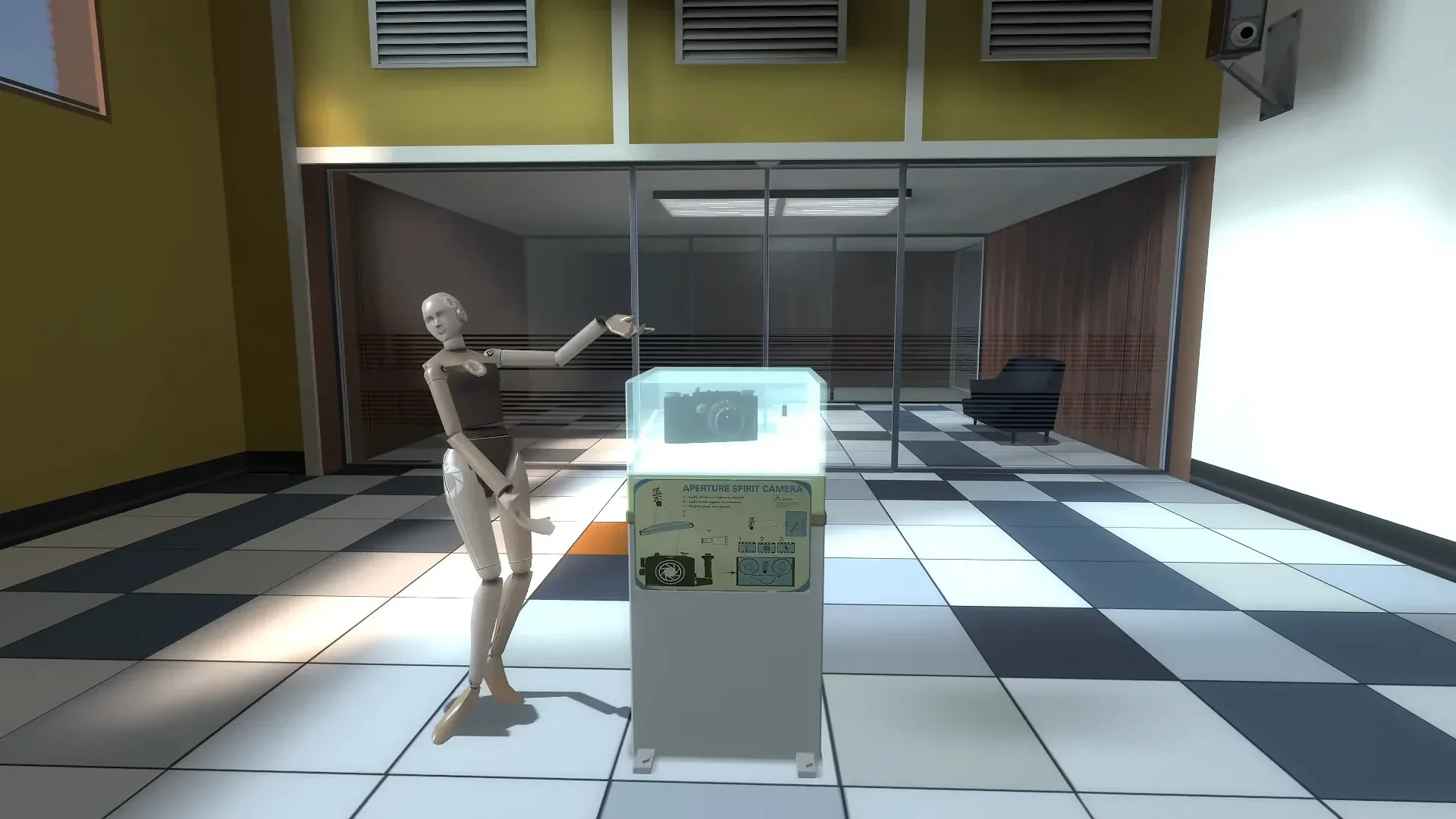

Valve’s canceled Portal prequel F-Stop has surfaced in a reported playable prototype, revealing the Aperture camera mechanic that helped shape Portal history without making it an official release.
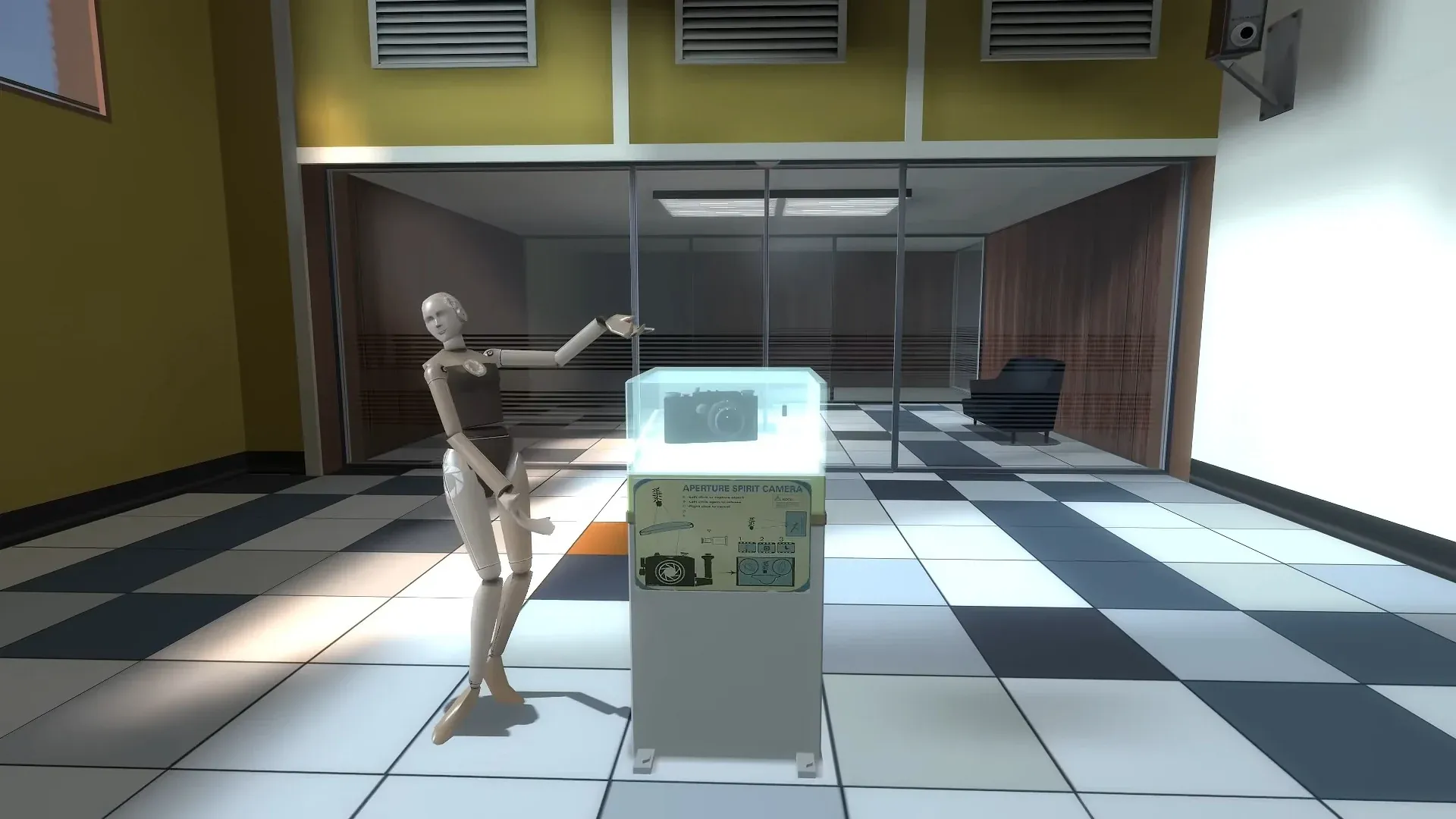
Image: world-today-journal.com
F-Stop is no longer only a Portal legend, but it is not a Valve release
A reported playable build of F-Stop, Valve’s canceled Portal prequel prototype from 2007, has appeared online after almost two decades as one of the company’s better-known pieces of lost development history. Kotaku reports that the build was assembled from three separate leaks, with most assets coming from the large Steam2 depot leak in late August and the missing source code and map source data appearing through the Valve Cut Content project’s Discord server within the past 48 hours. The Verge likewise reports that leakers have pieced together a playable version after those final files surfaced this week.
That is the concrete development. The tension is just as important: this is a leak of an internal Valve prototype, not a commercial launch, remaster, Steam release, or sanctioned preservation drop. None of the provided reports include a Valve announcement or a Valve comment confirming any official availability. Tbreak notes that Kotaku’s report includes no comment from Valve and that there is no word on an official release. So the F-Stop leak changes what the public can see of Valve’s old design work, but it does not turn F-Stop into a finished product with support, distribution, pricing, or platform plans.
What F-Stop was inside Valve’s 2007 experiments
According to Kotaku, F-Stop came out of a three-month 2007 period that Gabe Newell later called the Directed Design Experiments. During that period, Valve split into five teams, each tasked with designing and partially creating a video game experiment. F-Stop was the fifth of those projects, and it was conceived as a prequel to Portal.
The key historical detail is that F-Stop was not built around the portal gun. The Verge describes it as dramatically different from the mainline Portal games because it centered on a camera mechanic. Kotaku describes the tool as an experimental Aperture Science camera used to manipulate perspectives and solve puzzles. VGTimes describes the mechanic as replacing the iconic portal gun with a camera that lets players take a picture of an object, then project and scale it elsewhere in the environment.
That swap matters because Portal’s identity is usually treated as inseparable from the portal gun’s two-point spatial logic. From a first-person design angle, F-Stop appears to have been testing a different kind of readable, player-driven physics puzzle: capture, reposition, scale, solve. Same first-person frame, different verb. The sources do not establish F-Stop as the direct ancestor of any one Portal 2 system in a clean one-to-one way, but they do report that some dialogue, characters, and mechanics were later reworked or reimagined into Portal 2.
The leak appears to combine assets, code, and map source files
The shape of the F-Stop leak is unusually important because earlier asset dumps alone would not have given players a coherent look at the prototype. Kotaku reports that the late-August Steam2 leak contained the majority of F-Stop’s assets but did not include its source code or mapsrc data, Valve’s folder name for map source data. Over the past 48 hours, according to Kotaku, both of those missing pieces appeared via the Valve Cut Content project’s Discord server.
The reporting does not fully agree on the size of the broader Steam leak. The Verge describes it as a 12-terabyte leak, while Kotaku, Tbreak, and VGTimes describe it as roughly 13 terabytes. The useful takeaway is not the exact number, since the sources differ there, but the composition: an earlier depot leak apparently supplied most of the material, while later code and map files made the playable reconstruction possible.
Kotaku also reports a messy detail from the Valve Cut Content Discord moderators: the person who leaked the F-Stop mapsrc allegedly initially asked for $1,000, then ended up releasing the files for free. The Valve Cut Content team says it verified the map files’ authenticity, according to Kotaku and Tbreak. That verification is attributed to the community team, not Valve. Readers should treat that distinction seriously.
What the prototype reportedly shows when played
The clearest reported picture of the build is that it is playable in almost its entirety, but still a prototype with missing pieces. Kotaku says people who have played it report a few missing assets and dialogue lines, while describing it as essentially 99 percent complete. Tbreak repeats that players describe the build as about 99 percent complete, with a few missing assets and dialogue lines. VGTimes similarly reports that the build is about 99 percent complete and missing only a handful of assets and selected character voice lines.
The Verge adds a useful pacing detail: videos showing the full campaign reportedly clock in at under an hour. That short runtime fits the project’s origin as a three-month internal experiment rather than a full retail campaign. It also helps set expectations for anyone seeing “fully playable” and picturing a lost Portal 2-sized release. Based on the provided reporting, this is closer to a preserved slice of Valve design history than a hidden finished sequel.
For players, the most interesting part is the camera. In shooter terms, the entire game turns on the feel and utility of the primary tool. Portal’s gun gives immediate spatial commitment: place blue, place orange, route momentum. F-Stop’s camera, as described by The Verge and VGTimes, sounds slower and more object-focused: capture an item, then place or scale it through a photo-like output. That difference would change level pacing, puzzle readability, and how quickly a player can test ideas. The sources show the mechanic’s broad function, but they do not provide enough verified detail to judge whether it sustained a full game better than the portal gun did.
Why the camera mechanic matters to Portal history
The F-Stop leak is significant because it exposes a route Valve did not take. Portal’s public history is dominated by the clean elegance of portals, test chambers, and a first-person puzzle language that feels closer to arena map control than traditional adventure-game inventory logic. F-Stop shows that Valve was also exploring an Aperture game where the central interaction was photographic capture and perspective manipulation.
Kotaku reports that Newell was very taken with F-Stop, but playtesters were less enthusiastic, and Valve ultimately scrapped the game. That reported split is revealing. A prototype can impress internally because the design swing is bold, while still failing the practical match test: can fresh players read the rules, form plans, recover from mistakes, and feel smart instead of stuck? Portal’s best chambers work because the tool is legible even when the solution is not. The sources do not say exactly what playtesters disliked, so any claim beyond that would be speculation. But the reported outcome tells us Valve did not see enough reason to ship F-Stop in that form.
The later Portal 2 connection adds another layer. Kotaku and Tbreak report that some dialogue, characters, and mechanics were reworked into Portal 2. VGTimes says many concepts, including dialogue, characters, and core mechanics, were later reimagined and integrated into Portal 2’s development. The wording varies, and the sources do not itemize every reused element. The safest conclusion is that F-Stop was a meaningful part of Valve’s Portal-era experimentation, not that the leaked build is a missing Portal 2 blueprint.
How to read this leak without overstating it
For preservation-minded players, this is a major F-Stop leak because it moves the project from rumor, scraps, and secondhand descriptions into a reportedly playable Valve prototype. For everyone else, the practical guidance is simple: do not treat Portal F-Stop as a newly released game. The provided reports do not identify a Steam page, price, supported platform list, system requirements, patch plan, or official Valve statement. There is also no confirmed upgrade path because there is no official product to upgrade.
That distinction protects the story from getting inflated. Yes, Kotaku calls it fully playable in almost its entirety. Yes, The Verge says the canceled Portal prequel is no longer lost media. Yes, multiple outlets report that the community has assembled a nearly complete version from leaked assets, source code, and map data. Those are meaningful claims, and they are all tied to leaked material and community reconstruction.
The open questions remain the ones Valve has not answered in public through the provided sources. Valve has not confirmed the build, endorsed distribution, announced a release, or explained the original cancellation beyond the reported history that playtesters were less keen than Newell. Until that changes, F-Stop is best understood as a rare look at a canceled Valve game and an alternate Portal design path: a first-person Aperture prototype where the camera, not the portal gun, carried the match.