
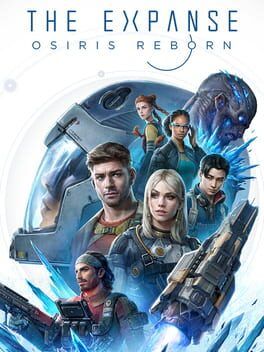
Owlcat’s sci-fi RPG now has David Gaider contributing to certain narrative work and Blythe Melin voicing the redesigned male captain, sharpening expectations after closed beta feedback.
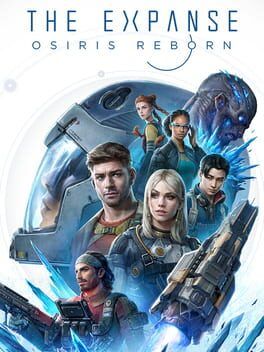
Image: IGDB
Store links: The Expanse: Osiris Reborn on Steam
Owlcat’s RPG gets a sharper narrative signal and a new captain
The Expanse: Osiris Reborn has picked up a notable RPG writing credit at the same time Owlcat Games is trying to correct one of the closed beta’s loudest presentation issues. David Gaider, best known as lead writer on Dragon Age: Origins, Dragon Age 2, and Dragon Age: Inquisition, said on Bluesky that he has been collaborating with Owlcat on “certain aspects of the game’s narrative.” Separately, Owlcat has revealed Blythe Melin as the new voice of the male protagonist and his brother, J, alongside an updated default male captain model.
That pairing is the real story. Gaider’s involvement raises the ceiling for player expectations around quest writing, companions, factions, and moral pressure points, even though his exact contribution has not been detailed. The protagonist recast, meanwhile, shows Owlcat reacting to direct criticism from the beta rather than waiting for launch to see whether players adjust. For a licensed sci-fi RPG being compared across the press to Mass Effect, those two updates land in the same pressure zone: can The Expanse Osiris Reborn make its captain feel authored enough to belong in the setting, while leaving enough space for the player to inhabit the role?
The confirmed facts are narrower than the excitement around them. Gaider has not been announced as the game’s lead writer, and he described his work as focused on “certain aspects” while continuing at Summerfall Studios. Owlcat has confirmed a new male voice and revised look, but the studio has not yet shared the full cast, the final shape of its dialogue changes, or whether players will get another beta before launch.
David Gaider’s role is promising, but the scope matters
GamingBolt and Eurogamer both reported Gaider’s Bluesky post, where he wrote that The Expanse has “long been one of my favourite series” and that he “jumped at the opportunity” to be involved. The draw is obvious for RPG players. Gaider’s BioWare credits include Baldur’s Gate 2, Neverwinter Nights, Star Wars: Knights of the Old Republic, and the Dragon Age trilogy entries for which he is most closely associated. GamingBolt also notes his role in creating Thedas, including its history and recognizable factions such as the Grey Wardens.
For The Expanse game, that background is relevant because Owlcat is working in a setting where faction identity, political pressure, and language matter. The source material supplied here points to Osiris Reborn as an original story in the larger Expanse universe, with CGMagazine summarizing the franchise as a far-future Milky Way story concerned with human politics and the consequences of alien life. Wikipedia’s listing describes the game as an action role-playing game developed and published by Owlcat Games in partnership with Alcon Interactive Group, with the player commanding a Pinkwater Security mercenary squad aboard a space frigate.
Still, the wording around Gaider’s contribution should temper assumptions. “Certain aspects” could mean anything from companion arcs to faction dialogue, lore consultation, quest pass work, or targeted rewrites. None of the supplied sources says he is directing the narrative, designing the full main story, or replacing Owlcat’s internal writers. The safer read is that Owlcat has brought in a veteran RPG writer whose strengths align with what Osiris Reborn has to sell, but the final game will still stand or fall on how those contributions integrate with Owlcat’s broader structure.
The Osiris Reborn protagonist has been recast after beta criticism
The clearer, player-facing change is the Osiris Reborn protagonist update. IGN reports that Blythe Melin is now the voice of the male protagonist and J after fan reaction to the beta described the previous voice work as “flat” and “boring.” IGN also quoted Owlcat’s earlier explanation that, while the previous actor “put in a lot of good work,” the performances for the male protagonist and J felt “less expressive” than the studio wanted.
Push Square reports that Owlcat revealed both a new face and voice for the male protagonist, with Melin performing as the male captain and his brother J. GamingBolt similarly identifies Melin as the new voice and says the default appearances of the male Martian version and J have also been updated. CBR’s report identifies Melin as the new male lead and J, and adds that players embody the captain of the Gemini, a mercenary frigate contracted by Pinkwater Security, with customization options that include gender.
There is one source conflict worth separating. CGMagazine’s article says Melin plays the male protagonist, but also includes a line stating that the voice actors for the main character’s twin are “currently unchanged.” That conflicts with IGN, Push Square, GamingBolt, and CBR, all of which report that Melin voices both the male protagonist and J, with several attributing the information to Owlcat’s video or press materials. Based on the weight of those reports, the confirmed direction is that Melin is covering both roles, while CGMagazine’s phrasing appears inconsistent with the wider reporting.
A default face still matters in a customizable RPG
On paper, changing the default male captain’s face should be less important than changing a fixed protagonist. Push Square notes that players will be able to fully customize their protagonist, and IGN says that applies whether players choose the male or female version of the character. Yet Owlcat’s press comment, quoted by Push Square, says it is “important to have a default look players can use as a basis for their own captain.” That is a practical RPG point, not a cosmetic footnote.
Default protagonists become the visual shorthand for trailers, store pages, thumbnails, screenshots, and community discussion. Even in character creators, the default model frames the fantasy Owlcat is selling: Martian captain, mercenary command, family tie through J, and a protagonist who has to carry multi-path dialogue scenes. Push Square described the visual shift as “quite dramatic,” while CBR notes a move away from short-cropped hair toward looser curls and a revamped facial structure. IGN’s contributor compared the new look to Marco Inaros from The Expanse TV show, while making clear that hair and appearance remain customizable.
For a systems-minded RPG audience, the key is how the new presentation supports choice. Melin told IGN that voicing both the Captain and J was a “unique challenge,” because one character functions as an avatar for the player while the other is a pre-established co-character. That distinction matters. If the captain’s line reads are too neutral, dialogue can feel inert. If they are too fixed, role-playing can feel constrained. Owlcat’s recast suggests the studio is trying to find a middle lane where the protagonist can respond with enough texture for scenes to land, without collapsing every player build into the same personality.
Closed beta feedback is now shaping more than the voice track
Owlcat’s response is not limited to a new actor. GamingBolt reports that the studio has acknowledged other criticisms from the closed beta, including moments that felt “too inconsistent or out of place.” Owlcat has promised improvements to some conversations so character reactions feel “more natural, responsive, and grounded,” according to that report. GamingBolt also notes that it is unknown whether those changes will appear in a new beta.
That is the part RPG players should watch most closely. Voice acting can improve the feel of a scene immediately, but responsiveness is a deeper design problem. In a choice-driven sci-fi RPG, conversations need to account for tone, prior decisions, faction context, companion presence, and the player’s chosen identity. A better performance can sell a line, but it cannot by itself fix dialogue that fires in the wrong emotional register or fails to acknowledge what the player has done.
Gaider’s comment to Eurogamer that Owlcat has been “responsive” to fans connects the narrative hire and recast without proving causality. The sources do not say Gaider drove the recast, rewrote the affected scenes, or joined because of beta criticism. What can be said is that Owlcat is publicly iterating on narrative presentation before release, and that the studio is doing so while highlighting help from a Dragon Age writer whose reputation is tied to characterful party RPGs.
The Mass Effect comparison helps, but it also raises the bar
Several outlets frame The Expanse: Osiris Reborn through a Mass Effect lens. Eurogamer says the game looks like it is carrying forward some of Mass Effect’s strengths, while Wikipedia’s development summary says Owlcat cited that series as a main inspiration. CBR calls Osiris Reborn a third-person RPG and notes that this perspective is a first for Owlcat. That comparison is useful for players trying to place the game, but it also brings expectations that are hard to fake: a memorable ship, a crew worth investing in, dialogue choices that feel reactive, and mission pacing that makes command decisions feel consequential.
Owlcat has experience with large RPG structures, but the supplied sources present Osiris Reborn as a different kind of project for the studio: a licensed science-fiction action RPG, built around a customizable captain, a crew aboard the Gemini, and a setting with an established fan base. Push Square’s earlier hands-on criticism of the protagonist, referenced in its new report, shows how quickly one weak center can distort impressions of an otherwise promising RPG. If the captain is the player’s anchor, then voice, face, and writing are part of the same system.
There is also a production tension here. Recasting a central voiced role in a multi-path dialogue game is not a trivial swap. IGN’s Melin quote refers to the difficulty of giving both the Captain and J distinct flavors and mannerisms across branching dialogue. Every additional path means more lines to record, direct, implement, and test. The upside is obvious if the new performance holds. The risk is consistency across the whole game, especially if some scenes were already far along before the recast.
Release timing, platforms, price, and the wait-or-watch question
The current launch window reported by GamingBolt and IGN is spring 2027 for PC, PlayStation 5, and Xbox Series X|S. GamingBolt also reports a $49.99 price and says Owlcat has compared the game’s intended length to Clair Obscur: Expedition 33. Those details make Osiris Reborn look positioned as a substantial RPG release without the $70 pricing currently attached to many big-budget console games, although final regional pricing and edition details are not covered in the supplied material.
For players deciding how closely to follow The Expanse Osiris Reborn now, the answer depends on what they need confirmed. If the appeal is a lore-aware sci-fi RPG with character creation, party-style storytelling expectations, and a known universe, the Gaider collaboration and protagonist recast are encouraging signs. If the concern is execution, the biggest unanswered questions remain practical: how much of the game’s dialogue has been revised, whether Owlcat will show another beta build, who voices the female protagonist and the rest of the cast, and how the action RPG systems fit around branching narrative choices.
The strongest confirmed development is not that Osiris Reborn has suddenly become a Dragon Age project. It has not. The stronger, better-supported read is that Owlcat has recognized a core protagonist problem early, replaced the male captain’s performance with Blythe Melin, refreshed the default model, and brought in David Gaider for defined but undisclosed narrative work. For a sci-fi RPG built around command, crew, and player identity, those are exactly the areas where pre-launch course corrections can matter most.