

Hands-on Exodus gameplay impressions from Gamescom and Austin previews point to a sci-fi RPG with clear Mass Effect roots, but zero-gravity combat, time dilation, Awakened companions, and RPG choices may define it on its own terms.
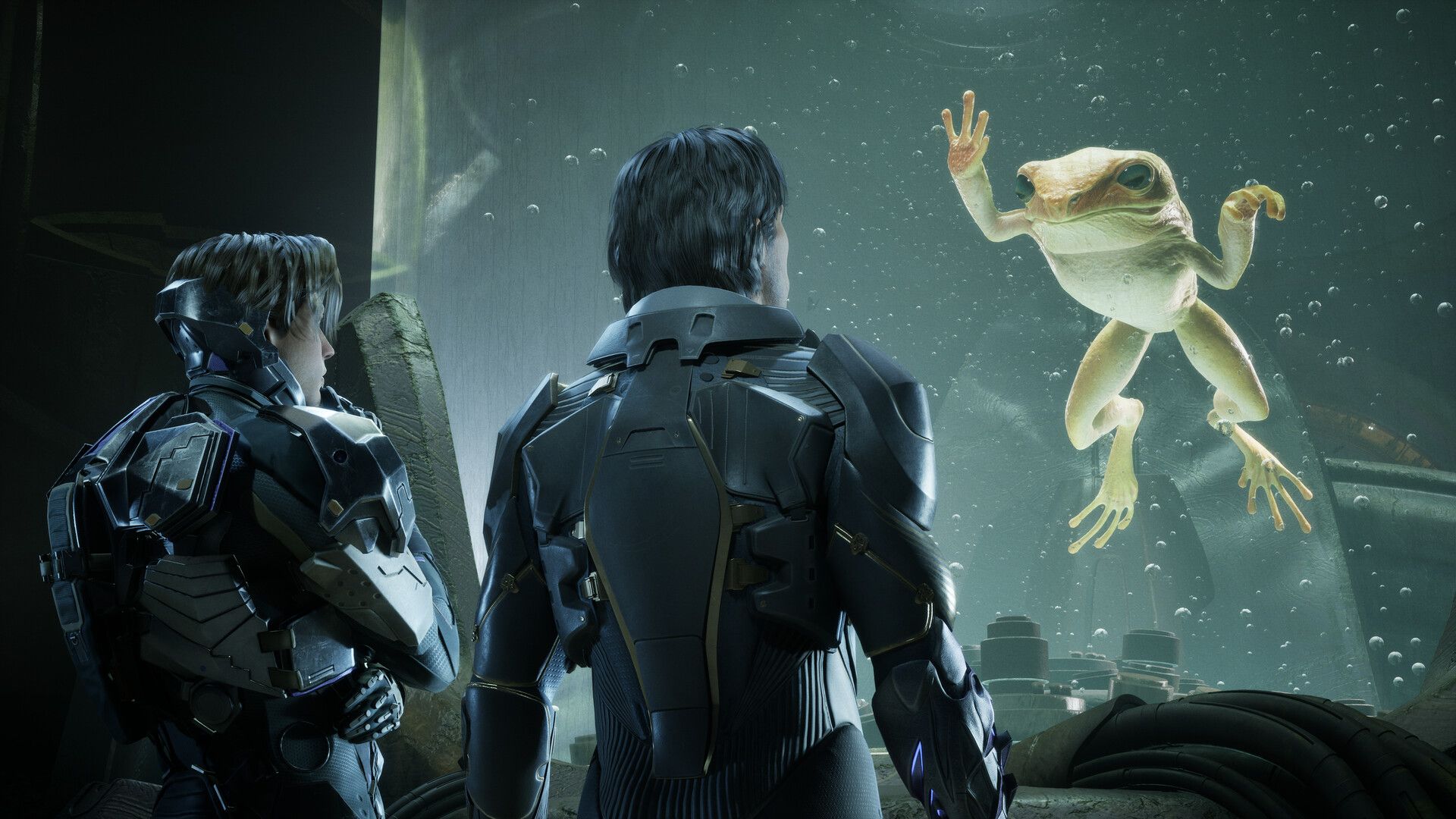
Image: space.com
Exodus finally has playable evidence behind the Mass Effect comparison
The strongest development around Exodus is no longer its pedigree. Multiple outlets have now played the sci-fi RPG, and their Exodus gameplay impressions agree on one important point: the Mass Effect comparison is obvious the moment combat, squad commands, and dialogue choices enter the frame. The tension is that those same previews do not agree on whether Archetype Entertainment has already escaped the shadow of BioWare’s trilogy.
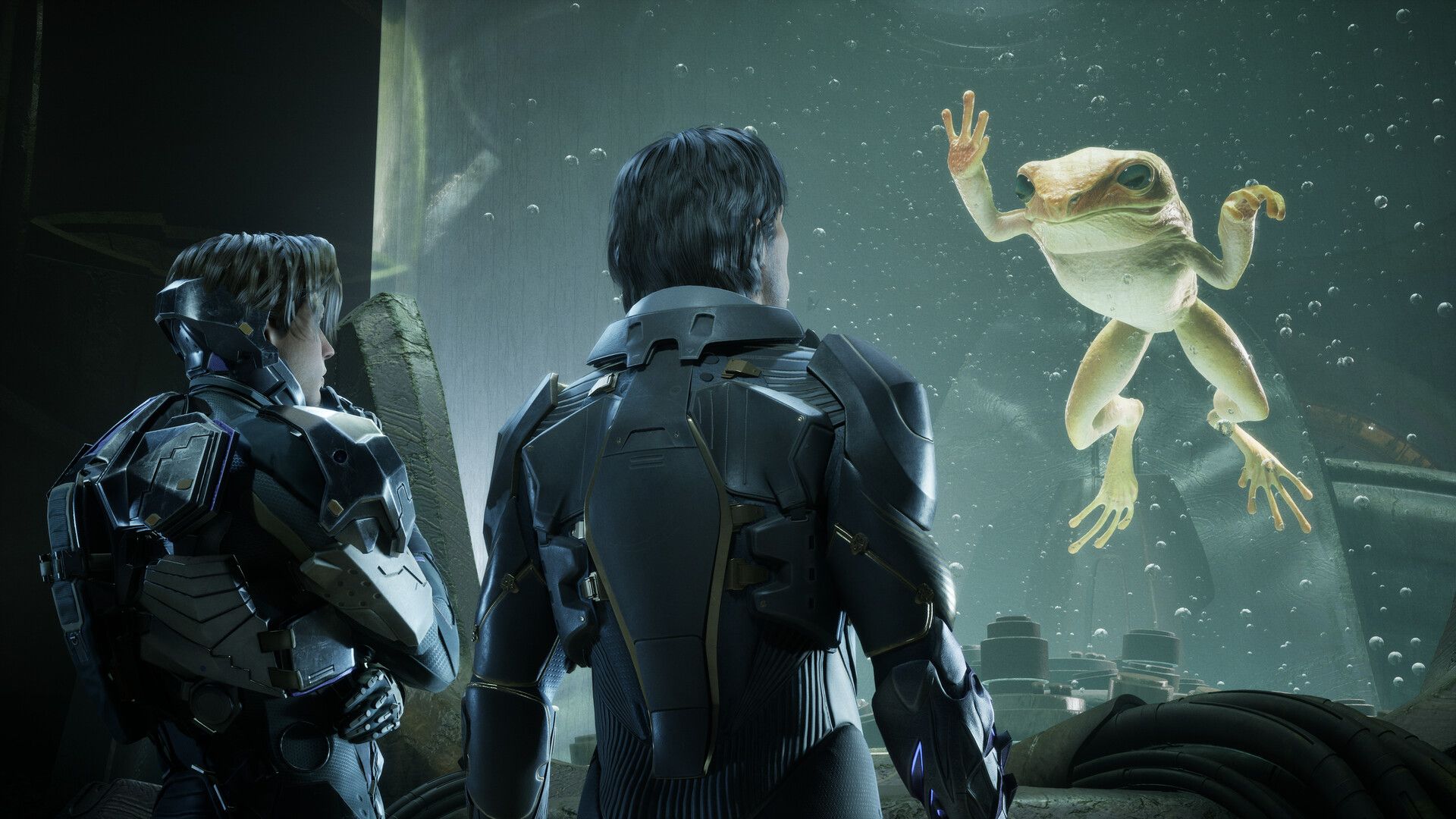
Polygon reports that Exodus is planned for April 7, 2027 on PlayStation 5, Windows PC, and Xbox Series X. That same report frames the game as Archetype Entertainment’s debut, with members of the team having worked on the original Mass Effect trilogy. Push Square, Game Rant, Eurogamer, Rock Paper Shotgun, GamingBible, and Polygon all saw or played versions of the Khonsu mission, an infiltration of an orbital platform tied to the liberation of the Kay, a frog-like Awakened species.
That shared demo makes the current Exodus Mass Effect comparison useful, but also narrower than it first appears. Yes, hands-on reports describe a third-person, squad-based action RPG with cover shooting, ability cooldowns, companion commands, and dialogue-driven relationship shifts. But the same demo also foregrounded zero-gravity traversal, livestone manipulation, animal uplift, and a time-dilation premise that is structurally different from the usual space-opera warp-drive fantasy. For RPG players, the open question is less whether Exodus resembles Mass Effect, and more whether its systems can turn that resemblance into a foundation rather than a ceiling.
The combat reads familiar, but the best moments happen when gravity loosens
Across the previews, Exodus’ combat sounds intentionally legible to anyone who has played a BioWare-style squad shooter. Polygon describes cover-based action, two party members on missions, a time-pausing ability wheel, cooldowns, and companion commands. Push Square’s hands-on preview says Jun can use a selection of weapons while also calling on squad abilities, including Elise’s knockdown missiles. GamingBible similarly reports that squadmates can execute charged abilities through a separate menu, including a mech-suited companion firing a missile and another ally using an ability called Shadow Step.
The more divided impressions start when the shooting is judged as a combat system rather than an influence map. Push Square found the weapons punchy and the cover system smooth, and came away surprised by the game’s fun factor after roughly an hour on PC. Game Rant also responded positively, saying combat felt familiar quickly but that the game’s atmosphere and design helped it stop feeling like a simple duplicate. Rock Paper Shotgun was less convinced, calling the powers-aided gunplay functional and saying many fights became routine shootouts against recurring ranged and melee enemies, sometimes interrupted by a bullet-sponge mech.
The one combat feature that cuts through that disagreement is zero gravity. Rock Paper Shotgun, even in a skeptical preview, singled out vacuum sections and brilliant zero-G fights as places where Exodus came alive. Eurogamer’s demo began with mag boots on the exterior of Khonsu, moving through a micro-gravity environment while Lidon hung in the background and debris scattered along the route. That matters for readers tracking the Exodus PS5 preview discussion because the combat pitch is not simply whether it has a good cover loop. The previews suggest Exodus may be at its strongest when encounter design breaks the flat corridor rhythm and forces the squad RPG template into stranger physical spaces.
Jun’s gauntlet, livestone, and catalysts show the buildcraft question
The hands-on reports give a clearer picture of Jun’s toolset than Archetype’s broad genre pitch. Push Square identifies Jun’s left-arm Celestial technology as Orion’s Gauntlet, using it in combat to send a damaging, stunning rift into enemies and in exploration to clear blocked paths or raise platforms. Eurogamer ties that environmental interaction to livestone, a lore-important material used throughout Khonsu’s architecture. In that preview, Jun can manipulate livestone to summon elevated platforms from the environment.
Rock Paper Shotgun describes a power that bursts jagged rocks from the ground and launches lighter enemies upward, one of the abilities it enjoyed. GamingBible mentions a similar ground-tunneling force attack, alongside another ability that slows enemy movement so shots can be placed more deliberately. These details point toward a protagonist kit built around battlefield control rather than only gun damage: stun, launch, slow, knockdown setup, environmental access, and squad follow-up.
The less settled part is progression depth. Rock Paper Shotgun says Exodus uses a catalyst system for setting up and activating elemental effects, comparing it to Mass Effect’s prime-and-detonate structure. That is a useful shorthand, but it also raises the main systems question for RPG players: will Exodus let builds meaningfully specialize around those triggers, or will catalyst play settle into a familiar combo rhythm? Push Square and GamingBible both saw crafting in the demo, with Push Square noting loot boxes containing grenades or crafting materials and saying healing supplies felt like the main immediate need. GamingBible says crafting allowed health kits, tools, and ammunition, while not seeming overwhelming in the session. None of the sourced previews establish the full skill trees, respec rules, gear rarity, or long-term build economy, so the safest read is that Exodus has visible RPG scaffolding but has not yet shown enough to judge its progression ceiling.
The RPG identity is strongest when choices cost resources, loyalty, or time
The most promising RPG details in the previews are not only in dialogue wheels. Push Square encountered an injured Zealot who claimed he was not loyal to the Lieutenant Jun was hunting. Saving him required spending healing supplies, and Push Square reports that choosing mercy reduced Jun’s relationship with companion Suliman, who argued against wasting resources. Polygon describes dialogue options that can build party affinity and shift morality along a red-and-blue scale. Game Rant says the Khonsu mission eventually presented a choice about what should happen to the Kay after they were freed, a decision that made the writer pause.
Those examples are small in isolation, but they outline the kind of RPG Exodus seems to be chasing: choice as a pressure point between resources, companion values, and factional outcomes. That is where the Mass Effect inheritance is most visible and also where Exodus has the most to prove. A relationship penalty in a demo is a signal, not a promise of deep consequence. Push Square specifically notes that it did not get to see the downstream consequences of saving the Zealot. Game Rant’s larger Kay decision sounds weightier, but the available source text does not reveal its outcomes.
For completionist-minded players, this is the section of Exodus to watch closely before launch. If companion approval, morality, mission outcomes, and time dilation all interlock, Exodus could reward careful role-playing and replay planning. If those systems sit beside one another without meaningful cross-pressure, the familiar dialogue framework may feel cosmetic. The current preview evidence supports cautious optimism, not certainty.
Time dilation is the clearest break from a standard space-opera template
Polygon’s preview supplies the most important context for why Exodus is not limited to being filed as a Mass Effect successor. Narrative director Drew Karpyshyn told Polygon that the game’s canon is rooted in relativistic physics, with one ironclad rule: no faster-than-light travel. Karpyshyn described Exodus missions as major narrative choices because time dilation can mean characters are gone for years or decades from the perspective of people back home.
That premise changes how to read the game’s 40,000-years-in-the-future setting. Polygon reports that humans fled a decaying Earth for the Centauri Cluster, with some ark ships arriving thousands of years before others because of time dilation. The earliest arrivals altered their genomes so extensively that they became Celestials, and they also uplifted Earth animals into sentient Awakened species. That is the lore basis for companions and characters such as Salt, the octopus mercenary, Houston, Jun’s adopted wolf brother, and the Kay on Khonsu.
Screen Rant, citing the Steam page and Gamescom 2026 trailer, highlights Salt’s role as an octopus companion who pilots a mech suit in combat and points to a trailer example where “3 years for Salt” equals “87 years back home.” That is an expectation-focused reading rather than a hands-on systems confirmation, but it captures why players are paying attention. If time dilation affects companion arcs, settlement states, quest availability, or homeworld politics, Exodus has a structural hook that goes beyond a party shooter with space conversations. The previews confirm the premise. They do not yet confirm how far the mechanic reaches in normal play.
The writing and party charisma are the biggest unresolved risk
Exodus’ worldbuilding is receiving stronger praise than its protagonist in every preview. Eurogamer admired Khonsu’s visual identity, noting an exterior of cavernous curves and interiors built from livestone, with mineral structures resembling hexagonal formations. Push Square called the game a looker and said it captured a sci-fi book-cover aesthetic. Game Rant praised environmental detail, conversation animation, and voice acting, saying nothing in the preview pulled it out of the scene.
Rock Paper Shotgun was much colder on the same broad slice. Its preview found Jun Aslan bland in the male version played, criticized some alien dialogue from the Kay, and argued that the corridor battles and human companions shown did not yet match the ambition implied by the premise. It also notes disappointment at not getting to play with the octopus sniper companion, a reminder that preview builds can skew impressions by limiting party composition.
That split is worth taking seriously. A squad RPG lives on encounter design, but it is remembered through the people arguing in the ship, reacting to hard choices, and complicating the player’s plans. Polygon lists a broader crew that includes Kara Voss, Suliman Tenjin, Elise Charroux, and Salt, while Eurogamer also mentions Houston elsewhere in the lore context. Push Square’s demo focused on Suliman and Elise. Rock Paper Shotgun’s criticism may reflect a limited sample, but it targets a real genre danger: if Jun and the early companions speak in stock heroic tones, the cleverest time-dilation fiction will have to work uphill.
Platforms, release timing, and whether to wait for deeper RPG proof
For practical purposes, Exodus is currently being previewed as a PS5, Windows PC, and Xbox Series X release. Polygon reports an April 7, 2027 launch date for those platforms. GameSpot’s page snippet in the provided source material lists “First Released Dec 31, 2027,” which conflicts with Polygon’s reported date and reads like a database placeholder rather than the launch-date reporting mentioned elsewhere on that same GameSpot page. Until Archetype Entertainment, Wizards of the Coast, or official storefronts are checked at purchase time, readers should treat April 7, 2027 as the reported release date in the strongest provided source, with the GameSpot listing noted as inconsistent.
The PS5 angle also needs one clarification. Push Square’s Exodus PS5 preview was based on about an hour played on PC, not on a native PS5 build. That preview still moved the game up the outlet’s PS5 watchlist, but the provided sources do not establish console performance targets, graphics modes, DualSense features, PC requirements, price, editions, upgrade paths, or preorder details.
So should RPG fans put Exodus on the calendar? Based on the preview round, yes, if the draw is a squad-based sci-fi RPG with choice-driven missions, dense lore, and combat that can mix cover shooting with companion tactics. Wait for longer footage or review coverage if your main concern is protagonist writing, quest consequence, build depth, or whether zero-gravity encounters are recurring pillars rather than demo highlights. The Mass Effect comparison remains the right doorway into understanding Exodus. The more interesting question now is whether Archetype can make its physics, companions, and moral tradeoffs carry the game once players stop noticing the family resemblance.