
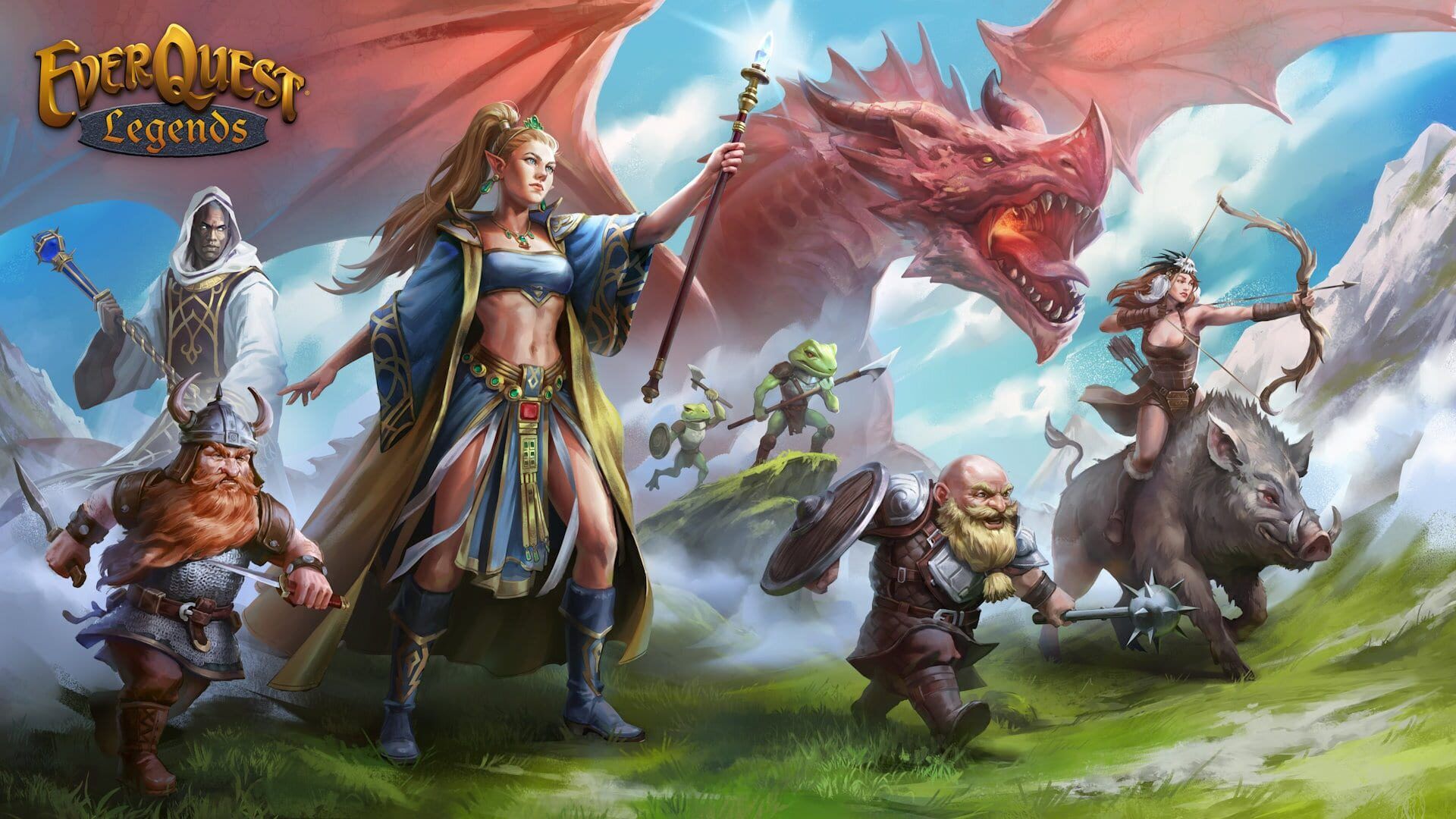

EverQuest Legends reimagines the 1999 MMO as a more solo friendly, time respectful experience while preserving its retro look, brutal zones, and social DNA. Here is how it modernizes the original, what classic systems return, and whether nostalgia and accessibility can truly coexist for veterans and new players.
EverQuest Legends is not trying to be EverQuest 3. It is not even trying to be a modern MMO in the conventional sense. Instead, Game Jawn and Daybreak are taking the original 1999 EverQuest client and rebuilding the rules, pacing, and structure around what today’s players actually have: less time, better genre literacy, and a lot more competition for their attention.
At Summer Game Fest 2026, Legends was presented as a “newly reimagined version of classic EverQuest” that still looks and sounds like 1999. That combination of aggressively old school presentation and aggressively modern design is the central tension of the project. The question is whether it can satisfy the veterans chasing a very specific flavor of Norrath nostalgia while also welcoming in players who never camped Orc 1 in East Commonlands.
What Is EverQuest Legends?
Legends is a standalone, PC only reinterpretation of vanilla EverQuest as it existed before the Kunark expansion. You are still rolling up a character in Norrath, picking a classic race, spawning into familiar starting cities, and hearing the same era appropriate music and UI bleeps that defined dial up MMO nights.
Under the hood, though, this is a different game. Legends is designed from the ground up to be soloable from level 1 all the way to endgame, with the option to duo or form small groups when you want to, not because you have to. There are story driven questlines that guide you through zones rather than leaving you to decipher obtuse NPC barks, and the entire leveling curve has been flattened so you are not spending real world weeks grinding the same camp just to get a single ding.
Importantly, Legends is not a progression server or a museum piece. It is a curated remix of classic EQ that picks and chooses what to keep, what to rescale, and what to quietly retire in favor of something less punitive.
How Legends Modernizes A 1999 Relic
The clearest modernization is philosophical. Where the original EverQuest treated time and friction as tools to slow you down and push you into groups, Legends is built to respect that you might have 45 minutes in an evening.
Combat pacing has been adjusted so fights resolve more quickly without turning every encounter into a faceless zerg. Auto attack, spell casts, and cooldowns have been smoothed out, and classes get core tools earlier so the low level game feels active instead of auto attacking while you chat. Health and mana regeneration are less punishing, cutting down on the classic minutes long med breaks between pulls.
The UI and control schemes have been overhauled for modern expectations. You still see chunky hotbars and old school fonts, but underneath is keybinding flexibility, clearer tooltips, and quest tracking that points you roughly in the right direction without fully hand holding. You can read the world more quickly, and you are not expected to alt tab to a wiki for every basic system.
Travel and downtime have also been streamlined. While wizard and druid ports remain iconic, basic zone connections are less of a slog, and corpse runs are far more forgiving. Dying no longer means a night ruined trying to drag your body through three dangerous zones with half your gear missing. There is still risk, but it is calibrated for tension rather than punishment.
Perhaps the boldest modernization is Legends’ explicit support for solo and casual play. Enemy densities, pathing, and aggro radii have been reevaluated to allow single players to carve out a camp without chain wiping to accidental trains. Quest rewards and experience are tuned so you can make real progress in a short session alone, but grouping can still accelerate your path and open up harder content.
Multiclassing, a new pillar of character building in Legends, also pushes the design into 2026. Instead of locking into a single strict role, you earn and slot abilities from multiple archetypes, letting you pivot between playstyles without rerolling a new character for every whim. It is a way to get some of the experimentation and buildcraft that modern MMO and ARPG fans expect without abandoning the recognizable EQ class fantasy.
Returning Systems And Classic Flavor
For all the modernization, Legends is very consciously “party like it is 1999.” The graphics are period correct with low poly models, sharp textures, and that uncanny EQ lighting that instantly transports veterans to their first nights in Qeynos Hills. Daybreak’s pitch is that you are not playing a retro inspired homage, you are back in the original Norrath, just with fewer reasons to hate your future self.
The iconic race roster returns, along with their original starting cities and cultural quirks. You are still picking between humans, elves, dwarves, ogres, trolls, and more, each dropping you into a familiar social hub packed with trainers, merchants, and early level hunting grounds a short jog away. The faction system also returns, so your actions in the world affect how guards and NPCs respond. Playing an evil race still means navigating certain cities carefully, preserving that sense of a world where reputation matters.
Classic zones and their layouts are back almost one to one. Players can expect to revisit places like Blackburrow, Crushbone, and the Karanas with their labyrinthine tunnels, wide open plains, and dangerous chokepoints intact. Spawn cycles and named mobs still exist, giving the world that camp based rhythm veterans remember. Those camps are simply tuned so that holding them with fewer people is actually feasible.
The core loop of pulling, crowd controlling, and slowly pushing your camp deeper into a dungeon remains the heart of the experience. Legends retains the emphasis on positioning, line of sight, and target priority rather than devolving into tab target spam. Spell lines, song twists for bards, and class utilities such as tracking, feign death, and invisibility keep their recognizable roles even as numerics shift around them.
On the social side, server wide chat, visible gear, and natural gathering points like tunnel markets and city banks are designed to rekindle organic community. Legends does not try to automate away interaction with automated group finders or cross server queues. You will still shout in public channels, inspect strangers, and build mental lists of good tanks or flaky healers.
Nostalgia Vs Accessibility
The risk for Legends is that in making EverQuest more approachable, it will smooth away the very edges that shaped veterans’ fond memories. So far, the approach seems more surgical than sweeping. Instead of removing friction wholesale, it targets the aspects that were more about technical and economic constraints of 1999 than intentional design.
Nostalgia is being honored primarily through presentation and geography. The audio, visuals, and zone layouts are doing most of the emotional heavy lifting. A veteran walking into Freeport or stepping onto the docks of Qeynos is meant to instantly recognize sightlines, NPC placements, and even the skyline, then discover that leveling there now feels like the memory of EverQuest instead of the harsher reality.
Accessibility, meanwhile, lives mostly in systems and pacing. You gain levels and gear at a cadence that feels rewarding without demanding no life commitment. Quests are legible, death is inconvenient instead of catastrophic, and moment to moment play respects your time. The result is a version of EverQuest that you can feasibly fit around adult responsibilities.
Whether those two pillars can truly coexist will depend on how purist you are. If your nostalgia is rooted in the exact numbers, spawn timers, and downtime that defined your teens, Legends will feel like a reinterpretation rather than preservation. It is closer to a high end fan mod or a director’s cut than a museum grade remaster.
For lapsed players who remember Norrath fondly but cannot imagine committing to the old grind, Legends looks far more promising. It is engineered specifically for people who outgrew classic MMO time demands but never stopped loving the idea of those worlds. If the solo viability and multiclass flexibility work in practice, it could finally deliver an EverQuest that survives outside of hardcore niche circles.
For completely new players, Legends is positioned as a history lesson that does not hurt. You can tour one of the genre’s foundational spaces without giving up all the conveniences you expect from post WoW MMOs. The success of that pitch will hinge on whether the dated visuals feel charmingly retro or simply off putting to an audience raised on far more detailed worlds.
Final Thoughts
EverQuest Legends is a fascinating bet on nostalgia with guardrails. By keeping the look, sound, and geography of 1999 intact while rebuilding the underlying systems around solo friendly, time respectful play, it is aiming at a sweet spot that few MMOs have attempted. This is not a classic server and not a full reboot, but something in between.
If Game Jawn and Daybreak can hold the line on risk and social friction while avoiding the worst excesses of tedium and punishment, Legends could become the definitive way to revisit vanilla Norrath in 2026. It will never fully replace the purist projects for hardcore fans, but it does not need to. Its real promise is that a new generation of players might finally see why EverQuest mattered, without having to live like it is 1999 to do it.