
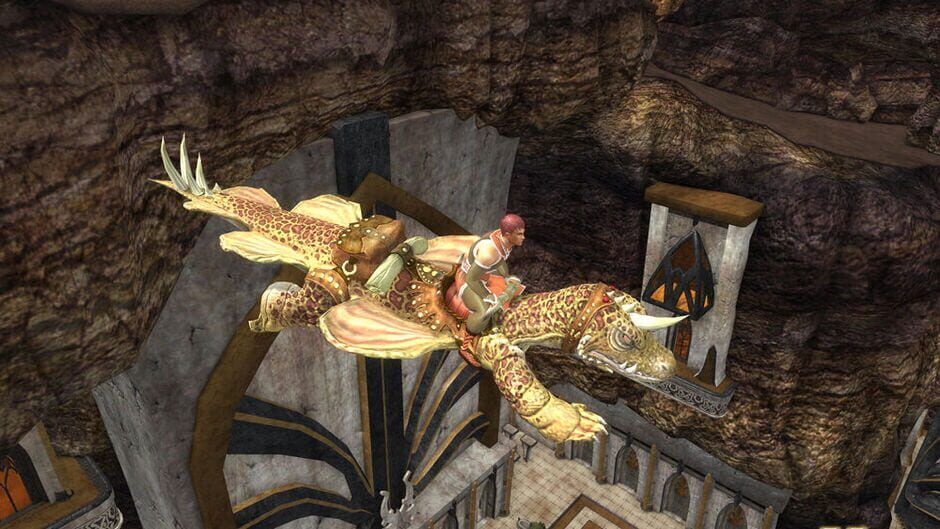

With EverQuest Legends heading into closed beta on April 24 ahead of a July launch, we look at how this pre-Kunark spinoff aims to modernize classic EverQuest, which systems writers and testers should watch closely, and whether it can balance nostalgia with true accessibility for today’s MMO audience.
EverQuest doesn’t get many true fresh starts. Progression servers come and go, experimental rulesets rise and fall, but the core game remains stubbornly, almost proudly, old school. EverQuest Legends is different. Heading into closed beta on April 24 under NDA and targeting a July launch, this standalone spinoff is openly trying to answer one big question: what if classic EverQuest had been built with modern MMO players and newcomers in mind from the ground up?
Positioned as a pre-Kunark take on Norrath, EverQuest Legends is not a 1:1 recreation of 1999. It keeps the bones of early EQ, then layers in features that simply did not exist back then: multi classing, more solo friendly content, and instancing to reduce the worst of the camp wars. For veteran EQ players, that sounds almost heretical. For everyone who bounced off the original because of corpse runs, downtime and social gatekeeping, it might finally be the on ramp into Norrath that has been missing for twenty five years.
The newcomer pitch is clear. Leveling is intended to be more approachable, with class flexibility and encounter design that lets you meaningfully play even if you only have an hour. Instanced content should help groups actually experience dungeon runs instead of losing entire nights to contested spawns. At the same time, the developers have repeatedly signaled that EverQuest Legends is not trying to become another streamlined theme park. This is still an EverQuest derived MMO, with group focused play, a sense of danger outside the cities, and progression that expects some commitment.
For modern MMO players used to games like Final Fantasy XIV, Elder Scrolls Online or World of Warcraft Classic, the big test will be friction. How much of EQ’s deliberate pace and punishing risk profile survives once you add contemporary quality of life features? Death penalties, travel time, manual grouping and knowledge heavy class design are exactly what gave classic EQ its identity, but they are also why so few new players stick with it today. If Legends goes too soft, it risks feeling like a generic retro skinned MMO. If it leans too hard into the 1999 mentality, it will remain a museum piece no matter how polished the art or netcode.
That tension is why the upcoming closed beta is so important, even if it is locked under NDA. This is where systems that only exist as bullet points right now will either harmonize or clash once hundreds of players slam into them at the same time.
One of the most intriguing systems to watch is multi classing. Classic EverQuest identities are incredibly tied to single classes. You were a cleric, a monk, a bard. Your reputation lived and died on that role. Legends wants to let you mix and match, which could be a major accessibility win for new players who do not want to reroll just to try something new, but it is also a direct shot at the pure class fantasy EQ veterans love. Balance will be tricky. If multi classing creates obvious best in slot combinations, the meta could harden around a tiny handful of hybrids while everything else is ignored. The beta will need to reveal whether Legends can preserve distinct combat roles without forcing rigid, unforgiving builds.
Group content and instancing will be the other headline systems to track. Instanced dungeons may sound routine in 2026, but for EverQuest they represent a philosophical shift away from social friction as content. In early EQ, half the game was negotiating camps, dealing with trains, and racing other groups to rare spawns. Legends, with its more newcomer friendly focus, cannot simply recreate that and expect modern players to call it charming. The key question is whether instancing is used as a scalpel or a sledgehammer. Are iconic camps and open world bosses still contested, creating that shared server narrative, while most leveling dungeons and story beats are instanced for reliability? Or does everything important retreat behind private copies, solving one problem while erasing the server identity that made EQ special in the first place?
Progression speed, and how it is tuned across solo, duo and full group play, will likely define how welcoming Legends actually feels. The developers have talked about more solo friendly options, which is almost mandatory in today’s MMO landscape, but solo friendly is a broad spectrum. Is it viable to solo all the way up at a reasonable pace, or is solo play mostly a backup for slow nights between dungeon queues and guild events? If the beta shows that grouping remains dramatically more efficient, that might please purists but it will also recreate the social gatekeeping that locks out shy or off peak players. On the other hand, if solo play is too effective, the social fabric that gives EQ its staying power could fray before launch.
Social tools, and not just combat systems, will quietly determine whether newcomers stick around. Classic EQ expectation is that players make their own fun through guilds, public chat and reputation. Modern MMOs have refined this with better LFG tools, mentor systems and casual friendly endgame paths. Legends needs to land somewhere in between. A basic group finder that still encourages conversation, opt in mentoring to connect veterans and rookies, and server wide events that do not assume raid level commitment would go a long way toward making the game feel alive but not overwhelming. Details on these tools are still thin, which makes them one of the more important things for beta testers to evaluate.
Another area the beta will quietly test is how the world itself sells nostalgia without demanding homework. Pre Kunark EQ is iconic, but it is also built around opaque quest chains, easily missed dialogue hints and navigation that assumes you already know where Freeport is from memory. Legends will likely have to make concessions here. More readable quest text, improved maps, and sometimes even subtle signposting can help new players fall in love with Norrath instead of alt tabbing straight to a wiki. The risk is that over explaining everything strips away mystery. The sweet spot is environmental storytelling and light guidance, not glowing arrows on the ground.
All of this plays into the central balancing act: can EverQuest Legends be both a love letter to early EQ and a viable entry point for someone whose first MMO was on a console or a mobile device? The closed beta’s staged invites suggest the team is keenly aware of how fragile that balance is. They are not just stress testing servers; they are stress testing the idea that EverQuest can evolve without losing its soul.
If the beta reveals that multi classing enhances rather than dilutes roles, that instancing relieves frustration without erasing server culture, and that progression respects your time without turning everything into a theme park, Legends could carve out a real space in today’s crowded MMO field. It would not replace the original, and it is not trying to. Instead, it could become the version of Norrath you recommend to friends who always wanted to understand why EverQuest matters but could never survive its sharpest edges.
If those pieces do not come together, EverQuest Legends risks becoming an oddity, too forgiving for the hardcore and still too archaic for everyone else. The closed beta starting April 24 is where that future will start to come into focus, even if the rest of us will have to wait until July to see the results for ourselves.