
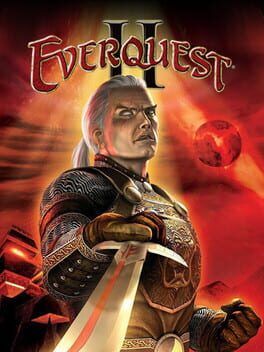
Daybreak’s EverQuest Legends revives the 1999 MMO as a more solo friendly, time respectful take on classic Norrath, keeping the look and feel while quietly rewriting how you actually play it in 2024.
EverQuest Legends is not trying to win an argument about what “true classic” EverQuest should be. It is doing something stranger and more interesting: taking the 1999 game almost at face value, then rearranging its guts so that you can actually live in it without scheduling your life around a six hour dungeon crawl.
This is a classic-MMO revival with a very particular target. It is for people who still think about running from Qeynos to Freeport with no map, but who now have kids, a job, and a Discord full of friends on completely different schedules. Daybreak and partner studio Game Jawn are asking a simple question: what if you could have the danger, friction, and social texture of old Norrath, but built for someone who can only log in for 45 minutes and doesn’t always have a preformed group?
What actually stays from 1999 EverQuest
EverQuest Legends keeps the parts of classic EverQuest that live in your muscle memory. The client uses the original visual style, the same low-fi character proportions and armor silhouettes, the same spell effects that bloom in chunky color rather than modern bloom lighting. Antonica is the launch setting, in its pre-Kunark form, with familiar routes through places like Blackburrow and Misty Thicket.
Music, ambient audio, and the broad shape of zones carry over, so landmarks are where veterans expect them to be. Mob layouts and loot tables are familiar enough that an old-school player can still tell you where a particular named enemy used to patrol. Legends is not a ground-up remake that swaps in a new art direction or compresses zones into instanced attractions. It reads much more like someone has lifted the original world into a better-behaved client.
Importantly, Daybreak is not polishing this into a modern theme park MMO visually. There is no heavy post-processing pass or character redesign trying to bridge the gap to EverQuest II. This is still chunky helms and jagged hills. The changes are mostly in how you touch the world rather than how the world looks.
A completely different approach to onboarding
Where Legends starts to diverge hard from 1999 is the moment you create a character. Classic EverQuest famously dropped you into a home city, offered a vague note from your guildmaster, and then left you to figure out how to open your inventory. Legends layers modern onboarding on top of that same geography.
The new starting flow spends its energy explaining how you play an MMO like this in 2024, not how to memorize obtuse keybinds. Interface tutorials are integrated into early quests instead of buried in a manual. The UI itself is closer to what current MMO players expect, with cleaner hotbars, more readable tooltips, and straightforward spell management. It is still recognizable as EverQuest rather than a generic modern HUD, but the intent is that you can move from another MMO into Legends without wrestling the client for an hour.
Crucially, the early game is structured so that you can learn systems solo without being punished for not immediately finding a group. Classic EverQuest’s level 1 to 10 experience often involved getting one-shot by a snake because you tabbed out to look up what “fizzle” meant. Legends instead frontloads guidance and survivability so that getting your bearings is part of the fun, not a hazing ritual.
Pacing for people who do not live in Norrath anymore
One of the biggest differences you will feel is pacing. The original EverQuest was built around long sessions and slow progress, where each level was a small saga and meditating for mana was an excuse to chat. Legends still respects the idea that advancement should matter, but it no longer expects you to spend a weekend camping a single spawn.
XP curves and encounter design have been retuned to make shorter play sessions meaningful. You can log in for under an hour and reasonably expect to finish a quest chain, clear a dungeon wing, or make a noticeable dent in your level bar. Death is still a threat and the world is not suddenly a loot conveyor belt, yet the time-to-fun is compressed compared with the 1999 cadence.
Loot progression is another place where the philosophy shifts. Legends adds a clear gear upgrade track, letting you push items up to +10 and customize effects. Instead of hoping a single rare drop defines your build for twenty levels, you are nudged to keep tinkering with your kit as you go. It works like a bridge between the slow, static itemization of classic MMOs and the more iterative gearing cycles players are used to now.
From “bring a cleric or log off” to genuine solo viability
The most radical design swing is how Legends handles roles and grouping. Original EverQuest was built around strict dependencies. If your group did not have a healer or crowd control, whole swaths of content were effectively off-limits. That created strong social bonds, but also made the game almost impossible to play on your own terms.
Legends attacks that problem at the class level. Each character can equip up to three active classes, drawn from a roster wide enough to generate more than 500 possible combinations. Instead of locking yourself into one narrow role, you can plan a personal toolset that covers basic survival, damage, and utility on your own.
This makes true soloing realistic in a way that does not exist in the 1999 ruleset. You can build a hybrid who can heal themselves, control a pull, and still kill things in a reasonable time. If you do group up, you are not held hostage by the exact composition. Four flexible characters can cover the jobs that used to require a perfectly assembled six person party.
Group caps are smaller and more flexible too. Standard groups top out at four players, and raids are designed for eight instead of sprawling 40 man affairs. That instantly lowers the coordination tax. You do not need a full guild calendar to see group content, and ad-hoc parties stand a better chance of succeeding without meticulous class quotas.
The goal is not to remove cooperation. Dungeons, open world danger, and shared spaces still push you toward teaming up. What changes is that lack of a healer or tank at that exact moment is less of a hard stop. The systems are biased toward letting you play now, with whoever is around, or completely alone if that is what your schedule allows.
Preserving friction without preserving tedium
A lot of modernized classics make the world safer and smoother at the cost of what made it memorable. Legends tries to walk a finer line. Travel is still physical, with recognizable runs between cities and zones that feel like real spaces rather than loading screens. Mobs can still punish careless pulls. Downtime exists.
At the same time, plenty of the sharpest edges have been sanded. Interface friction is reduced significantly. Information that once required third party websites is surfaced in-game through better tooltips and quest guidance. Spell and ability management are less about deep menu diving and more about actively using your kit.
The overall effect is that classic EverQuest’s mood and danger profile survive, while its most dated chores are pushed into the background. You still plan your routes, respect patrols, and think about your pulls, but you spend less of your precious playtime on busywork like wrestling with archaic windows or trying to interpret vague quest text.
How this compares to other legacy MMO revivals
EverQuest Legends is launching into a space that already has experiments in making old MMOs feel new again. World of Warcraft Classic has been gradually remixing its own history with Seasons that speed leveling and add twists, while Old School RuneScape continues to expand a frozen version of its 2007 ruleset. There are also private server scenes for games like Star Wars Galaxies and City of Heroes, all trying different answers to the same question: what do you change when you bring an old MMO forward?
Legends sits in a more aggressive camp of reinterpretation than projects that primarily tweak numbers. Its three class system and small group focus fundamentally change how you relate to traditional group roles. Where something like a progression server mostly preserves the original social contracts, Legends rewrites them so that soloing is a first class citizen rather than a fringe challenge run.
At the same time, it is far from a wholesale reboot. Unlike a full remake that throws out art and zone layouts, Legends keeps the visible shell of classic EverQuest largely intact. For returning players, that means the nostalgia hit is immediate. For new players, it means stepping into a world that feels distinct from current-gen MMOs instead of yet another game chasing the same glossy fantasy aesthetic.
Who EverQuest Legends is actually for
Nostalgia is clearly part of the hook, but the design choices point beyond a museum piece for veterans. Legends is targeting three overlapping groups.
It is for lapsed EverQuest players who want to revisit Norrath without accepting the full 1999 rulebook. Those players know the locations and the vibe, but no longer have the time or social infrastructure to live in a group-locked game.
It is for MMO fans who missed EverQuest entirely, but are curious about where the genre’s DNA came from. Legends gives them a way in that respects modern expectations about onboarding, UI, and flexible play schedules, without disguising that this is an older, harsher world than most contemporary titles.
And it is for solo-first players who find most MMOs either too soft or too socially demanding. Legends openly acknowledges that you might spend most of your time playing alone, and it designs its systems so that this is not a consolation prize. You can do meaningful content at your pace, then fluidly pivot into small groups and bite-sized raids when schedules align.
A classic MMO for the lives players have now
EverQuest Legends is not trying to replace live EverQuest or compete directly with current blockbuster MMOs. Instead it presents an alternate timeline where the 1999 design is asked to grow up alongside its audience.
By preserving the look, sound, and broad shape of classic Norrath while modernizing onboarding, pacing, and class flexibility, Daybreak is testing whether an old-school world can feel welcoming without losing its teeth. For anyone who has ever wanted to go back to their first MMO but cannot go back to their first MMO lifestyle, Legends might be the most convincing invitation yet.