
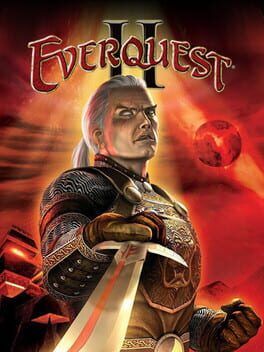
EverQuest II’s Varsoon time‑locked progression server has hit the Kunark Ascending expansion, marking more than a decade of content re-explored. Here is why this matters for EQ2, how TLE servers keep classic MMOs alive, and why nostalgia-driven progression cycles continue to sustain long-running online worlds.
EverQuest II’s Varsoon time locked progression server has quietly crossed a major milestone. Kunark Ascending, the game’s 13th expansion, is now unlocked for the TLE community, pulling players into one of EQ2’s late-era high points all over again.
For the live game this is old news. Kunark Ascending originally launched back in 2016. For Varsoon though it marks another full step through EverQuest II’s enormous expansion timeline, proof that the server and its community are still pushing steadily forward instead of stopping at the “classic” nostalgia band.
What Kunark Ascending means for Varsoon
Kunark Ascending picks up after Terrors of Thalumbra and dives back into the ever-popular continent of Kunark, mixing subterranean realms, ancient Iksar lore, and high-end progression systems. When it first released it was late-game content for long-time veterans. On Varsoon it becomes a fresh top-end goal for a server that started over in 2022 with only launch-era content.
With this unlock Varsoon players gain access to Kunark Ascending’s signature offerings: level-cap progression, new endgame dungeons and raids, questlines steeped in Kunark history, and a gear chase tuned for the server’s time locked ruleset. The progression path that started with simple handcrafted gear and basic heroic instances now stretches into one of EQ2’s more complex stat and itemization eras.
Importantly this is happening on a curated schedule. Varsoon was built around expansions unlocking roughly every 16 to 18 weeks, with mid-cycle content landing about two months after its parent expansion. That cadence gives the server a sense of seasonal rhythm. There is always a next goal on the horizon, but players get enough space to actually live in each era instead of rushing to the finish line.
Kunark Ascending arriving on Varsoon is a signal that the experiment is working. A server that many expected to cap out around classic or mid-era EQ2 is now exploring expansions that were once considered too modern to ever receive the nostalgia treatment.
Why time locked progression servers keep legacy MMOs alive
Varsoon is part of a broader trend that has reshaped how old MMOs survive. Time locked progression servers are not simply reruns of content. They are frameworks for re-experiencing an entire game’s life cycle at human speed.
In a traditional live service MMO, the pressure is always forward. Old zones are speed‑leveled past, early dungeons are ghost towns, and new or returning players often feel like they are stepping into a museum where everyone else is already in the final exhibit. A TLE server resets that clock. Everyone starts at level one. The first raid kills matter again. Group chat in low-level zones comes back to life.
For developers that reset is powerful. They can:
Re-use years of content without building brand new expansions. Monetize cosmetics, convenience, and subscriptions on top of an already finished content roadmap. Collect balance data and feedback in a controlled, era-specific environment instead of trying to untangle fifteen years of systems at once.
For players the appeal is even more direct. A progression server offers:
A fresh economy where low-level crafting and common drops retain value. A synchronized leveling wave where it is easy to find groups for content at every tier. A chance to re-run old expansions with modern knowledge, optimized class builds, and social networks that did not exist at launch.
Varsoon layers an additional twist on top through its free-trade ruleset, allowing most items to be traded between players. That turns loot and crafting into a more social and dynamic game, reinforcing the sense that the entire server is working through the timeline together rather than splintering into isolated progression cliques.
Kunark Ascending arriving this late in the expansion order shows that there is still demand not just for the romanticized early years, but for the full arc of EverQuest II’s design. Players are not just here for Antonica and Freeport. They want to relive the mid and late game experiments that defined EQ2’s modern identity.
Nostalgia as a live service: how Varsoon structures the past
Calling progression servers “nostalgia servers” undersells what is happening on Varsoon. This is nostalgia structured as a live service, a rolling content plan built from memory and history.
The time lock cadence is key. Sixteen-week expansion windows are long enough for guilds to gear up, clear raids, and dabble in alts, but finite enough that each era feels distinct. When a new expansion hits, it is an event. Players rush into the latest contested zones, progression races kick off, and old gear that once felt irreplaceable gets retired. It mirrors the original release years, but in a more predictable, community-friendly pattern.
This cyclical structure reshapes how players relate to content.
First, it changes the emotional weight of each expansion. When you know that Kunark Ascending will be the main focus for a fixed window you are more likely to savor its questlines, dabble in its collections, and run its heroics beyond the bare minimum. There is a sense of scarcity, not because content will vanish, but because the community spotlight will inevitably move on.
Second, it creates natural re-entry points. A lapsed player who quit after Rise of Kunark or Sentinel’s Fate can watch the Varsoon schedule and jump back in when “their” expansion comes up. Kunark Ascending showing up is not just a patch note. It is a beacon to anyone whose peak EQ2 memories are tied to that era’s zones, classes, or raid encounters.
Third, it flattens the barrier between veterans and newcomers. On a live server, catching up to a decade of systems, gear ladders, and meta knowledge is daunting. On Varsoon everyone is bound by the same ceiling. Even if you arrive mid-cycle you only have a few expansions of history to absorb, not fifteen.
The result is a community that feels both older and more approachable. Veterans bring mountains of knowledge, but the fixed unlock schedule means they cannot simply sprint twelve expansions ahead and disappear. The game’s own structure keeps everyone roughly aligned.
The social glue of nostalgia driven MMO cycles
Nostalgia is personal, but MMOs turn it into something communal. That is what keeps servers like Varsoon vibrant even as the broader genre wrestles with competition from newer, flashier online worlds.
When an expansion like Kunark Ascending unlocks, players are not just engaging with content. They are revisiting shared stories. Guilds talk about where they were during the original launch. Raid leaders compare strategies from the past to what works on Varsoon’s tuned encounters. Crafters remember old recipes and economies, then adapt them to a new, free-trade environment.
The key is that these stories are not frozen. Each progression cycle layers new experiences on top of old ones. Maybe your original guild no longer exists, but you clear the same raid with a different roster and a decade of extra skill. Maybe that heroic dungeon that once destroyed your group at launch becomes a relaxed farm run you carry newer players through.
This layering of memories is one of the most underrated strengths of the TLE model. It means that even long-stale content can feel alive again, because it is reframed through new social contexts and server histories. Kunark Ascending on Varsoon is not literally the same expansion that launched in 2016. It is Kunark Ascending as filtered through years of balance passes, accumulated community knowledge, and the specific culture of a progression server that started in 2022.
For Daybreak and Darkpaw, that is a form of renewable energy. Each unlock becomes a soft relaunch, a chance to re-market an old expansion, sell time-limited cosmetics or boosts, and invite lapsed players back for “just one more run” through their favorite era.
What Varsoon’s future says about long-running MMOs
The fact that Varsoon has made it all the way to Kunark Ascending challenges the idea that nostalgia servers must end in the early or “golden age” years of an MMO. It suggests that for a certain kind of player, the complete historical arc is itself the appeal.
For EverQuest II, that is important. The game’s later expansions experimented heavily with systems, power creep, and layered progression mechanics. Some veterans bounced off those changes on live. On Varsoon they get a second life under a more controlled timeline, with a community that is intentionally opting in.
If Varsoon continues to march through the remaining expansions it will effectively let players relive nearly the entire life span of EQ2 across a few condensed years. That is a powerful retention tool. Each unlock offers a new reason not to walk away yet.
For other legacy MMOs watching from the sidelines, the lesson is clear. Time locked progression is not just a launch gimmick. It is a long-term strategy for extending the relevance of a game well past the point where new full-scale expansions are affordable or realistic.
Varsoon’s Kunark Ascending milestone shows that when you respect the past, pace it carefully, and give players reasons to gather around each step in the timeline, even a twenty-year-old world like Norrath can still feel like a place worth coming home to.