
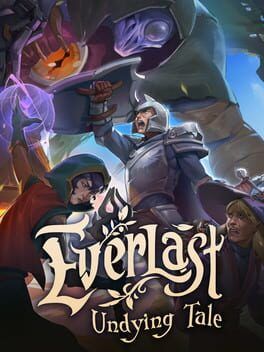
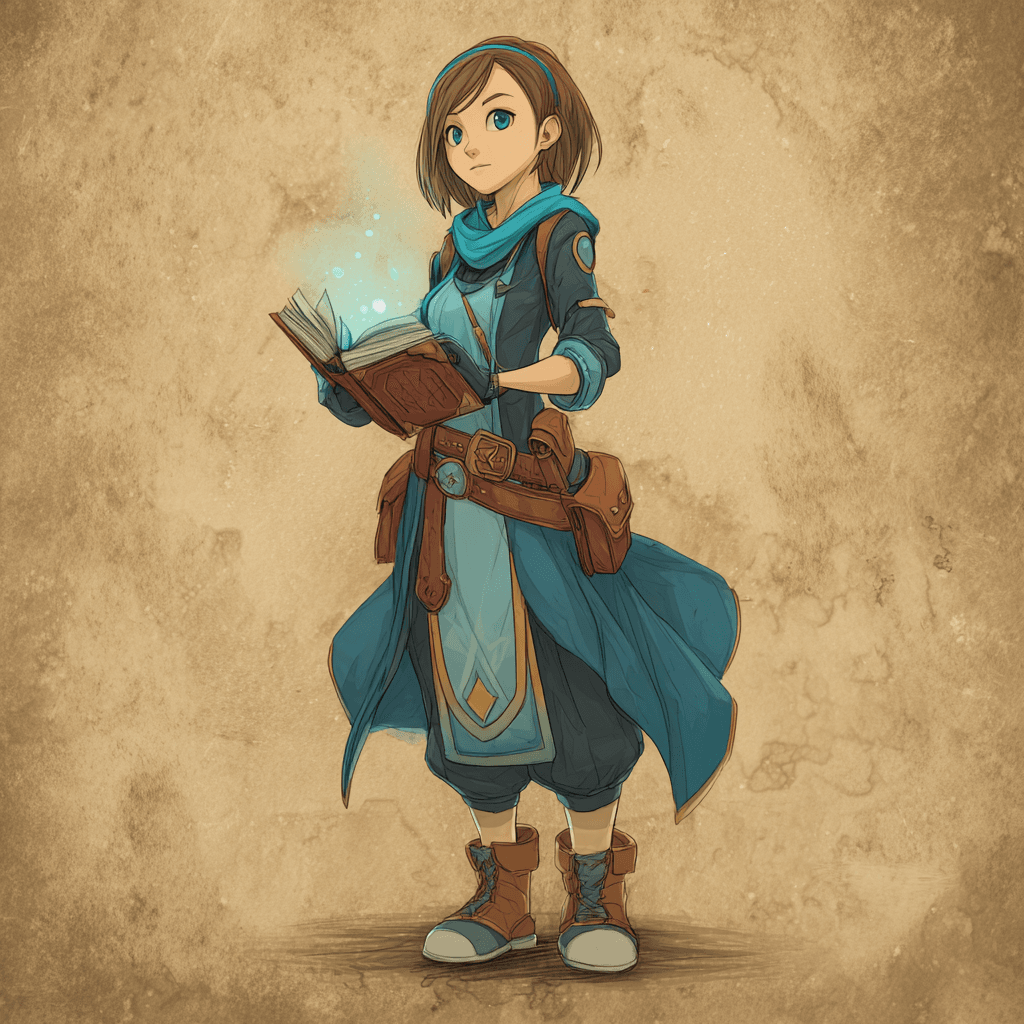
InSpades has launched Everlast: Undying Tale on Steam Early Access, positioning the RPG as a classic-inspired MMO-lite with 100-player public worlds, solo and private play, skill progression, crafting, quests, and an undead curse at the center of its story.
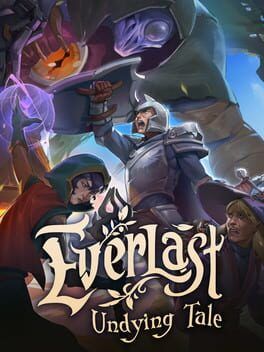
Image: IGDB
Store links: Everlast: Undying Tale on Steam
A smaller MMO pitch arrives with one very MMO-sized promise
Everlast: Undying Tale entered Steam Early Access on October 28, with developer InSpades pitching the open-world action RPG as an MMO-lite that can host public worlds for up to 100 players. That is the concrete hook of this launch, and also the point that needs the most careful expectation-setting. This is being sold as a classic-inspired MMO-lite, not as a subscription-scale MMORPG with a persistent megaserver, decades of endgame layering, and fully proven live-service infrastructure on day one.
MMOHuts reports that Everlast launched into Steam Early Access with public worlds supporting up to 100 players, while RPGamer states that players can play solo or in multiplayer, with servers available for up to 100 players. ModDB’s public listing gives the same basic split: players who want the shared-world atmosphere of MMOs can join public worlds with up to 100 players, while those who prefer a smaller experience can create private worlds with friends.
That split is the real shape of Everlast: Undying Tale early access. InSpades is chasing the social rhythm of older online RPGs, including open exploration, skill lines, gathering, crafting, world events, quests, and bosses, but it is packaging those ideas in a more flexible structure. The practical question for buyers is whether the launch build already has enough RPG texture and multiplayer reliability to support that promise, or whether Early Access should be treated as the beginning of a year-long buildout.
Sarkis, undeath, and the role of the resurrected player
The lore premise is direct but useful for an RPG built around repeated labor, regional recovery, and skill growth. According to RPGamer, players take on the role of Pyrrhics, people resurrected by Death himself, placed under his contract, and cursed to confront an undead threat in the kingdoms of South Umbardom and Northgaelia. Games Press, carrying the pre-launch announcement, identifies the death figure as Adon of Bythos and says players are resurrected in Sarkis with a second chance at life and a debt to repay.
Other source descriptions frame the same world from a slightly different angle. MMOHuts describes Sarkis as a land overrun by undead after ancient magic brings them back. MMORPG.com reports that InSpades describes the game as having a deep story and lore around sudden undead appearing and a mysterious curse being broken. Those accounts align around the central loop: the player is returned from death, the world is destabilized by the undying, and progression is tied to repairing both a character and a damaged land.
For a systems-minded RPG player, that setup matters because it gives a clean justification for Everlast’s broad activity spread. Games Press describes quests that range from convening with the dead and tracking down arcane items for friendly monsters to helping townsfolk with the daily work of farms and shops. The stated fantasy is less about rushing from one combat arena to the next and more about finding a place in a world where small errands, gathering routes, and regional rebuilding sit beside undead battles.
The classic MMO inspiration is mostly in the structure, not the scale
InSpades has been explicit about the game’s lineage. MMORPG.com reports that the developer calls Everlast: Undying Tale an homage to the classic MMO, and Games Press describes it as a hand-crafted love letter to classic MMO games in an action RPG package. The phrasing is important. Everlast is borrowing the habits and pleasures of classic online worlds, but the current pitch stops short of claiming the full scope of a traditional massively multiplayer RPG.
The sources point to several classic MMO touchstones. Players can explore an open world, gather materials, craft, take quests, fight bosses, and participate in shared server events. MMOHuts says those events can range from shared resource harvesting to larger boss fights. Games Press says players can work together on special events and tasks to help breathe life back into a world that has fallen into ruin. That is the old MMO cadence: head out, skill up, run into other players, contribute to local objectives, return with materials, and convert time into long-term character growth.
The world details in the press materials also suggest a deliberately readable fantasy geography. Games Press names the capital Kal Crossing and the Southern Swamps among the locations players can explore, presenting the world as bright, varied, and built for wandering off the beaten path. The tone being sold is not grim survival sandbox isolation. It is closer to the lived-in errand board, resource node, faction-town feeling that many classic MMO players associate with slower progression and regional familiarity.
Progression is built around skills, crafting, and action combat
Everlast’s RPG case rests heavily on breadth of progression. Games Press says players can level 16 different skills, while RPGamer lists fishing, gathering, occult rituals, combat tactics, and more as part of the skill array. MMOHuts separately identifies skill lines such as woodcutting and occultism. That range positions Everlast closer to a life-skill-heavy online RPG than a class-only dungeon crawler, at least in the way the early access pitch has been presented.
Combat is described as real-time rather than tab-targeted. RPGamer reports that players can block, dodge, and parry enemy attacks while dealing melee and ranged damage. That matters for anyone arriving from older MMOs expecting hotbar rotations and cooldown management above all else. Everlast appears to be blending MMO-style shared-world progression with an action RPG combat model, which can make solo play more active but also puts pressure on responsiveness, enemy readability, and network synchronization in multiplayer worlds.
Crafting is also a live system at launch rather than a minor side feature. MMOHuts reports that the Early Access launch update reworked crafting, including changes to Focused Crafts, quality chances, automatic crafting material use, and a new Overtime bar in the crafting minigame. For players who judge RPGs by long-tail progression rather than campaign length alone, those details are worth watching. A crafting minigame with quality outcomes can become a satisfying specialization path if its economy, inventory friction, and material routes are tuned well. In Early Access, it can also become one of the first places where balance problems show.
The launch build arrives with fixes aimed at the exact risks of a 100-player world
The most useful launch detail is not simply that Everlast supports 100-player public worlds. It is that InSpades’ Early Access update, as reported by MMOHuts, includes a broad multiplayer sync pass addressing cases where what players saw did not match the server. For a game selling shared resource harvesting, boss fights, action combat, and public servers, synchronization is not a background technical issue. It affects whether a parry feels fair, whether gathered resources behave consistently, and whether a public event feels communal instead of chaotic.
The same launch update also targets the basic friction points that can make or break a long-form RPG routine. MMOHuts reports that the Spot Cap Warp System is available through the quest In Search of the Past, Losing the Future, with warp stones placed across several regions. Item pouches add a new equipment slot and five extra inventory cells beneath the 30-slot backpack, with different pouch types for item groups such as herbs, ore, fish, logs, potions, and tools. World map search, server-side backpack sorting, bank Deposit X and Withdraw X functions, and improved Steam Deck and Linux support are also listed among the quality-of-life additions.
Those are not glamorous patch notes, but they are highly relevant to Everlast’s identity. A classic-inspired MMO-lite lives or dies on repeated routes: gathering, banking, crafting, questing, traveling, and returning to the field. If the map is hard to parse, storage is too limited, travel is too slow, or multiplayer state feels unreliable, the nostalgia target curdles quickly. InSpades appears to be using the Early Access launch to shore up those pressure points before the game’s planned content cadence has to carry the community.
Price, discount, timing, and the Early Access caveat
The launch price is straightforward in broad terms but inconsistent in the reporting around the discount. RPGamer says the Early Access version is available for $24.99 with a 20% launch discount. MMOHuts says Everlast is priced at $25 with a 25% launch discount currently available. Both outlets agree that Early Access is expected to last around a year, and MMOHuts reports that InSpades says the price will be somewhat higher when the game reaches full release.
That conflict should be treated as a store-check moment rather than something to smooth over. The confirmed takeaway from the provided sources is that Everlast: Undying Tale Steam Early Access launched at roughly $25, has a launch discount, is planned to remain in Early Access for about a year, and is expected to cost more at 1.0. Anyone buying specifically because of the discount percentage should verify the current Steam price in their region before purchase.
Platform information in the provided sources centers on Steam and PC. RPGamer lists the game for PC via Steam Early Access, and the official Steam page is the referenced storefront across multiple reports. MMOHuts also notes improved Steam Deck and Linux support in the launch update, but that is not the same as a formal compatibility guarantee in the source text. Treat handheld and Linux play as an area to verify through the Steam listing and early user reports if those are your primary ways to play.
Who should jump in now, and who should wait
Everlast: Undying Tale is most clearly aimed at RPG players who enjoy building a character through many small disciplines instead of chasing a single campaign-critical level number. If your favorite parts of online RPGs are fishing, woodworking, gathering routes, occult-flavored side systems, local quests, public events, and slowly becoming useful to a region, the early access pitch has a coherent identity. The 100-player world cap gives it room for social texture without implying the scale of the largest MMOs.
The caution is equally clear. This is a new MMO early access launch with public-world ambitions, a one-year development window, and a launch update already focused on multiplayer synchronization, inventory, crafting, travel, and quest adjustments. Those are exactly the systems that need time under real population load. Players who want a polished endgame, a settled economy, or fully tested large-server combat may be better served by waiting for post-launch updates and community impressions.
For players comfortable with unfinished systems, the appeal is that Everlast’s inspirations are legible. InSpades is not hiding the reference point: this is a classic-inspired MMO-lite built around shared atmosphere, skill-based progression, action combat, and a fantasy world trying to recover from undeath. The sensible way to approach it is as an Early Access RPG with MMO habits, not as a finished replacement for a long-running MMO. If that distinction sounds like a feature rather than a compromise, Everlast’s first year on Steam is worth watching closely.