
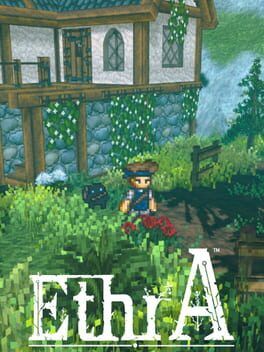
Ethra is officially planned for Nintendo Switch 2 after Stonelab Games cleared its Kickstarter goal, but the open-world pixel-art RPG still has major release details left to reveal.
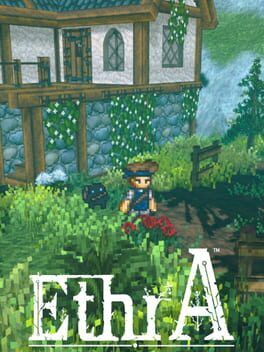
Image: IGDB
Store links: Ethra on Steam
Ethra is headed to Switch 2, but the date is still penciled in
Ethra has cleared its Kickstarter funding goal, and that success has locked in a future Nintendo Switch 2 release for the open-world pixel-art RPG from Stonelab Games. Nintendo Everything reported that the project raised over €40,000 and, importantly, that Switch 2 support was part of the main funding target rather than a later stretch goal. GoNintendo likewise reported that the funding target was reached, making a Switch 2 version part of the plan “down the road.”
That distinction matters. Many crowdfunded indie campaigns treat console versions as conditional rewards, added only if the project pushes far beyond its original budget. In Ethra’s case, the Switch 2 commitment was baked into the baseline ask, according to Nintendo Everything. Now that the campaign has passed that threshold, Stonelab Games has effectively moved Ethra from a hopeful fit for Nintendo’s next hardware to one of the upcoming Switch 2 indie games players can reasonably keep on their radar.
The tension is timing. GoNintendo reported that the current goal is to release Ethra sometime around April 2028, while also noting that this depends on development staying on track. Nintendo Everything’s report is more general, saying the game will come to Nintendo’s console “down the line.” Neither source points to a final Switch 2 launch date, an eShop listing, preorder details, or a publisher announcement.
What Stonelab is actually building with Ethra
Ethra is described in the Kickstarter material quoted by Nintendo Everything and GoNintendo as a 3D pixel-art open-world RPG with a heavy focus on exploration and combat. The story follows two protagonists, Bob and Veil, as they travel across a continent and uncover what the campaign describes as a thousand-year-old lie the world has forgotten.
Bob is a farm boy looking for a more interesting life. Veil is described as a lost child from a rare species with a natural affinity for magic. That pairing is also the center of the game’s combat pitch. According to the campaign details reproduced by both Nintendo-focused outlets, players control Bob and Veil together rather than swapping between two fully separate party members in a traditional RPG structure.
Bob handles close-range combat, while Veil casts spells and buffs. Veil can ride on Bob’s back, which keeps the pair together and protects Veil while simplifying movement and attacks. Players can also place Veil on the ground and control him with orders, forcing enemies to deal with two targets and opening offensive opportunities. The tradeoff, according to the campaign description, is risk: if Veil is defeated, Bob loses magical support and fights at a serious disadvantage.
That mechanic gives Ethra a sharper identity than its familiar ingredients might suggest. Open-world pixel RPGs live or die on whether their minute-to-minute actions feel purposeful across a large map. Ethra’s central question is not only where to go, but how tightly to keep its two heroes connected in each fight.
The Switch 2 promise gives a small RPG a louder signal
For a small indie RPG, confirmed platform intent can be a visibility tool as much as a technical roadmap. IGN’s running list of upcoming Nintendo Switch 2 games frames the console’s post-launch library as a mix of exclusives, third-party releases, and games benefiting from backward compatibility with the original Switch. In that environment, a game without a clear platform message risks being swallowed by release-date lists, storefront churn, and bigger publisher marketing cycles.
Ethra’s Switch 2 confirmation gives it a cleaner pitch for Nintendo players: this is an Ethra game being planned for Nintendo’s current console, rather than a PC-first Kickstarter that may or may not eventually reach the eShop. That does not guarantee placement in a showcase, eShop feature, or discovery queue. None of the provided sources report any Nintendo Direct appearance, Nintendo publishing support, or official store page. But it does give Stonelab Games a concrete hook when players search for Nintendo Switch 2 games beyond the large first-party and licensed releases.
That hook is especially useful because Ethra is trying to stand out with craft instead of scale. The game’s selling points are specific and readable: dual-character combat, pixel-art presentation, open-world exploration, towns, ruins, rumors, quests, and slower activities such as fishing, cooking, farming, and home work, as described by GoNintendo from the campaign. Those are the kinds of details that help an indie title survive outside a crowded trailer reel.
A two-developer production choice shapes the whole project
TechTimes reported that Ethra is being made by exactly two developers and that Stonelab shifted away from traditional hand-drawn directional sprite sheets toward pixelated 3D models blended with 2D sprites. The outlet characterized that decision as a production solution for building an open world at a scale a two-person team could handle.
That context helps explain why Ethra looks the way it does. TechTimes described the earlier approach as an 8-direction sprite-sheet technique, where characters must be drawn and animated from multiple angles. For a game with many characters and combat animations, that workload multiplies quickly. By using pixelated 3D models, the team can build a character once and render it from different angles through the engine, according to TechTimes’ explanation of the production pipeline.
For players, that is not a promise of performance or polish on Switch 2. No source here provides frame-rate targets, resolution, loading information, handheld-mode performance, or optimization details. It does, however, show that Ethra’s art direction is tied to a practical development constraint. The style is part aesthetic, part survival plan, and that matters when evaluating a crowdfunded open-world RPG from a small team.
The combat pitch has promise, and some obvious pressure points
The most interesting part of Ethra’s design is the Bob-and-Veil control scheme. GoNintendo’s writeup adds that Veil has an auto mode, which the campaign recommends even for experienced players, and that Bob can carry two weapon sets. In each set, players can equip his left and right hands independently, then swap between setups during combat. Veil can also equip different spells, allowing his magic to complement Bob’s weapons.
The campaign details cited by GoNintendo say swords, shields, spears, greatswords, and bows are currently implemented, with dual daggers next on the team’s list and additional weapons planned as development continues. Progression is said to unlock new melee moves, spells, artifacts, gear, and more ways to combine close-range pressure with magical support.
That is a strong RPG action premise, but it also puts pressure on readability. Controlling two characters, managing enemy attention, protecting a vulnerable caster, swapping weapons, and issuing orders can become elegant or exhausting depending on encounter design. The existence of Veil’s auto mode is a smart signal because it suggests Stonelab knows the mechanic needs flexibility. What remains unproven, at least from the provided material, is how this system feels across long sessions, larger fights, bosses, or handheld play on Switch 2.
April 2028 is a target, not a full release plan
The clearest timing detail comes from GoNintendo, which reported that the current goal is for Ethra to release sometime around April 2028 if development stays on track. Nintendo Everything’s report confirms the Switch 2 plan but does not give a date beyond a future release. TechTimes reported that the Kickstarter campaign launched on September 8, 2026, runs through October 10, 2026, and carried a €40,000 funding goal, which aligns with Nintendo Everything’s report that the campaign passed that level.
Several practical details remain unannounced in the provided sources. There is no confirmed Switch 2 release day, no price, no eShop page, no preorder window, no file size, no physical edition information, no upgrade-path information, and no confirmation of whether the Switch 2 version will launch alongside any other platforms. The sources also do not name an outside publisher or distributor for console release.
That leaves interested players with a sensible wait-and-watch position. Ethra Switch 2 is confirmed as a future platform target after the Kickstarter success, but it is still early for buying decisions. Backers and wishlisters should look for development updates that answer the console-specific questions: when the Switch 2 build enters certification planning, whether performance targets are disclosed, whether the April 2028 window holds, and how Stonelab handles the scope of an open-world RPG with a two-person team.
The discovery case for Ethra on Nintendo’s new console
Ethra’s Switch 2 confirmation lands at a useful moment for indie discovery. IGN’s Switch 2 release-date coverage emphasizes that players are now building libraries around Nintendo’s new hardware, with releases stretching across 2026 and beyond. In that context, early platform clarity gives a small RPG time to gather an audience before the release calendar hardens around bigger names.
The game still has to earn that attention. “Open world,” “pixel art,” and “RPG” are crowded labels, and Switch audiences have seen plenty of charming retro-styled adventures. Ethra’s better argument is its combination of dual-character combat, exploration-heavy world design, life-sim-style downtime, and a production method built around what a very small team can actually finish.
For now, the confirmed fact is simple: Stonelab Games’ Ethra is planned for Nintendo Switch 2 because its Kickstarter funding goal was reached. The open questions are the ones that will decide how closely players should track it: the final release date, console performance, pricing, publishing plan, and whether the April 2028 target survives the realities of making an ambitious indie open-world RPG.