
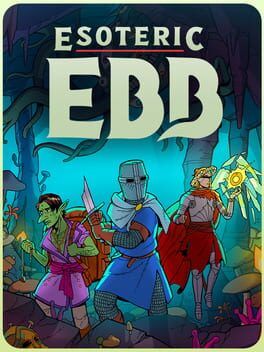

Hands-on impressions of Esoteric Ebb, a D&D-skewering narrative CRPG whose stat-voiced inner monologue, lethal dice checks and post‑arcanepunk chaos are already earning it “RPG of the year” buzz.
If you have been waiting for a game to finally pick up Disco Elysium’s torch instead of just waving it around, Esoteric Ebb is the one critics are pointing to. Raw Fury and solo developer Christoffer Bodegård describe it as a “Disco‑like” CRPG rooted in tabletop freedom, and early hands-on previews from Rock Paper Shotgun, PC Gamer and others suggest that is not idle marketing. This is the first game since Revachol that really tries to put the voices back in your head.
You play as the Cleric, a lowly government functionary and esoteric investigator in a bizarre post‑arcanepunk city. Your opening case sounds small on paper: a tea shop has exploded in a wild magic blast on the eve of an election. In practice it unfolds into labor disputes, corporate goons, goblin politics and questions about what faith and law even mean when the gods are as real as union-busting mercenaries. Much like Disco Elysium’s washed‑up cop, the Cleric is less a power fantasy and more a vehicle for social disaster.
The most obvious thread back to ZA/UM’s classic is the inner monologue system. Where Disco Elysium sliced your psyche into 24 wildly specific skills, Esoteric Ebb builds everything around six familiar tabletop attributes: Strength, Dexterity, Constitution, Intelligence, Wisdom and Charisma. In most RPGs these are silent numbers. Here they will not shut up. Each is written as a distinct personality, chiming into conversations, undercutting your plans and arguing with each other over what to do next.
PC Gamer describes combat encounters as “a chat between you and your skills,” which captures how integrated the voices are. A tense standoff with a goblin queen or a seagull‑provoked brawl becomes a turn‑based conversation where passive rolls let stats offer insights, then you debate which voice to follow on your active turn. Rock Paper Shotgun’s former ZA/UM writer source highlights this as the point where Esoteric Ebb stops being a Disco tribute act and turns into a genuine heir. You are not just picking blue text or red text. You are moderating a committee meeting held inside your skull.
Dice checks give that committee teeth. Esoteric Ebb leans hard into its tabletop roots with transparent d20 rolls, visible target numbers and frequent chances to fail in interesting ways. Much like a real pen‑and‑paper session, every stray decision can spiral into chaos. Pet the same seagull one too many times, mishandle a goblin’s ego, try to brute‑force a staircase and you will suddenly be staring down a check that can leave you humiliated, injured or both. Critics who spent hours with the demo talk about the game not as a series of quests but as a chain of improvised disasters they were delighted to tumble through.
What separates Esoteric Ebb from Disco Elysium is where that chaos lands tonally. Where Disco was hungover, mournful and deeply political, Esoteric Ebb replaces the cigarette smoke with Discworld‑style absurdity. The setting is high fantasy warped through post‑industrial arcanepunk, full of protesting dwarves, Pinkerton half‑orcs, devils who explain contract law and a goblin sidekick named Snell who becomes the Cleric’s patient foil. The politics are still there union busting, state power, religion as bureaucracy but the delivery skews toward “funny, unhinged chaos” rather than existential despair.
That tone also shows up in how the game treats combat. Where Disco Elysium all but refused to let you fall back on violence, Esoteric Ebb introduces a pseudo‑combat layer that still plays out almost entirely in dialogue boxes. When things kick off, you are locked into a turn‑based exchange of skill checks with your opponent, who answers your failed rolls with damage, status effects or narrative escalations. Wargamer and PC Gamer both note how this keeps fights grounded in character choices rather than stats alone. Winning an encounter can mean out‑arguing a devil over a clause or leveraging Charisma to redirect a mob, not just rolling high on a traditional attack.
Early builds suggest the structure is tighter than Disco Elysium’s sprawling Revachol, but still dense with reactivity. The opening slice sees you juggling that exploded tea shop with a dwarven protest, corporate interference and your own workplace reputation, and every major beat seems wired with skill checks and alternate solutions. One critic mentions that even character creation has been tuned to be more approachable than Disco’s cryptic archetypes, with clear sample builds that show what kind of inner chorus you are assembling.
The Cleric’s journey is also framed more explicitly as playing through a doomed tabletop campaign. NPCs banter like a D&D table that has gone on too long, magical mishaps feel like failed rolls described by a gleeful Dungeon Master, and the game constantly invites you to either lean into being a legendary cleric or “completely ruin the campaign.” That meta layer lets Esoteric Ebb indulge in slapstick and wild tonal swings without losing coherence. When your Intelligence stat starts whispering about becoming a wizard‑king instead of doing your job, it feels like a player suddenly chasing a dumb build idea mid‑session.
So why are people already calling this a potential RPG of the year contender, years ahead of its full release? Partly because the Disco‑like space is more crowded than it looks, and few pretenders have nailed the balance of systems, writing and worldbuilding. A former ZA/UM writer telling Rock Paper Shotgun that Esoteric Ebb is “the most exciting game Disco Elysium has inspired” carries real weight. PC Gamer going so far as to anoint it “2026’s best RPG” in March speaks to how confident those hands‑on sessions felt. Across outlets, the throughline is that Esoteric Ebb does not just copy Disco’s tricks. It understands why they worked.
At its best, according to early critics, Esoteric Ebb feels like a revelatory iteration on that formula. The inner voices are fewer but sharper, the dice are more present, the fantasy setting allows for weirder setpieces and the writing manages to thread sharp political edges through genuinely funny, often deranged vignettes. It is not trying to out‑philosophize Disco Elysium. It is trying to answer a different question: what happens if you give that level of narrative care to a disastrous D&D campaign in a world of goblin labor disputes and divine HR departments?
If the full game sustains the density, variety and razor‑edged dialogue of its demo, Esoteric Ebb will not just be another “Disco‑like” on a Steam tag. It will be the first CRPG that feels comfortable standing next to Disco Elysium, squabbling voices and all, and saying: we are part of the same lineage now.