
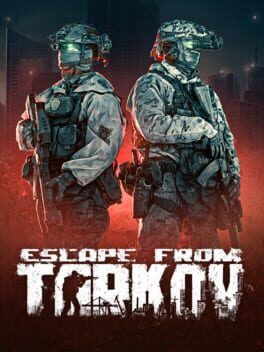
How the Icebreaker map, Boreas story chapter, and Half-Life nods quietly reinvent Tarkov’s PvE and storytelling, and why the community is split on the new lore-heavy direction.
Icebreaker Is Tarkov’s First True Story Dungeon
Patch 1.0.5.0 is the first time Escape From Tarkov has treated PvE as a destination instead of a tutorial. Icebreaker is a self-contained nuclear icebreaker ship, instanced away from the usual raid rotation and tuned strictly for 1 to 3 players. There is no random PvP here. You are not matching into a Shoreline lobby that happens to have more AI. You and your squad intentionally board a frozen hulk sitting in the Gulf of Finland to push through a linear story chapter.
Icebreaker’s structure is closer to a co‑op dungeon than a Tarkov raid. You launch an expedition, clear AI pockets, push toward explicit story objectives, and eventually collide with a bespoke boss encounter themed around the Paradigm Shipping operation. For a series that has traditionally buried lore in documents, off-hand trader lines, and out-of-raid fiction, that is a significant shift. Story is no longer just context for why you are fighting over Interchange’s power station. It is the object of the activity.
The ship itself is designed to sell that idea. Instead of Tarkov’s wide, sandboxy levels full of overlapping sightlines and third-party angles, Icebreaker narrows your decision space into corridors, machinery rooms, research sections, and open-deck kill boxes. The AI density is higher, and the spaces are clearly built to let the game script beats like ambushes and last-stand moments without a random player short-circuiting them.
Boreas Threads Tarkov’s Conspiracy Through One Focused Chapter
Where Icebreaker is the physical location, Boreas is the narrative spine that pulls you toward it. The chapter opens from the hideout, where you can pick up a distress signal through the Intelligence Center radio or discover Paradigm Shipping posters in Ground Zero and the TerraGroup building. Those breadcrumbs link TerraGroup’s murky experiments to a commercial shipping outfit and a stranded nuclear icebreaker that has somehow breached the Tarkov blockade.
Mechanically, Boreas chains together more traditional raids across Woods and other maps before you ever step onto the ship. You repair radio equipment under a cellular tower, chase down Paradigm documents, and interrogate traders for scraps of information about the distress signal’s origin. Only once you have pushed through that scavenger-hunt structure are you allowed to run Icebreaker proper and start answering the questions that have been hanging over Tarkov’s fiction since the Full Speed Ahead event first teased an unknown vessel.
From a systems perspective, this is Battlestate testing a new layer above the quest list. Boreas behaves like a seasonal campaign: multi-stage, gated, and explicitly authored to end with a big set piece. The reward is not just loot or trader rep, but concrete advancement of the metaplot about TerraGroup, USEC, BEAR, and the larger Norvinsk conflict.
A Quiet Half‑Life Tribute Hiding In The Hull
Boreas is not just a lore drop for Tarkov. It is a wink at one of PC shooter history’s great ghost ships. The chapter name is a nod to the Borealis from Half‑Life 2’s extended fiction, an icebreaker tied up in secret teleportation research and stranded in a remote region under unclear circumstances. DualShockers points out that Tarkov’s Paradigm Shipping icebreaker, trapped inside a quarantine ring with classified tech on board, is playing in a very similar sandbox.
Battlestate does not go as far as headcrabs or crowbars, but the references run deeper than a shared name. A corporate front line handling dangerous research, a vessel that should not be where it is, and a chain of radio pings leading players into something that feels too big for a local conflict are all straight out of Valve’s playbook. Tarkov keeps it grounded in its own tone, with military AI, grounded weapon handling, and the ever-present threat of failure, yet the shape of the scenario is unmistakably Half‑Life flavored.
For a game that has often signaled its inspirations through mechanics rather than direct homage, this is a rare, overt hat tip. It also underlines what Battlestate is trying to do with PvE: turn Tarkov’s world into something you explore like a campaign, instead of a set of loosely stitched together arenas.
PvE As A Storytelling Tool, Not Just A Safe Mode
The biggest systemic change in Icebreaker is not the map, but what the map represents. Battlestate has experimented with PvE before through co‑op modes and offline raids, yet those were always pitched as practice or a difficulty slider. Icebreaker is designed from the ground up as narrative content. The absence of random human opponents is not a concession for casuals, it is a prerequisite for authoring the kind of pacing they want.
Enemy AI spawns, patrol paths, and the boss encounter are all tuned around a predictable player count and defined ingress routes. That allows for more aggressive scripting. You can be funneled into a kill corridor knowing that an unexpected five‑man squad will not sweep the angle and skip the fight. You can be locked in a hold while alarms blare and reinforcements breach because the game has full control of what you are facing.
That level of control also lets Battlestate finally make good on the “story-driven progression” line that has been in Tarkov’s marketing for years. Boreas’ objectives are framed as investigation instead of shopping lists. Fixing infrastructure on Woods, triangulating the distress signal, and following Paradigm’s trail are all about building a picture of what the icebreaker is doing here. When you do finally reach the ship, your knowledge of its corporate backers and the political stakes of its cargo colors the firefights that follow.
In other words, the PvE structure is being used to carry fiction in a way public raids cannot. Open maps will always favor emergent chaos over authored beats. Icebreaker is Battlestate carving out a space where they can flip that ratio.
Softening Tarkov’s Rough Edges With New Systems
Alongside Icebreaker and Boreas, Patch 1.0.5.0 quietly ships several systems that speak volumes about where Tarkov’s design is heading. The new task assistance indicators highlight the direction of critical quest items once you are close enough to their spawn. It is not a full GPS arrow snapping you from extract to extract, but it trims the most frustrating edges off older quest design that often relied on obscure item placements and external map guides.
Within the Boreas chain, that change does more than reduce friction. It keeps pacing intact. If you are stuck searching a single room on Woods for half an hour with no feedback, the story’s momentum dies and Icebreaker becomes another checklist. With subtle indicators, the chapter can push you along just fast enough that the radio messages, trader dialogues, and environmental clues land in a single, coherent evening instead of being stretched across a week of failed attempts.
The update’s harsher tuning of the Obdolbos 1 injector, now with a one‑in‑three chance to kill on use, is an interesting counterweight. Battlestate is willing to smooth the path to narrative beats through guidance tools, yet they are also doubling down on Tarkov’s lethality where it matters most. Even in a PvE‑heavy patch, the sandbox remains uncompromising when you lean too hard on its more fantastical tools.
Community Split Over Lore‑Gatekeeping And Co‑op Focus
Player reaction to Icebreaker and Boreas has been predictably polarized. On one side, you have longtime fans who have been begging for a more explicit campaign to make sense of years of cryptic events. For them, Boreas is finally the moment where clues about TerraGroup, Paradigm, and the blockade converge into a tangible mission that feels as important as any late‑wipe questline.
On the other, there is a growing frustration about how the content is accessed. Threads on Reddit and forums capture a recurring complaint: that one of the most interesting locations Tarkov has ever produced is effectively locked behind a quest chain and hideout progression. Newer players or those who primarily live in standard PvP raids see an impressive new map on marketing screenshots, then discover they cannot just click a matchmaking button and explore the ship in a normal raid rotation.
There is also anxiety about what a PvE‑first push means for Tarkov’s identity. Some veterans worry that co‑op story expeditions will siphon resources from competitive balancing or desync improvements. Others are wary of any steps toward quest indicators, fearing a slide into checklist design that undercuts Tarkov’s harsh, read‑the‑map‑yourself ethos. At the same time, a sizeable segment of the community welcomes Icebreaker as a much‑needed pressure valve, a place to progress lore and gear without the constant threat of being dropped by an unseen sniper 200 meters away.
The Half‑Life homage is similarly divisive. Many PC shooter diehards appreciate the Borealis nod and the way Boreas reframes Tarkov’s conspiracy in a more overtly science‑fiction light, hinting at experimental tech and wider geopolitical stakes. Some purists, however, argue that leaning too hard into recognizable genre references risks diluting Tarkov’s grounded, paramilitary tone.
What Icebreaker Signals For Tarkov’s Future
Taken together, Icebreaker and Boreas feel less like a one‑off event and more like a prototype for how Battlestate wants to deliver story from here on. Dedicated PvE locations, multi‑map narrative chapters that culminate in co‑op finales, and subtle quality‑of‑life systems like task indicators all point toward a Tarkov where the war in Norvinsk is no longer just background noise. It is a story you can actually play through, on rails when it needs to be and in the sandbox the rest of the time.
The studio will have to walk a tightrope. If future chapters lock too much of the game’s most ambitious level design behind progression, backlash from the raid‑first crowd will only grow. If PvE scripting starts to dominate development at the expense of Tarkov’s unique brand of player‑driven chaos, the game risks losing what made it stand out in the first place.
For now, though, Icebreaker succeeds at something Tarkov has struggled with since its first alpha raids: making its lore feel present and urgent. Whether you are crawling through the bowels of a stranded icebreaker or triangulating a distress signal under a lonely tower on Woods, you are no longer just grinding for rubles. You are participating in a story Battlestate seems finally ready to tell in full.