
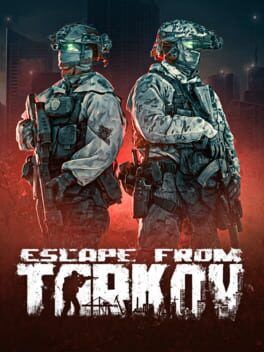
A post-launch look at Escape From Tarkov 1.0’s rocky Steam debut, Nikita Buyanov’s roadmap for seasonal characters and story quests, and what it all means for newcomers and veteran raiders.
Escape From Tarkov finally hitting Steam in its 1.0 form should have been a victory lap. Instead, its first week has felt more like another brutal Factory spawn with no meds and a broken gun. Crashes, server instability, and a storm of negative Steam reviews have framed the launch, even as many players praise the underlying update as one of Tarkov’s strongest foundations yet.
Yet behind the noise, director Nikita Buyanov is already talking about what comes next. In a post-launch roadmap, he outlines plans that could significantly reframe Tarkov’s identity: a stronger seasonal structure, fresh story quests tied into the Scav Life DLC, returning winter conditions, and a renewed focus on quality-of-life fixes.
For a game defined by its unforgiving extraction loop and long-term account progression, those seasonal and narrative ambitions raise a big question. Can Tarkov stay Tarkov while also becoming more approachable for newcomers on Steam, without losing the veterans who survived years of wipes and server queues?
A brutal but revealing first week on Steam
Tarkov’s Steam debut has effectively doubled as a live stress test. Buyanov describes the first week as a trial not just for the servers, but for the development team itself. The result has been predictable: queue times, disconnects, and hard crashes punctuating raids, alongside angry reviews that have pulled the game’s Steam rating down into mixed territory.
Underneath that, though, many longtime players and new Steam recruits agree that the 1.0 content base feels coherent. The core gunplay, armor math, ballistics, and map reworks remain uniquely punishing but rewarding. The problem is that none of that matters if your first impression is a failed login or a crash mid-raid.
That is why the immediate roadmap is not about flashy new guns or giant new maps. Instead, Battlestate is promising months of focused work on performance, stability, and quality-of-life polish. Server upgrades, bugfix passes and small usability tweaks sound unglamorous, but for someone booting Tarkov for the first time on Steam, they determine whether this is a game worth learning or a refund request waiting to happen.
Story quests and Scav Life: adding structure to chaos
Beyond stabilization, the first major wave of content is pointed at narrative structure. New storyline quests and an in-game event are planned as Tarkov moves toward the Scav Life DLC. Combined with the return of winter conditions in the city, the idea is to make raids feel less like isolated matches and more like chapters in a larger war.
For veterans, additional story quests are another vector for min-maxing: new quest chains mean new unlocks, new trader progress paths, and fresh routes through old maps. Done right, they can pull experienced players back into locations they long ago optimized, forcing them to approach familiar choke points with different gear and priorities.
For newcomers, narrative is something else entirely. Tarkov’s traditional onboarding has been a sink-or-swim plunge into aggressive AI, cryptic traders, and opaque systems. Clearer story quests that introduce mechanics, explain factions, and direct players towards manageable objectives could double as a soft tutorial layer without feeling like one. Instead of dropping into Customs with no idea what to do, a new Steam player could be following a chain that gradually escalates risk, teaches basic extraction routes, and drips lore along the way.
The tension is whether these quests remain fully optional side rails or become the de facto way to play. If they pay out too well, veterans may feel forced into linear questing to stay competitive. If they are too stingy, newcomers will ignore them and slide back into the same frustrating early experience Tarkov has always had. Striking that balance will be crucial as Battlestate leans harder into a story-driven framework.
The big pivot: seasonal characters and what they could mean
The most transformative piece of Buyanov’s roadmap is not the next event or even Scav Life. It is the planned introduction of seasonal characters and a broader seasons framework for Tarkov.
On paper, a seasonal character system sounds like formalizing what Tarkov has already done through periodic wipes. Fresh starts reset the economy, collapse the power gap, and bring everyone back to the same naked PMC sprinting for a pistol. But a true seasonal structure can go further by giving each cycle its own ruleset, rewards, and pacing.
For veterans, this could finally provide structure to what has long been a wipe-and-wait pattern. A clearly defined season with a start and end, unique challenges, and maybe even seasonal modifiers could give top-end players reasons to experiment with off-meta builds or pursue prestige-style grinds instead of bloating their stashes for months on end. Seasonal ladders, cosmetic rewards, and targeted goals can all speak to players who already know how to survive but want new ways to measure mastery.
For newcomers, seasonal characters might be the most important safety net Tarkov has ever built. One of the steepest obstacles in extraction shooters is joining late and facing a population that has months of gear and knowledge. If seasons are frequent and well messaged, new Steam players can plan their entry around resets, knowing they will not be permanently behind the curve. The social pitch becomes simpler: "Wait for the next season, we will all start together." That could be a huge deal for squads trying to onboard friends.
The flip side is the risk of diluting Tarkov’s identity as a long-haul hardcore sim. Some veterans love the feeling of permanent, high-stakes progression where every lost gun matters because it represents weeks of accumulated advantage. If seasons shorten that arc too much, the game could slide toward the cadence of mainstream looter shooters, with progress treated as disposable. Battlestate’s challenge is to define what carries between seasons, what is truly temporary, and how to retain the sting of loss while still offering regular fresh starts.
Preserving the hardcore extraction identity
The core of Tarkov’s appeal is that it does not care whether you are having fun. Death is fast, information is incomplete, and the game expects players to study it like a subject. Seasonal characters and more explicit story content do not have to compromise that, but if mishandled, they could sand off exactly the edges that make Tarkov different.
To keep its hardcore extraction identity intact, the seasonal framework will need to respect several unwritten rules. Gear must remain scarce enough that losing a kit hurts, even late in a season. Meta builds should be attainable but not trivial, so that knowledge and map awareness stay more important than raw item level. Story quests can guide without over-scripting raids; objectives should intersect with the chaos of PvP, not route around it.
Veteran players will also be watching how Battlestate handles monetization around seasons and Scav Life. A misstep that ties meaningful seasonal advantages or exclusive power to paid content would be explosive for a community already skeptical of business decisions around edition upgrades and the Steam release. If seasons feel like an organic extension of Tarkov’s wipe culture, veterans are far more likely to embrace them as another layer of the simulation rather than a cynical reset button.
For newcomers, the goal is not to make Tarkov easy, but to make it legible. Seasonal characters, better story quests, and a more stable client can accomplish that without undermining difficulty. The first successful Steam season would be one where new players understand why they died, what they could do differently, and what they are working toward if they queue for one more raid.
Looking ahead to Tarkov’s next phase
In the short term, Tarkov’s first week on Steam will probably be remembered more for its instability and controversy than its content. But if Battlestate follows through on its roadmap, this rocky launch could end up as the pivot moment where Tarkov finally embraced a more structured seasonal model and a clearer story identity.
For veterans, the appeal will lie in fresh ladders to climb, new quest lines to solve, and seasonal metas to crack. For newcomers discovering Tarkov through Steam, it may be the difference between bouncing off in the first few raids and finding a path to mastery inside one of the most demanding shooters on the market.
Escape From Tarkov 1.0 on Steam is not suddenly going to become friendly. What it can become is comprehensible, seasonal, and narratively grounded while still being ruthless. If Battlestate gets that balance right, this messy first week could end up looking less like a failure and more like the painful extraction that leads to a stronger endgame.