
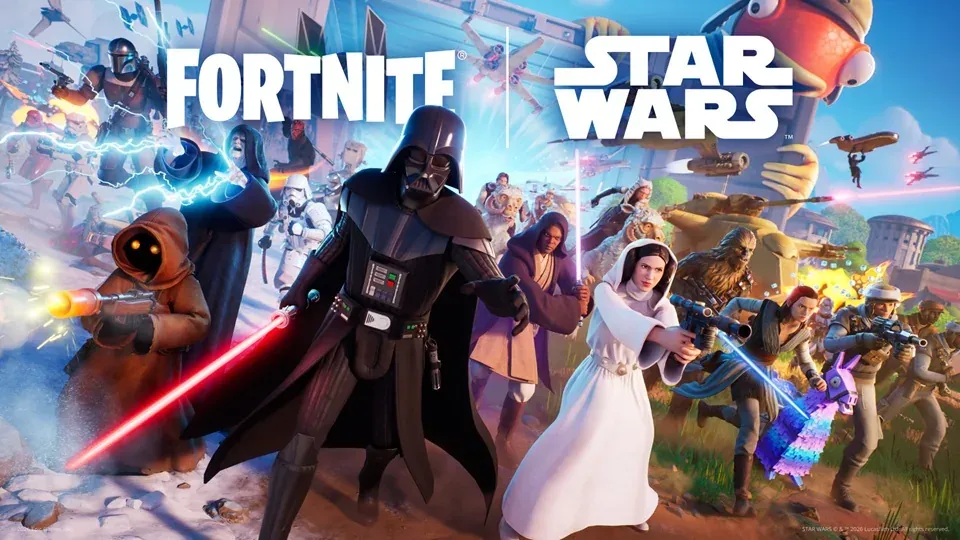

Epic’s reported AI-first development push has collided with a delayed unannounced Star Wars and Marvel shooter, raising bigger questions about studio culture, Disney’s partnership, and what players can actually expect.
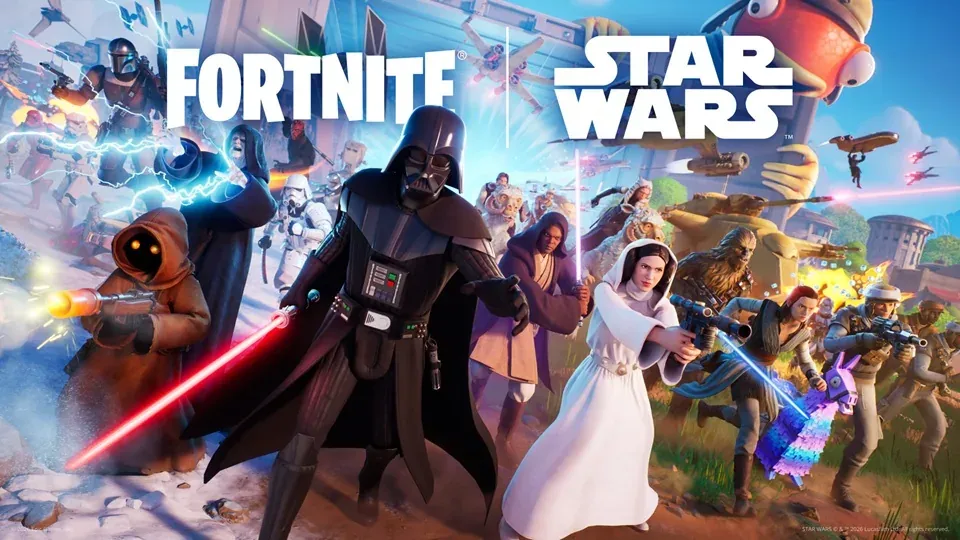
Image: comicshoplocator.com
Epic’s reported AI push lands as its Disney shooter misses March
The strongest concrete development is also the source of the tension: Bloomberg reported, as cited by IGN, egamers.io, Gadget Review, and other outlets, that Epic Games has delayed an unannounced Star Wars and Marvel crossover shooter that had been internally lined up for March. Epic has not announced the game, has not given it a public title, has not named platforms, and has not provided a replacement release window.
According to those reports, the slip is tied to a familiar production problem rather than a sci-fi premise: Epic allegedly underestimated the time and resources required to build the project, and development moved more slowly than expected. That would be a notable delay on its own because the game is reportedly part of Epic’s wider Disney relationship. It becomes a much larger story because the same reporting says Epic is pushing the team toward an “AI first” production model.
Bloomberg reportedly obtained an internal message from a director on the project that included the line, “No more hand-written code.” The same message reportedly said the project’s art would be “generated with full AI workflows.” IGN and egamers.io both report that developers on the project were encouraged to use tools such as Anthropic’s Claude, with humans expected to supervise the output.
Those details remain reported, not officially announced product information. Epic’s public response, however, confirms the direction of travel. Communications director Jake Jones told Bloomberg, in a statement quoted by multiple outlets, “We’re embracing AI-accelerated development, led by Epic developers who are the visionaries and creative drivers for everything we do.” That sentence is doing a lot of work. It affirms AI acceleration while positioning Epic’s human developers as the creative leads. The unresolved question is how that balance works inside an actual production pipeline when code, art, tools, approvals, and quality control all collide.
The mandate changes the studio equation before it changes the game
For a large studio, an Epic Games AI first mandate would not function like a new plugin or optional tool adoption. If Bloomberg’s account is accurate, this is a production philosophy being pushed into the daily work of developers who already face a slipped schedule. That has consequences for morale, accountability, and the definition of craft inside a studio.
The reported phrase “No more hand-written code” is especially sharp because it reframes engineering labor. It suggests developers would shift from writing systems directly to prompting, editing, integrating, and validating AI-generated output. In theory, that can speed up routine work. In practice, it moves pressure into review, debugging, and architectural judgment. A bad line of human-written code has an author. A bad AI-generated system may have a prompt, an editor, a reviewer, a toolchain, and a deadline behind it. That can make responsibility harder to trace unless the studio builds strong process around the new workflow.
The art-side claim is equally sensitive. A “full AI workflow” for art on a Disney-connected Star Wars and Marvel game would have to pass through brand consistency, character likeness, approvals, legal review, and player scrutiny. Gadget Review notes that developers reportedly questioned error detection and quality assurance gaps around the AI-generated work. That is not a small concern for entertainment properties with some of the most tightly managed visual identities in popular culture.
Bloomberg reportedly said many Epic developers were left “stunned” by the push. That reaction matters because game development culture depends on trust between leadership and specialists. If developers see AI as a force multiplier they control, adoption can become another production advantage. If they see it as a top-down response to a missed schedule, it can read as management trying to solve planning errors by rewriting the labor model midstream. Those two interpretations create very different studios.
Sweeney’s public framing is ambitious, but the timing is awkward
Epic founder and CEO Tim Sweeney addressed the broader shift on X shortly before Bloomberg’s story went live, according to IGN and egamers.io. He said Epic had a “huge pivot underway” and was “moving developers around to retool for maximum AI acceleration.” He also wrote that “the aim isn’t to do the same stuff with fewer people,” but to let Epic build “MORE and BETTER stuff” and bring benefits to teams using Unreal.
In a later post, Sweeney described the goal in more cautious terms, saying Epic’s aim was to “survive the AI revolution,” help other developers do the same, and emerge making “better code and content faster.” Those posts are important because they show Epic is not treating AI as a quiet internal experiment. The company is trying to present AI game development as part of its strategic identity, both for its own projects and for the Unreal ecosystem.
The awkward part is timing. A message about acceleration lands differently when it appears alongside a delayed project. If a team has already missed an internal March target because the company underestimated staffing and time, then a major workflow pivot can look like a strategic leap or a compensating move, depending on where you sit. From a strategy perspective, the risk is that Epic is trying to change the engine while racing the car.
GameSpot also pointed to Epic’s public tone around AI through a separate Epic Games Launcher preview, which Epic described in its own announcement as “vibe coded.” GameSpot criticized that rollout as buggy and thin on meaningful new features, and reported that Epic warned users not to use the beta with Fortnite or Rocket League. That launcher episode is separate from the Star Wars and Marvel shooter, but it reinforces the broader reputational issue: Epic’s public enthusiasm for AI is arriving before the company has shown players a major, polished AI-accelerated game outcome.
The shooter carries more weight because of the Disney deal
The slipped project matters beyond one missed internal release window because it appears to sit inside Epic’s high-profile relationship with Disney. Disney announced in February 2024 that it planned a $1.5 billion equity investment in Epic alongside a multiyear collaboration to create a connected games and entertainment universe tied to Fortnite. The announced plan included Disney, Pixar, Marvel, Star Wars, Avatar, and other properties.
The unannounced shooter has been described by multiple outlets as part of that broader Disney and Epic relationship. The Main Street Mouse reports that the shooter is one piece of a three-project, non-Fortnite deal between the companies. IGN notes earlier Bloomberg reporting that described an Epic-developed Disney extraction shooter, reportedly similar to Embark Studios’ Arc Raiders. That genre label is still part of the reporting trail, not an official announcement from Epic.
That distinction matters for players. Epic and Disney have already used Fortnite as a crossover platform for major entertainment brands, but a standalone shooter would test a different kind of commitment. A live service or extraction-style game needs matchmaking, progression, loot rules, cosmetics, balance cadence, onboarding, anti-cheat, platform compliance, and ongoing content production. If it also connects to Fortnite’s cosmetic ecosystem, as GameSpot says Bloomberg reported, the project becomes a bridge between Epic’s existing live-service machine and Disney’s franchise ambitions.
A delay in that context is not simply a calendar movement. It may affect how quickly Disney’s investment becomes visible to players as playable software rather than skins, events, or branded islands. It also raises a practical strategic question: can Epic use AI to expand output without diluting the consistency that licensed universes require? For Marvel and Star Wars, speed is only useful if the result survives fan scrutiny and licensor approval.
AI could help Epic scale, but it can also create hidden production debt
The optimistic case for Epic AI game development is straightforward. Epic owns Unreal Engine, runs Fortnite at massive scale, operates a storefront and launcher, and maintains a creator ecosystem. If AI tools can automate repetitive tasks, generate iteration candidates, assist with code scaffolding, or accelerate content variations, Epic could turn internal learning into broader Unreal-facing tools. Sweeney’s posts specifically point toward benefits for all teams using Unreal, according to IGN and egamers.io.
But the production risk is also straightforward. AI output still has to be reviewed, integrated, secured, optimized, localized, tested, and maintained. In game development, speed at the asset or code-generation stage does not automatically mean speed at the shipping stage. If generated work introduces subtle bugs, inconsistent art direction, performance problems, animation issues, or compliance concerns, the time saved upstream can return as hidden debt downstream.
That is the strategy problem behind the Epic Games shooter delay. Bloomberg’s reporting, as summarized by IGN and egamers.io, says the delay came because Epic misjudged required time and resources. AI acceleration may address throughput, but it does not erase planning accuracy, feature discipline, or the coordination cost of a large licensed shooter. A team can generate more candidate material and still be bottlenecked by approvals, technical integration, live-service design, or basic fun.
There is also a culture cost if staff believe the mandate undervalues specialist judgment. The most effective AI-assisted studios are likely to be the ones that make expertise more central, because experienced developers are better at spotting weak outputs and knowing when a generated solution is unsafe. If the internal message is heard as “the machine builds, humans clean up,” morale and ownership suffer. If it becomes “experts get better leverage,” the same tools can produce a healthier shift.
Players should treat the project as real but still unannounced
For readers tracking the Epic secret Star Wars Marvel shooter, the practical guidance is simple: do not plan around March. Bloomberg’s reported March target has been abandoned, and no public replacement date exists. Epic has not announced a title, platforms, price, business model, beta plan, trailer, system requirements, or whether the game will launch through Fortnite, the Epic Games Store, consoles, or some combination of those routes.
The safest confirmed facts are limited. Epic has publicly embraced AI-accelerated development through its statement to Bloomberg and Sweeney’s posts. Disney publicly announced a $1.5 billion planned equity investment in Epic and a multiyear collaboration. The shooter, its delay, the reported “No more hand-written code” directive, the “full AI workflows” art language, the use of Claude, and the internal March target all come from Bloomberg’s reporting as relayed by multiple outlets.
That does not make the reporting trivial. It means the story should be read as a production signal rather than a product reveal. The signal is that Epic may be using one of its most commercially sensitive internal projects to test a more aggressive AI-first pipeline. If that works, the lessons could affect Unreal tools, Fortnite-adjacent content, and future licensed games. If it struggles, the delay may become an early example of how difficult it is to replace mature game production habits with AI-centered workflows under schedule pressure.
The next meaningful update will not be another executive post about acceleration. It will be a public reveal that answers ordinary player questions: what the game is called, how it plays, where it launches, whether it is free-to-play, how it connects to Fortnite cosmetics, and how polished it looks after this reported pivot. Until Epic shows that, the delayed shooter remains less a release to anticipate and more a test case for how far a major publisher-developer can push AI into the center of game production.