
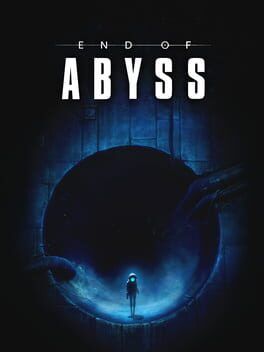

Section 9 Interactive’s first post-launch End of Abyss patch targets map errors, blocked doors, and a revival freeze. Here is what changed, what remains unresolved, and whether players who waited on reviews should reconsider.
Image: IGDB
A fast patch meets a slow-burn problem
Section 9 Interactive has released an End of Abyss patch almost immediately after launch, and the timing is the story. According to MP1st, the October 2 update appears as version 1.012 on PS5 and 1.0.1.2 on Xbox Series X|S and PC. GameSpot reports that the patch arrived one day after End of Abyss launched on PlayStation 5, Xbox Series X|S, and PC through the Epic Games Store.
The update targets the kind of issues that can sour an exploration horror game quickly: map inaccuracies, doors that could fail to open, and a freeze tied to revival. Those are not cosmetic rough edges. In a game built around moving through an oppressive facility, doubling back through hostile corridors, and reading the environment for the next route forward, a broken map or blocked path can turn tension into distrust.
That creates an unusual situation for anyone who held off after reading early End of Abyss review complaints. Some of the most practical launch problems have already been addressed, at least according to the patch notes reported by MP1st and GameSpot. The harder question is whether the End of Abyss launch fixes are enough to change the buying advice, because several critiques from early reviews were about design and pacing rather than bugs.
What the first End of Abyss patch changes
MP1st reports that the update fixes a possible freeze when Cel revives with the Defibrillator mod while still taking damage. It also fixes an issue with energy node doors where dying between destroyed nodes could prevent those doors from opening. MP1st adds that the door fix should unblock users who had already encountered the problem, which makes it especially important for players whose saves were stalled rather than merely inconvenient.
The same report lists map fixes, including a missing room and some doors showing as reset after restarting. It also mentions other minor fixes and improvements, without detailing them. WindowsForum, citing MP1st, repeats the same version split across platforms and emphasizes that the update is a targeted maintenance patch rather than evidence of a wider technical overhaul.
GameSpot’s account gives the map fixes more context. The outlet says its reviewer’s main concern was that the in-game map could share incorrect information, such as marking a door as locked after it had been unlocked or failing to show when a key had been found. GameSpot argues that this is especially damaging in a metroidvania-style structure, where players make long routing decisions based on map state.
That is the central practical change. The End of Abyss PS5 update, along with the matching Xbox and PC versions, appears aimed at making the facility legible again. It does not promise a redesign of combat, pacing, enemy pressure, or the overall route structure.
Why map reliability hits harder in this kind of horror
End of Abyss is described across the reviews as an atmospheric adventure with metroidvania elements, survival horror framing, and heavy backtracking. GamingBolt’s review says the opening stretch sells the Facility’s oppression through presentation before the game’s pacing, combat, and repeated backtracking begin to drag against that atmosphere. GameSpot similarly frames exploration and route planning as central to the experience.
In that context, the map is part of the horror machinery. A locked door should create a question the player can answer: do I need a key, a tool, a new route, or the nerve to return through danger later? If the answer might be “the map is lying,” the fear becomes administrative. You stop listening to the building and start auditing the interface.
This is where Section 9’s quick patch has real weight. The reported fixes do not make End of Abyss scarier by themselves, and they do not turn a contested design into a universally recommended one. But they strike at a specific kind of frustration that reviewers and players identified early: wasted trips through an already backtracking-heavy structure.
For horror, wasted movement can work when it costs resources, nerves, or time under pressure. It fails when it feels like paperwork caused by bad information. Based on the reported notes, this patch is trying to move End of Abyss back toward the former and away from the latter.
The launch complaints were bigger than bugs
The patch addresses several concrete problems, but it does not erase the broader criticism around End of Abyss. GamingBolt praised the art direction, environmental design, limited color palette, and early atmosphere, describing the Facility as oppressive before the first real encounter. The same review was far harsher on pacing, combat fundamentals, difficulty spikes, and the amount of backtracking.
GamingBolt also criticized how radio communication interrupts moments that might otherwise let players piece together objectives through exploration. In one example from the review, the player reaches a reactor objective, only for a call to explain the need for three power cores after the route has already started to unfold. That complaint is not a bug. It is a storytelling and guidance choice, and the current patch notes do not claim to alter it.
Community reaction reflected similar caution before and around launch. In a Reddit thread on r/metroidvania, one user who said they had finished and reviewed the game called it “good but frustrating,” citing bugs, map problems, and confusion over where to go. Another commenter said they might wait until later in the year for patches. The same reviewer in the thread said they had been told by the team that a specific bug they hit most was being patched, while also stressing they had to review the version they were given.
That distinction matters for readers comparing End of Abyss review complaints with the new patch. The fix list appears to address map and progression reliability, two of the loudest practical complaints. It does not address every criticism tied to the game’s feel: how often you backtrack, how combat lands, how scary it is, or how much the game explains through calls instead of letting dread breathe.
The review window changed almost overnight
GameSpot’s follow-up is unusually candid about how quickly the ground shifted. The outlet says its review went live two days before its article on the patch, while the game had launched only the day before that follow-up. GameSpot notes that the patch fixed many of the issues it had planned to revisit later, creating a rare case where a review could become outdated almost immediately on specific technical points.
The outlet also says one severe pre-release bug, a boss failing to drop a quest item, was patched just hours before the reviewer had to file the review, allowing the game to be completed. GameSpot says it did not foreground that issue because the public was not expected to experience it at launch. That is a useful window into how unstable the late review period appears to have been, at least from that outlet’s experience.
For players, the fairest reading is not that early reviews were wrong. They described the state those reviewers played, and in GameSpot’s case, the outlet has now reported that the game changed quickly after publication. The fairer update is that End of Abyss seems to have crossed from “wait for map and blocker fixes” to “check whether the remaining design complaints bother you.”
This is also a reminder that a day-one or near-launch patch can solve different kinds of problems. A progression blocker can be corrected. A missing room marker can be added. A door state can be restored. But the unease of moving through a survival space depends on systems working together: enemy design, sound, resource pressure, routing, objective clarity, and trust in the world.
Should review-wary players jump in now or keep waiting?
If your main concern was technical obstruction, the reported End of Abyss patch is a meaningful improvement. MP1st says the update fixes a revival freeze, an energy-node door problem that could block progress, and map errors involving a missing room and door states after restarting. GameSpot says the patch clears up most of the issues that hurt its review experience, especially the unreliable map information.
If you were waiting because you dislike confusing navigation caused by bugs, End of Abyss is in a better position than it was at launch, based on those reports. The fact that the door fix is said to unblock already affected users is also important. Players who hit that issue may not need to restart, though the available source material does not specify whether they must reload a save, revisit the area, or take another step to trigger the correction.
If your concern is the underlying design, waiting still makes sense. GamingBolt’s criticisms of tedious pacing, combat weakness, difficulty spikes, and intrusive communication are not addressed by the reported patch notes. Reddit discussion also included complaints that the game was not especially scary and that unlimited ammo undercut some survival pressure, though those are player and reviewer impressions rather than patch-confirmed issues.
The safest recommendation is conditional. Players drawn to bleak facility horror, strong art direction, and exploration through a hostile map now have fewer reasons to fear a broken route. Players looking for tight survival resource pressure, cleaner pacing, or a scarier enemy loop should treat the patch as a technical correction rather than a transformation. End of Abyss sounds healthier after update 1.012 on PS5 and 1.0.1.2 on Xbox and PC, but the abyss still has the same shape.