


A reported breakdown of the new End of Abyss gameplay and developer video, focusing on exploration, tension, facility design, and the unanswered questions horror fans should track before launch.
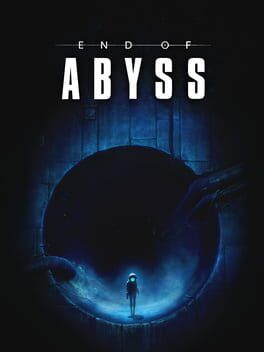
Image: IGDB
End of Abyss opens its facility doors before an October launch
Section 9 Interactive and Epic Games Publishing have begun a behind-the-scenes video push for End of Abyss ahead of its reported October 1 launch, according to MonsterVine, with the first installment titled Entering the Facility: Meet the Creators. That is the concrete development around the game right now: a developer-facing video series has started, and it is being positioned as a weekly run-up to release.
The tension is that End of Abyss is still being defined in public by fragments rather than a full buyer-facing breakdown. GamersHeroes identifies it as a top-down atmospheric horror game. Bloody Disgusting describes it as a sci-fi horror shooter and an action adventure title. GamingBolt reports that the new showcase includes gameplay and behind-the-scenes interviews, noting a dark, gloomy Abyss where the cast moves with surprising agility. Martin Cid Magazine points to specific play ideas, including wall scanning, shooting creatures, enemies splitting, a dual-use scanner, and a top-down horror framing.
Taken together, the new End of Abyss gameplay and End of Abyss developer video material sketch a clearer shape than a teaser alone could. This appears to be horror built around movement through a decaying facility, information-gathering under pressure, and combat encounters that may become worse when the player fires. What remains unconfirmed in the provided reporting is equally important: platforms, price, performance targets, PC requirements, edition structure, and how much survival-game resource management sits beneath the atmosphere.
The developer video frames the horror around origin, team, and influence
MonsterVine reports that the first behind-the-scenes video, Entering the Facility: Meet the Creators, looks at the origins of End of Abyss, the team behind it, and the influences behind its decaying facility. Bloody Disgusting similarly says the video is intended to introduce players to the team behind Section 9 Interactive’s upcoming sci-fi horror shooter. GamersHeroes reports that Section 9 Interactive and Epic Games Publishing released the new behind-the-scenes video in time for spooky season.
That focus matters because the facility is being treated as a central subject, rather than a neutral corridor set. The sources do not provide a transcript of the developer interviews, so it would be too strong to claim exactly which films, games, or art traditions are being cited. What can be said is that the first video’s stated emphasis, as reported by MonsterVine, puts creation history and environmental influence in the foreground. For a horror game, that is a useful signal. Facility horror succeeds when architecture feels like pressure: rooms narrow the player’s options, lighting withholds certainty, and backtracking becomes a risk calculation instead of a convenience.
The title of the first video, Entering the Facility: Meet the Creators, also gives the campaign a practical structure. Section 9 and Epic are not only selling a monster reveal or a combat hook at this stage. They are building a weekly explanatory series around the place itself and the people making it. For horror fans deciding whether to keep End of Abyss on the radar, the question now is whether later episodes continue to show systems and spaces in motion, or whether they remain broad studio-profile pieces.
Exploration appears to revolve around seeing what the room refuses to show
The sharpest reported exploration detail comes from Martin Cid Magazine, which describes an End of Abyss setup involving scanning walls and a dual-use scanner. The outlet’s wording connects that scanner, the creature-splitting mechanic, and the top-down horror framing as parts of a coherent design intention. That is a stronger signal than a generic mention of exploration, because it suggests the act of reading the environment may be mechanically tied to survival.
In horror terms, a scanner changes how a room breathes. If the player must actively inspect walls or surfaces, then moving forward becomes a negotiation between speed and certainty. A top-down view can give broad spatial awareness, but it can also flatten mystery unless the game gives the player reasons to doubt what is immediately visible. A scanner can supply that doubt. It can make a clean wall suspicious, a dead end provisional, and an empty route feel unfinished.
The phrase dual-use is the part to watch. The provided sources do not define both uses in detail, and they do not confirm whether the scanner consumes energy, has a cooldown, exposes the player, or competes with weapons for attention. Those are vital survival-horror questions. If scanning is free and safe, it becomes a routine interaction. If scanning asks the player to slow down, give up aim, spend a limited charge, or risk detection, it becomes a pressure system. Right now, the public reporting supports the scanner as a meaningful exploration tool, but not the exact cost structure behind it.
The new gameplay suggests mobility, but not comfort
GamingBolt’s most useful observation from the new gameplay is that the Abyss looks as dark and gloomy as expected, while the cast moves around surprisingly nimbly. That combination is worth separating from the usual horror shorthand. A nimble character does not automatically make a horror game less tense. It changes where the tension has to come from.
Slow movement can create fear by making escape feel impossible. Faster movement asks different questions: how quickly can the player read a room, how cleanly can they reposition, and whether enemies punish panic rather than simple delay. If End of Abyss gives the player agile movement inside a hostile facility, then encounter design has to meet that agility with threats that close space, flank, split, or force bad routes through the environment.
Martin Cid’s reported creature-splitting mechanic is especially relevant here. Shooting creatures and watching them split implies that combat may not be a simple delete button. Again, the provided material does not lay out enemy health, damage, ammo economy, or how splitting works in exact terms. But the described mechanic points toward escalation through action: firing may solve the immediate problem while creating additional bodies, lanes, or targets. For a top-down horror game, that can turn a room into a moving diagram of bad choices. The player may have mobility, but the space can still collapse around them if enemy behavior multiplies faster than the player can control it.
The facility is the throughline, from art direction to encounter pressure
Across the available coverage, the facility is the shared anchor. MonsterVine specifically says the first behind-the-scenes video examines the influences behind the game’s decaying facility. GamingBolt emphasizes the dark and gloomy look of the Abyss. GamersHeroes uses the phrase top-down atmospheric horror. Martin Cid connects the top-down framing with scanner use and the creature-splitting mechanic. None of those details alone gives the full design map. Together, they point to a game trying to make place, vision, and threat feed into each other.
That is the correct direction for this kind of horror. A facility setting can become repetitive if it is only a sequence of metal halls and sealed doors. It becomes memorable when the layout changes the player’s behavior. Scanning walls implies hidden information. A gloomy presentation implies restricted readability. Agile characters imply the player is expected to navigate actively rather than simply endure. Splitting enemies imply combat has consequences beyond expenditure of ammunition.
The practical concern is whether those pieces hold up over a full game. The provided reports do not confirm campaign length, level variety, puzzle density, checkpointing, difficulty settings, or how often the scanner and splitting creatures appear. Horror systems are vulnerable to overexposure. A monster that splits is frightening the first time, tactical the tenth time, and potentially tedious if the answer never changes. A scanner can deepen exploration, but it can also become busywork if every room asks for the same sweep. The promise in the End of Abyss preview material is coherence. The risk is repetition.
Horror fans should track the unanswered survival questions
Based on the current source material, End of Abyss deserves attention from horror fans who like oppressive spaces, top-down tension, and combat that may complicate rather than cleanly resolve danger. The confirmed or reported pillars are specific enough to stand out: Section 9 Interactive and Epic Games Publishing are behind the project, a behind-the-scenes series has begun, MonsterVine reports an October 1 launch, the first video focuses on the creators and facility influences, GamingBolt has seen dark gameplay with nimble cast movement, and Martin Cid reports scanner use and creature splitting.
For a buying decision, though, the missing details are still substantial. The provided sources do not confirm platforms, pricing, PC specifications, console performance, accessibility options, save structure, or whether launch includes any demo or early access path. They also do not confirm the survival economy. As a horror specialist, I would want to know whether ammunition is scarce, whether healing resources exist, whether scanning has a cost, whether enemy splitting can be prevented, and whether stealth or avoidance is viable. Those details determine whether End of Abyss plays like an atmospheric shooter with horror dressing or a harsher survival game where every shot stains the room with consequences.
The best reason to keep watching the weekly developer videos is that they may answer those questions before October 1. The first wave has already clarified the mood and some mechanical intent. The next useful step would be unedited or lightly edited gameplay showing a full exploration loop: entering a room, scanning, discovering a route or threat, engaging or avoiding creatures, and dealing with whatever splitting enemies leave behind. Until then, the End of Abyss horror game pitch is promising, but the final read should wait for clearer information on systems, availability, and performance.