
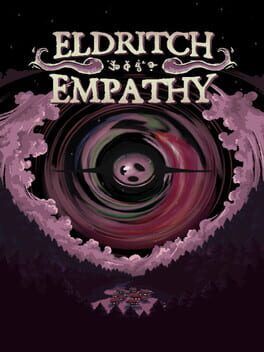

Team17 and LUAL Games have revealed Eldritch Empathy, a PC-bound Lovecraftian horror puzzle game planned for 2027 with sanity pressure, research-driven runs, and choices between purifying or purging corrupted creatures.
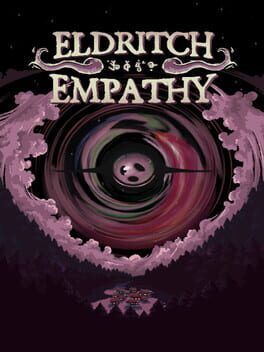
Image: IGDB
Store links: Eldritch Empathy on Steam
A 2027 PC reveal built around studying the thing in the dark
Eldritch Empathy has been revealed for PC in 2027, with publisher Team17 and developer LUAL Games positioning it as a Lovecraftian narrative puzzle game rather than a straight combat horror release. The announcement, carried through the official Games Press release and reported by Invision Community, Console Creatures, Capsule Computers, and Netto’s Game Room, confirms the game is coming to Steam and centers on investigation, cosmic horror, roguelike elements, and a sanity system.
That combination gives the reveal its immediate hook for horror players tracking new horror games 2027: Eldritch Empathy is selling fear as a research problem. The player is not described as a soldier, exorcist, or monster hunter first. The confirmed setup has players armed with research tools, their wits, and dwindling sanity as otherworldly creatures threaten their world. The pressure comes from understanding what these entities are before the mind gives out.
The current announcement does not include a specific release date inside 2027, pricing, PC system requirements, or console versions. What is confirmed is a PC launch window, a Steam page, and a design pitch built around investigative puzzles, choices with lasting consequences, and repeated runs where knowledge survives even when sanity does not.
The Lovecraftian premise begins with a behemoth breaking reality
According to the official announcement text distributed on Games Press, the story begins after a monstrous behemoth appears with the power to peel back the veil of reality. That breach brings otherworldly monsters down on the player’s home, turning the surrounding wilderness into a field site for cosmic contamination.
The sources describe forests, mountains, and mines as the spaces players will investigate. Each creature is tied to corrupted emotions, and the player records findings in a grimoire while trying to learn how the horrors came to exist and who sent them. In horror terms, that is a useful distinction. Eldritch Empathy is not currently being pitched around ammunition scarcity, chase sequences, or barricade management. Its survival pressure is framed through observation, deduction, and the cost of getting close enough to know what you are facing.
That puts the game’s Lovecraftian label under a specific lens. The reveal is less about tentacles as decoration and more about knowledge as a hazard. The official materials repeatedly connect progress to research, but every interaction also threatens the player’s sanity. For a Lovecraftian horror puzzle game, that is the right axis to watch: whether the final design can make learning feel necessary, dangerous, and morally compromised all at once.
Puzzle play is tied to empathy, violence, and irreversible choices
The central creature interaction in Eldritch Empathy is confirmed as a choice between empathy and violence. The announcement says players can attempt to purify the corruption within a creature, or purge it permanently by ending the host. Both paths carry consequences, and the official key features state that the player’s actions can have an irreversible impact on the village and its community.
That is the reveal’s sharpest design promise. Puzzle games often treat the correct answer as clean and final. Eldritch Empathy appears to complicate that by asking whether solving the creature is the same as saving it. The sources describe corrupted emotions as something to analyze through tools and prior research, which suggests the puzzle layer is about reading the monster rather than simply matching symbols or unlocking doors. The confirmed language does not explain how those tools work moment to moment, so it would be premature to claim a specific puzzle format.
From a practical horror-player perspective, the question is how much consequence lives in the system rather than the text around it. Team17 and LUAL Games say choices can shape the village and community. They have not yet detailed whether that means altered NPC availability, changed routes, different endings, permanent creature states, or resource consequences across runs. The premise is strong because it turns compassion into a risk calculation, but the impact will depend on how visible and mechanical those consequences become in play.
The roguelike loop turns sanity loss into retained knowledge
Sanity is the announced survival resource. The official description says each interaction saps the player’s sanity, with some interactions taking a heavier toll than others. Once sanity is fully depleted, the player succumbs to the darkness and begins again. The important confirmed wrinkle is that a failed attempt does not wipe everything clean: players wake up with knowledge and research gathered from previous runs, then push deeper into the forest.
That gives Eldritch Empathy its roguelike shape. The announcement also refers to improving the player’s build between attempts, though it does not specify the upgrade systems, currencies, tools, or progression trees involved. The phrasing points toward planning runs around accumulated information, creature identification, and survival capacity rather than random loot alone.
For horror, this structure can cut two ways. Repetition can make monsters familiar, which risks dulling dread. At the same time, a good sanity system can make every observation feel like spending from a limited mental budget. If Eldritch Empathy makes the player decide when to withdraw, when to risk one more reading, and when to accept an imperfect solution, its roguelike loop could fit the premise. If the loop becomes simple optimization, the cosmic horror may lose its teeth. The reveal confirms the ingredients, but not yet the tuning.
The confirmed platform picture is narrow, and that matters for planning
For now, Eldritch Empathy is confirmed for PC in 2027. The announcement links to the Steam page, and Netto’s Game Room specifically notes that players can visit Steam to wishlist the game. The quotes from LUAL Games co-founders Anna-Lena Pontet and Luzia Hüttenmoser refer to excitement for the Steam launch next year, which lines up with the 2027 window stated across the sources. Team17 general manager Harley Homewood also described the game as progressing toward launch next year in the same press release.
There is no confirmed PlayStation, Xbox, Switch, or Nintendo successor platform version in the supplied material. There is also no confirmed price, early access plan, demo, rating, controller support, localization list, Steam Deck status, or PC performance target. Horror fans who primarily play on console should treat Eldritch Empathy as PC-only until Team17 or LUAL Games says otherwise.
For players building a 2027 horror watchlist, the practical move is simple: wishlist on Steam if the research-and-sanity premise is your lane, then wait for gameplay details before treating it as a day-one certainty. The reveal tells us the fantasy and structure. It does not yet answer how the puzzles read on screen, how harsh the sanity economy is, how long runs last, or how much combat sits behind the word “purge.”
The horror to watch is whether compassion becomes a real survival risk
The title Eldritch Empathy is doing a lot of work, and the announcement supports that focus. The game is about analyzing corrupted creatures, choosing whether to purify or destroy them, and carrying the burden of those decisions back to a village that can be permanently affected. That gives the reveal a stronger identity than many early horror announcements, because the fear is not only the creature in the woods. It is the possibility that the humane answer costs more sanity, more time, or more of the community than the brutal one.
There are still major unknowns. The sources do not provide audio details, enemy behavior systems, interface examples, or a breakdown of how investigative puzzles are solved. They also do not explain how the grimoire functions beyond recording research and supporting future attempts. Those are important gaps for a game whose tension appears to rely on reading monsters under pressure.
Still, Eldritch Empathy 2027 is worth tracking because its confirmed design pitch has a clear pressure triangle: understand the creature, preserve your sanity, and live with what your solution does to everyone around you. If LUAL Games can make those choices mechanically painful rather than purely narrative, Team17 may have a distinctive indie horror project on its 2027 slate.