
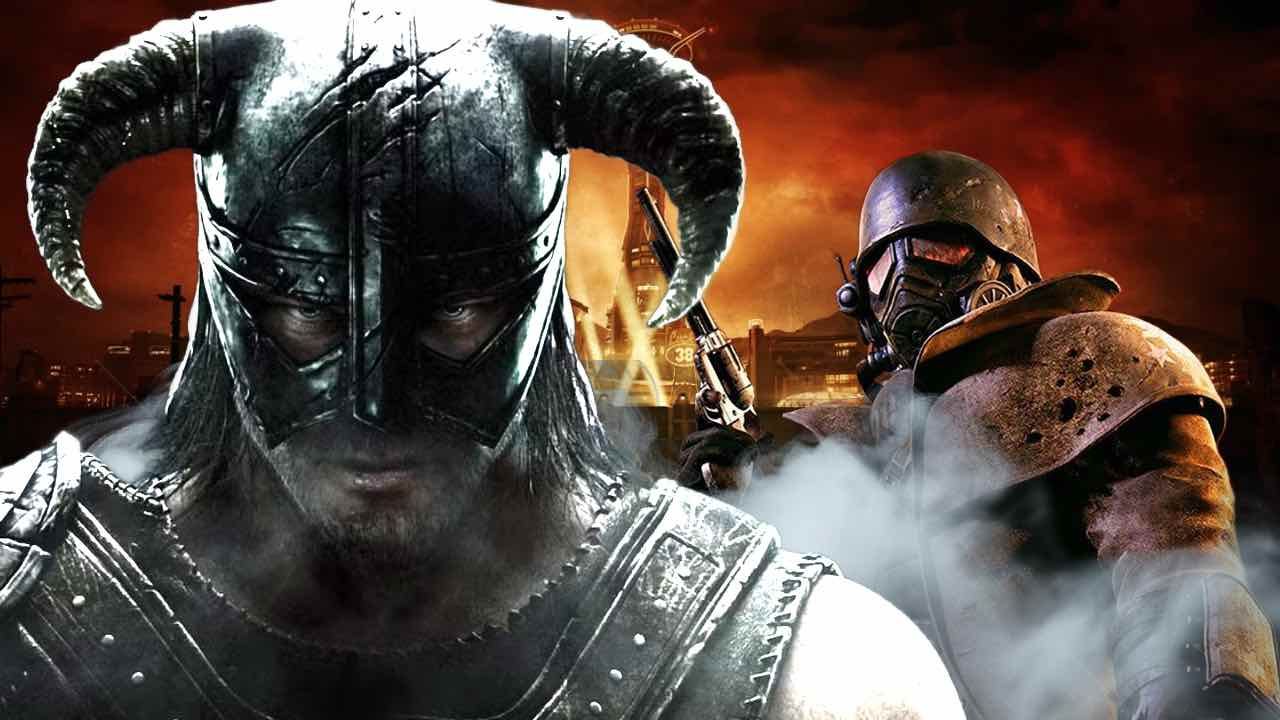

Former Skyrim co-lead Kurt Kuhlmann says Bethesda and Todd Howard have been highly protective of The Elder Scrolls, helping explain why fans have never received a Fallout: New Vegas-style fantasy spinoff.
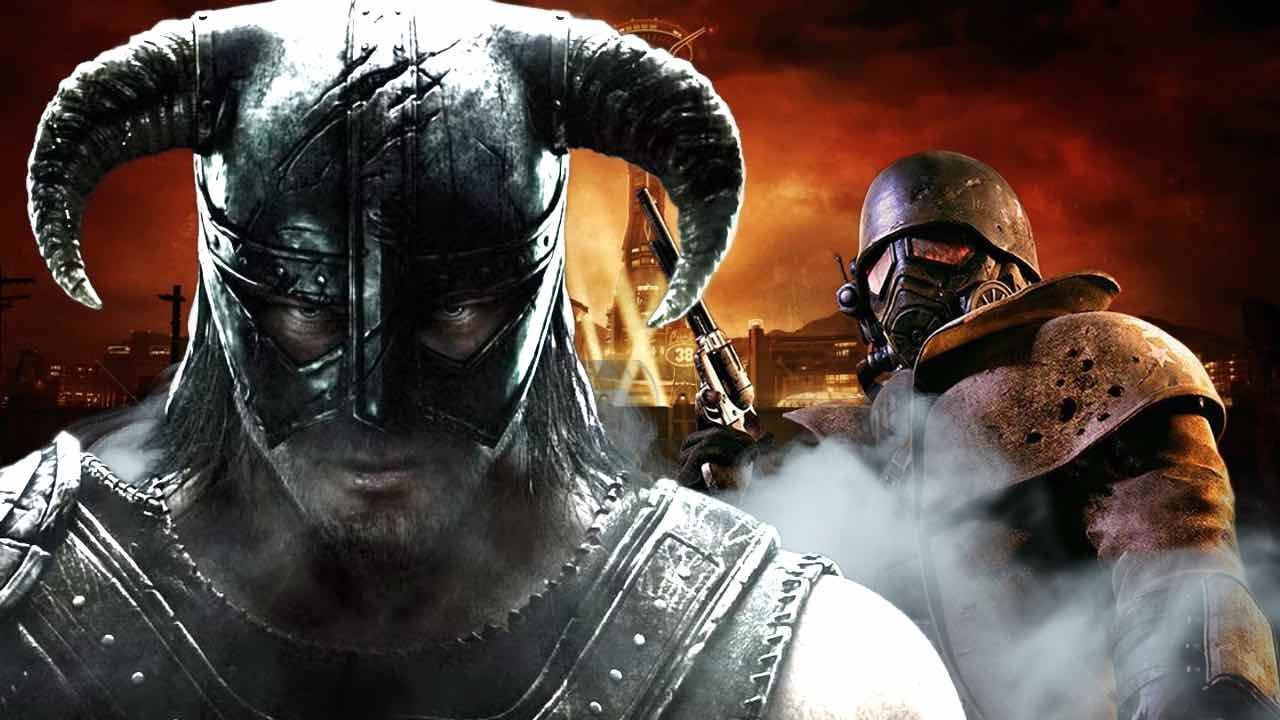
Image: frvr.com
Skyrim co-lead points to Bethesda’s protective grip on Tamriel
Former Elder Scrolls loremaster and Skyrim co-lead Kurt Kuhlmann has offered the clearest explanation yet for why Bethesda has not pursued a Fallout: New Vegas-style Elder Scrolls spinoff during the long wait for The Elder Scrolls 6: in his view, Bethesda and Todd Howard have been too protective of the fantasy series to invite that kind of comparison.
Speaking on FRVR’s podcast, Kuhlmann said Fallout: New Vegas created, at minimum, a perception battle over who made the better Fallout game, Bethesda or Obsidian. He described the familiar fan argument around New Vegas, where some players say Obsidian understood Fallout better and should be handed the franchise outright. Kuhlmann told FRVR he did not know that Howard “wanted to create that situation again for The Elder Scrolls.”
That is the concrete tension behind the current round of Bethesda RPG comments. Fans have spent nearly 15 years since Skyrim’s original 2011 release asking why The Elder Scrolls never received its own New Vegas equivalent, especially while Bethesda Game Studios shipped Fallout 4, Fallout 76, Starfield, and maintained distance from a new single-player Elder Scrolls release. Kuhlmann’s answer is not that a spinoff was technically impossible or that no outside studio could handle quest design, lore, or faction writing. His answer is about stewardship, authorship, and the business risk of letting another team define what players expect from Tamriel.
The New Vegas comparison is powerful because it is about ownership, not format
Fallout: New Vegas matters in this discussion because it was not merely a side game in the eyes of many RPG players. Obsidian’s 2010 entry became a lasting point of comparison against Bethesda’s Fallout 3, especially among fans who prioritize faction reactivity, dialogue checks, reputation systems, and quest outcomes over Bethesda’s particular strengths in environmental exploration and open-ended world wandering.
Kuhlmann’s comments, as reported by FRVR, GamingBolt, and Eurogamer, frame that reaction as the cautionary example. Once Bethesda let Obsidian make a Fallout game, the conversation did not stay neatly contained to one outsourced project. It became a referendum on what Fallout should be. Kuhlmann said the New Vegas reaction produced the perception of “who makes a better Fallout game?” and fed the argument that Obsidian should simply get Fallout.
That is a different risk for The Elder Scrolls because, as FRVR notes, Fallout was a franchise Bethesda acquired, while The Elder Scrolls is identified much more directly with Bethesda’s own history, setting, and lore. Arena, Daggerfall, Morrowind, Oblivion, and Skyrim all represent different versions of Bethesda’s single-player RPG philosophy, but they are still part of the same internal lineage. Handing a mainline-style Elder Scrolls spinoff to another studio would not only fill a release gap. It could create a second benchmark for how Tamriel should handle guild progression, moral choice, skill growth, magic systems, and regional identity.
For fans who want a Bethesda New Vegas style spinoff, that is exactly the appeal. A separate team could take a province, a border conflict, or a faction-heavy premise and push systems Bethesda might not prioritize in a numbered sequel. Kuhlmann’s comments suggest Bethesda may see the same possibility as a threat to the clarity of the series’ identity.
ESO has been Bethesda’s pressure valve during the single-player drought
Kuhlmann also pointed to The Elder Scrolls Online as a major reason Bethesda could go so long without a new single-player Elder Scrolls entry. He told FRVR that ESO “took the heat off” because there was an ongoing Elder Scrolls product creating new content. GamingBolt similarly quotes him saying that for many players, The Elder Scrolls is now ESO, because that is where they had their Elder Scrolls experience and that is what they want more of.
That point matters for the spinoff question because ESO occupies some of the release-space a single-player experiment might otherwise fill. It gives Bethesda and ZeniMax a way to keep Tamriel active, revisit regions, add quests, and serve lore-hungry players without creating a direct comparison between Bethesda Game Studios and another single-player RPG developer.
From a systems perspective, ESO is also a safer kind of divergence. It can tell Elder Scrolls stories with MMO structures, shared zones, group content, and ongoing chapter updates while remaining visibly separate from Skyrim’s single-player inheritance. A hypothetical Elder Scrolls 6 spinoff built like New Vegas would be much harder to separate in players’ minds. If it had sharper faction consequences or more satisfying character builds than the next Bethesda-developed game, the comparison would be immediate.
That does not mean ESO answers the same desire. Kuhlmann acknowledged that he is one of the single-player people. The practical split for fans is clear: ESO can provide new Elder Scrolls quests and lore, but it does not replace the solitary rhythm of building a character, joining guilds on your own terms, breaking a quest sequence, or living with the consequences of a province-scale RPG designed around one player.
The Elder Scrolls 6 delay changed the appetite for experiments
The spinoff discussion is sharper because The Elder Scrolls 6 has taken so long. Dexerto, citing Kuhlmann’s earlier FRVR interview, reported that many Bethesda developers expected The Elder Scrolls 6 to come directly after Fallout 4. Kuhlmann said “we all expected it to be directly after Fallout 4,” before Fallout 76 and then Starfield changed the studio’s trajectory.
According to Dexerto’s account of Kuhlmann’s comments, Fallout 76 was not originally expected to involve the whole Bethesda Game Studios team, but it eventually drew in developers from the main studio. After that, Howard’s approved new IP, Starfield, became the next major direction rather than The Elder Scrolls 6. Kuhlmann said he would have preferred to work on The Elder Scrolls 6 instead of Starfield and believed the majority of the studio likely felt the same way.
Those claims come from a former developer looking back, not from a current Bethesda roadmap. Still, they help explain why the fan demand for an Elder Scrolls spinoff has become so persistent. If Skyrim had been followed by The Elder Scrolls 6 within a more familiar cadence, a New Vegas-style side project might have seemed optional. After Fallout 4, Fallout 76, and Starfield, the absence looks like a strategic choice.
Bethesda announced The Elder Scrolls 6 in 2018, according to Dexerto, but the game remains in development with few public details. GamingBolt writes that it still is not expected any time soon, while also reporting recent comments from Xbox CEO Asha Sharma, who said she had played an early build and praised its “scale and grandeur.” Those comments, as presented by GamingBolt, speak to internal progress and fan speculation, not to a public release window, platform list, price, or confirmed subtitle.
Kuhlmann’s comments are evidence, but not an official cancellation of anything
There is an important boundary around this story. Kuhlmann is a former Bethesda developer, and Eurogamer notes he left the studio in 2023. His comments carry weight because of his history as Elder Scrolls loremaster and Skyrim co-lead, but they are not a current Bethesda policy statement.
FRVR is also careful on one key point: Kuhlmann did not confirm whether Bethesda ever had internal discussions about a possible Elder Scrolls spinoff. FRVR says such discussions seem unlikely based on his comments, while Eurogamer characterizes the situation as Bethesda apparently never considering an outside-team spinoff to fill the gap. The safest reading is narrower. What is confirmed is that Kuhlmann believes Bethesda and Howard were protective of The Elder Scrolls and wary of recreating the Fallout 3 versus New Vegas comparison. What remains unannounced is any actual Elder Scrolls spinoff project.
FRVR also notes that recent claims about an unannounced Elder Scrolls spinoff were debunked. That leaves fans in a familiar position: plenty of appetite, no confirmed game, and no official signal from Bethesda that a New Vegas-style Tamriel project is being planned.
The corporate picture has shifted since Kuhlmann left. Eurogamer reports that Xbox is now more focused on major franchises including Fallout and The Elder Scrolls, and that Obsidian is under the Bethesda umbrella as part of Microsoft’s restructuring. Eurogamer also reports that Obsidian is working on a new Fallout game, while Bethesda president Jill Braff recently told staff that Obsidian’s “creative identity and strengths” would remain intact after the move. Those details make a future collaboration easier to imagine, but they do not confirm an Elder Scrolls spinoff.
For RPG fans, the realistic wait is still for The Elder Scrolls 6
For now, the practical guidance is simple. There is no announced Elder Scrolls spinoff, no confirmed developer, no release date, no platform list, and no price. Fans looking for new Elder Scrolls content can play ESO’s ongoing material, revisit Skyrim’s many editions, or wait for Bethesda to reveal more about The Elder Scrolls 6.
The disappointment is understandable because a spinoff could serve a real design purpose. A smaller Elder Scrolls RPG could explore a tighter province, a narrower political conflict, or a more reactive faction structure without carrying the full burden of a numbered sequel. It could be a place for riskier progression systems, denser quest consequences, or a more opinionated approach to class identity than Bethesda may want in a flagship release expected to satisfy millions of Skyrim players.
Kuhlmann’s comments suggest that is exactly the kind of experiment Bethesda has been reluctant to permit. The Elder Scrolls is a lore-heavy series where tone, metaphysics, geography, and player fantasy all matter. Letting another studio make a beloved entry could refresh the formula, but it could also shift the audience’s expectations away from Bethesda’s own approach before The Elder Scrolls 6 arrives.
That is the uncomfortable answer for players waiting on new RPG experiments. The most plausible near-term Elder Scrolls future remains Bethesda’s own sequel and ESO’s continued updates, not a surprise New Vegas-style detour through Tamriel. Until Bethesda says otherwise, the Elder Scrolls spinoff fans keep imagining is best treated as a possibility shaped by corporate changes and fan demand, not a project with public evidence behind it.