
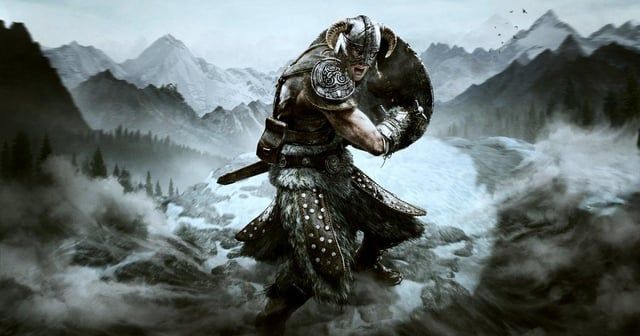

Former Bethesda designer Kurt Kuhlmann says Todd Howard’s protection of The Elder Scrolls and ESO’s long life help explain the missing New Vegas-style spin-off.
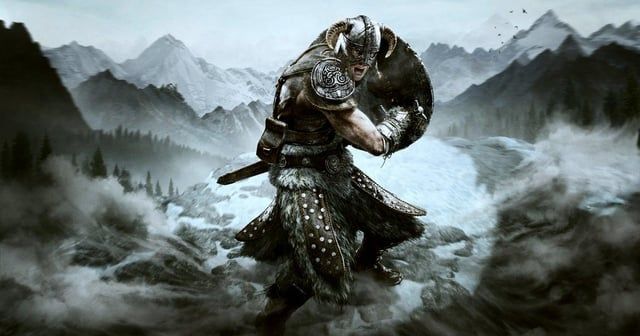
Image: reddit.com
A former Bethesda lead points to Todd Howard’s protection of The Elder Scrolls
Former Bethesda designer Kurt Kuhlmann says The Elder Scrolls never received a Fallout: New Vegas-style single-player spin-off in part because Todd Howard was “very protective” of the fantasy RPG series during Kuhlmann’s time at the studio. That claim, made in an interview with FRVR and reported by VGC, speaks directly to a question Elder Scrolls fans have been asking for years: if Obsidian could build New Vegas from Fallout 3’s foundation, why did Skyrim never get a comparable side project during the long wait for The Elder Scrolls 6?
Kuhlmann is a notable source on the subject, though his comments are still his interpretation rather than an official Bethesda explanation. VGC identifies him as a former Bethesda lead who spent 20 years at the company, served as senior designer on Fallout 3 and Fallout 4, and was co-lead designer on The Elder Scrolls V: Skyrim. GamesRadar also describes him as a veteran Elder Scrolls loremaster and notes his work as a quest designer on Oblivion.
The concrete fact is simple: Bethesda has not released a New Vegas-style single-player Elder Scrolls spin-off in the years since Skyrim. The more delicate claim is why. Kuhlmann told FRVR that New Vegas created, at least in perception, a fan debate over “who makes a better Fallout game” and whether Bethesda should “just give it to Obsidian.” He said he did not know that Howard wanted to create that situation again with The Elder Scrolls, adding, “Todd, from my time there, he is very protective of it.”
The New Vegas comparison cuts deeper than outsourcing
Fallout: New Vegas remains the obvious reference point because it was a major Bethesda-published RPG made outside Bethesda Game Studios. VGC notes that New Vegas was developed by Obsidian rather than Bethesda, and Kuhlmann’s comments frame its legacy as both a success story and a cautionary tale. The game’s popularity did not merely prove that another RPG studio could operate inside a Bethesda-owned franchise. According to Kuhlmann, it also encouraged a lasting factional argument among fans about whether Obsidian understood Fallout better than Bethesda did.
That comparison matters because The Elder Scrolls occupies a different place in Bethesda’s history. VGC reports Kuhlmann’s distinction that Fallout was inherited from Interplay in 2004, while The Elder Scrolls was created by Bethesda. In other words, Fallout already came with a lineage outside Bethesda Game Studios. The Elder Scrolls, from Arena through Skyrim, is tied to Bethesda’s internal identity as a maker of open-world fantasy RPGs.
For a series built around provinces, metaphysics, faction questlines, character progression, and the recurring question of how much freedom the player has to define a life inside Tamriel, a licensed single-player spin-off would not be a small creative handoff. It would involve another team making calls about tone, canon pressure, combat feel, skill growth, quest consequence, and the density of authored stories in an open world. Kuhlmann’s account suggests Bethesda saw the risk of creating a second center of gravity for The Elder Scrolls, especially after New Vegas became a measuring stick that Fallout fans still use.
Kuhlmann did not confirm a canceled Elder Scrolls spin-off
The strongest responsible reading of the interview is that Kuhlmann offered a reason a Skyrim New Vegas style spin off never emerged, not confirmation that Bethesda canceled one. FRVR states that Kuhlmann “never confirmed whether or not any discussions were had” about a potential Elder Scrolls spin-off, though the outlet characterized such discussions as unlikely based on his remarks.
That distinction is important because fan speculation around unannounced Elder Scrolls projects has been persistent. FRVR also notes that recent claims of an Elder Scrolls spin-off in development were debunked. Based on the provided source material, there is no confirmed single-player Elder Scrolls spin-off in development, no announced developer, no release window, no platforms, and no pricing.
So the story is not that Bethesda secretly had its own New Vegas equivalent ready to go. The supported story is narrower and more revealing: a former senior Bethesda RPG designer says Howard and Bethesda were protective enough of The Elder Scrolls that handing it to another studio would have risked the same authorship debate New Vegas created around Fallout.
The Elder Scrolls Online changed what a new Elder Scrolls product could be
Kuhlmann’s other major point is that The Elder Scrolls Online altered the pressure around the series. “I do think ESO took the heat off,” he told FRVR, according to VGC. His reasoning was that there was still a new Elder Scrolls product, it was ongoing, and it was “creating new content constantly.”
That is where Elder Scrolls Online fan expectations become central to the story. VGC notes that The Elder Scrolls Online was released 12 years ago and is still active. FRVR frames the current gap from Skyrim’s release at 15 years, while also emphasizing that the series has continued through the MMO. For single-player Elder Scrolls fans, that distinction can feel enormous. For a player whose attachment to the series is built around solo exploration, save files, modded builds, faction arcs, and the personal rhythm of clearing a province, ESO is a different kind of RPG life.
Kuhlmann acknowledges that divide. He told FRVR there are “single-player people,” adding that he is one of them, but said there are also many players for whom The Elder Scrolls “is now ESO.” In his view, ESO became their experience of the franchise, the version they love, and likely the version they want more of.
That is a major shift in audience expectation. The Elder Scrolls used to mean long gaps between enormous single-player chapters. ESO established a parallel pattern: recurring updates, persistent characters, group content, and a Tamriel that expands over time rather than arriving as one sealed province-scale box. Kuhlmann believes that ongoing presence helped Bethesda focus on Starfield while still having an active Elder Scrolls product in the market.
ESO filled the calendar, but not the same role as a solo Bethesda RPG
FRVR reports Kuhlmann’s belief that ESO was Bethesda’s “we’re doing something with Elder Scrolls” push while the studio worked on Starfield. That does not make ESO a direct replacement for The Elder Scrolls 6, and Kuhlmann does not describe it as one. Instead, he presents it as a pressure valve. It gave some fans new zones, stories, and reasons to stay in Tamriel, while the single-player audience continued waiting for a traditional sequel.
From an RPG systems perspective, the split is easy to understand. Skyrim’s appeal is rooted in solitary agency: a stealth archer who becomes Arch-Mage, a heavy armor vampire hunter, a thief who ignores the main quest for 80 hours, a modded survival run through the Reach. ESO’s appeal is organized around a shared world, live-service cadence, multiplayer economies, and a character that persists through ongoing content. Both use Elder Scrolls lore, but they train players to expect different kinds of progression and different rhythms of reward.
Kuhlmann’s comments suggest ESO’s success complicated the old assumption that every Elder Scrolls fan was waiting for the same thing. Some still want a new solo Bethesda world with the density and simulation flavor associated with the mainline games. Others have spent a decade treating ESO as their primary version of Tamriel. That split helps explain why a single-player spin-off absence can feel glaring to one part of the audience and less urgent to another.
The Elder Scrolls 6 remains the only confirmed mainline path forward
For readers looking for practical guidance, the current status is unchanged by Kuhlmann’s interview. VGC reports that The Elder Scrolls 6 was announced with a teaser trailer at E3 2018, that Bethesda said soon afterward the game was still years away, and that it was still said to be in early development as of 2023. The provided sources do not include a release date, platform list, price, upgrade path, or technical details.
That leaves three clear categories. Confirmed: Bethesda has announced The Elder Scrolls 6, ESO remains active, and no New Vegas-style Elder Scrolls spin-off has been released. Attributed interpretation: Kuhlmann believes Howard’s protectiveness of the IP and the fan comparison created by New Vegas help explain why Bethesda did not hand The Elder Scrolls to another studio in the same way. Unannounced: any current single-player Elder Scrolls spin-off project.
The useful takeaway is to treat talk of a Skyrim New Vegas style spin off as commentary on Bethesda’s past franchise strategy, not as a sign of an imminent reveal. Kuhlmann’s Bethesda RPG interview gives fans a plausible insider explanation for a long-standing absence, but it does not add a new game to the release calendar. Until Bethesda says otherwise, the next main single-player Elder Scrolls destination remains The Elder Scrolls 6, while ESO continues serving the part of the audience that wants Tamriel as an ongoing world rather than a new offline province.