

Former Skyrim co-lead Kurt Kuhlmann says many Bethesda developers expected The Elder Scrolls 6 after Fallout 4, before Fallout 76 and Todd Howard's Starfield changed the studio's path.
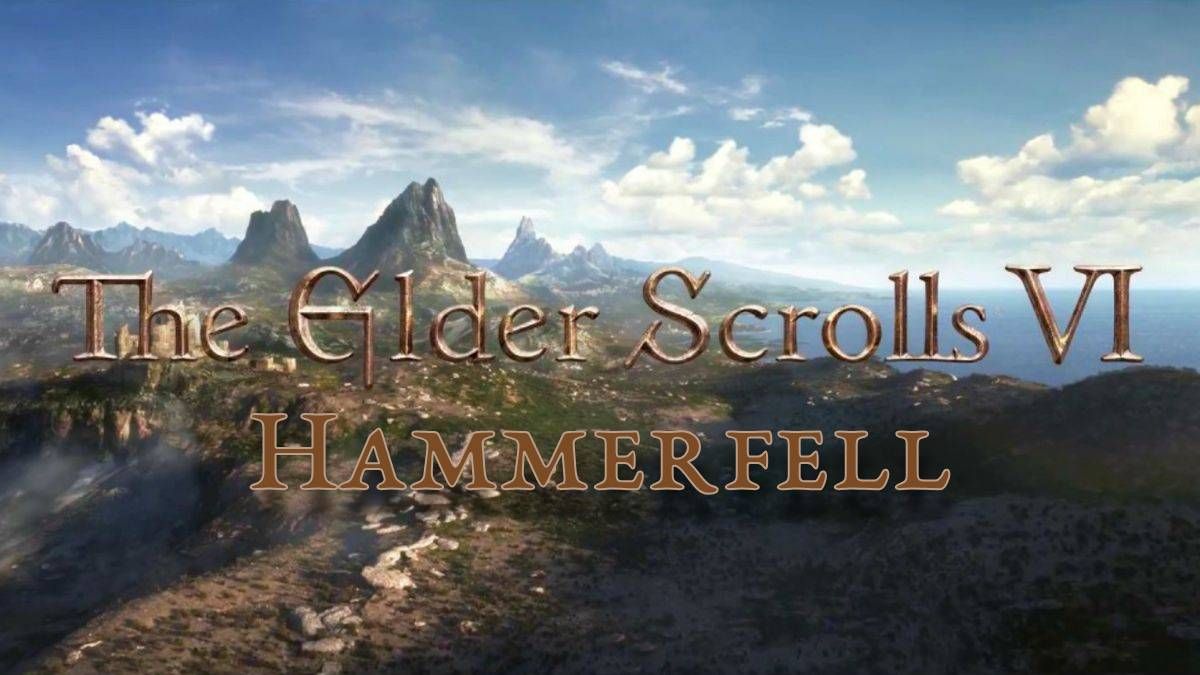
Image: kotaku.com
Kurt Kuhlmann says Bethesda expected Tamriel after Fallout 4
Former Skyrim co-lead and Elder Scrolls loremaster Kurt Kuhlmann has given the clearest reported account yet of a tension many Bethesda fans have long suspected: after Fallout 4, he says many people inside Bethesda Game Studios expected the next major destination to be The Elder Scrolls 6, not Starfield.
Speaking to FRVR, Kuhlmann said, “We all expected it to be directly after Fallout 4. Why wouldn’t it be? That’s what we did, and that was kind of the expectation. And then Fallout 76 came along.” GamingBolt, Rock Paper Shotgun, Console Creatures, PC Gamer, and GamesRadar all picked up the same FRVR interview, with the central claim being Kuhlmann’s recollection of internal expectations rather than a new Bethesda announcement.
That distinction matters. Kuhlmann is describing how he remembers the post-Fallout 4 moment from inside the studio, not revealing a current release plan, subtitle, setting, platform list, or gameplay system for The Elder Scrolls 6. His comments do, however, help explain why the wait has felt so strange to long-time RPG players: according to Kuhlmann, some of the same developers who had just finished one huge Bethesda cycle believed the next climb would return to Tamriel.
The old Bethesda rhythm made that expectation logical
Kuhlmann’s account lands because Bethesda’s major single-player RPG cadence had trained players, and apparently some developers, to expect a certain alternation. Rock Paper Shotgun points to the historical sequence: Oblivion led into Fallout 3, Fallout 3 led into Skyrim, and Skyrim led into Fallout 4. If that rhythm had continued cleanly, The Elder Scrolls 6 after Fallout 4 would have looked like normal service rather than wishful thinking.
From a systems-minded RPG perspective, that expectation was never only about setting. Elder Scrolls and Fallout ask Bethesda’s designers to solve different problems. Fallout 4 pushed settlements, voiced protagonists, power armor economies, factions, and shooter-facing progression. A return to The Elder Scrolls would have meant reworking fantasy progression, guild structures, regional exploration, magic, stealth, melee, and the looser identity-building that Skyrim players kept alive for years through roleplay and mods.
Kuhlmann’s comments suggest that, at least for him and others he describes as “most people,” the studio’s creative appetite after Fallout 4 leaned toward that fantasy toolkit. FRVR quotes him as saying that working on The Elder Scrolls 6 was “what I think most people wanted.” That is a strong claim from a veteran developer, but it remains his account. It should not be stretched into a headcount, a staff-wide vote, or proof of a formal abandoned plan.
Fallout 76 complicated the handoff before Starfield fully took over
The route from Fallout 4 to Starfield was not a simple one-project handoff. In Kuhlmann’s telling to FRVR, Fallout 76 arrived first and disrupted what some at Bethesda thought would happen next. He said Fallout 76 was originally expected to be handled by BattleCry Studios, now Bethesda Austin, after the cancellation of BattleCry’s own project. According to FRVR and GamingBolt’s reports on the interview, Fallout 76 eventually pulled in the wider Bethesda team rather than remaining a more contained Austin-led effort.
That detail helps separate two often-blended questions. One is why The Elder Scrolls 6 did not immediately follow Fallout 4. The other is how Starfield became Bethesda Game Studios’ next full-scale single-player RPG. Kuhlmann’s account says Fallout 76 absorbed broader studio attention before Starfield became the main long-term focus. Rock Paper Shotgun also notes that Bethesda’s main studio had been roped into Fallout 76’s troubled development, citing prior reporting on that game’s production difficulties.
The public reception of both Fallout 76 and Starfield adds another layer. GamingBolt characterizes the launch response to both post-Fallout 4 games as mixed. Kuhlmann still acknowledged, according to GamingBolt, that there was value in having “something completely different” to look forward to every few years. That nuance is important. His interview is not simply a developer saying Starfield should never have existed. It is a recollection of a studio priority shift, with Fallout 76 acting as an additional detour before Bethesda’s new sci-fi universe consumed the main development road.
Todd Howard’s Starfield push was a priority call, not proof of a canceled Elder Scrolls 6
The sharpest line from the FRVR interview is Kuhlmann’s description of Starfield as a decision that arrived from the top. He recalled Todd Howard saying, “No, we’re doing Starfield. I got that approved. It’s going to be a new IP. It’s going to be this ambitious [game]. It’s going to be the greatest space RPG ever made.” Kuhlmann also told FRVR that Starfield was not, in his view, a broad internal groundswell where everyone was asking Howard to make a space game.
That aligns with Howard’s own public framing in one key respect: Starfield was a personal and strategic swing. Rock Paper Shotgun cites a GQ interview in which Howard said Bethesda had “been wanting to do something else for a long time and play in a new universe.” Howard described the thinking as starting after Fallout 4 in 2015 and framed the choice around urgency: “if not now, when?” In that quote, he suggested that if Bethesda did not make Starfield then, the answer could have become “never.”
The two accounts do not have to be forced into conflict. Kuhlmann is saying many staff expected and preferred The Elder Scrolls 6. Howard, in the cited GQ comments, is explaining why Bethesda chose a new universe anyway. The practical result is the same for players: Elder Scrolls 6 development was deprioritized behind Fallout 76 and Starfield, while Bethesda used the post-Fallout 4 moment to chase a new IP rather than preserve the previous franchise rotation.
What Kuhlmann’s comments do not establish is that The Elder Scrolls 6 was in full production and then canceled, rebooted, or shelved in a form players would recognize. The supplied sources say the game was expected by some, had early decisions according to FRVR, and later entered active development in 2023. That is a very different claim from a lost near-complete Elder Scrolls game.
The timeline explains the wait better than the teaser did
The Elder Scrolls 6 was formally announced at Bethesda’s E3 2018 conference, according to the public listing included in the source material. That same listing describes it as the sixth main installment after 2011’s Skyrim and says Todd Howard is leading the project. It also states that the game entered active production in 2023 following Starfield’s launch. FRVR likewise says The Elder Scrolls 6 only started active development in 2023 and still has no release date.
That timeline reframes a common fan complaint. The wait from Skyrim to The Elder Scrolls 6 is enormous, but the supplied sources do not support the idea that Bethesda has spent all of those years actively building the sequel at full scale. Howard had already warned in 2016 that the game was a long way off, according to the public development history. ZeniMax Online Studios producer Matt Firor said in 2018 that it would follow Starfield in Bethesda Game Studios’ release schedule, and Bethesda’s Pete Hines similarly said in 2020 that more details would not come until after Starfield.
For players who care about quest density, faction design, character builds, and world reactivity, that distinction is meaningful. A game entering active development after Starfield means the core Elder Scrolls 6 questions are still likely tied to Bethesda’s current production priorities, engine pipeline, and lessons from recent releases. It does not mean a decade of finished guild lines and province systems has been waiting behind a curtain.
Where speculation should stop for Elder Scrolls 6
Kuhlmann’s interview adds useful context to Elder Scrolls 6 development, but it does not answer the questions players most want answered. Based on the supplied source material, Bethesda has not announced a release date, price, final platform list, confirmed setting, subtitle, character system, faction lineup, or gameplay reveal window for The Elder Scrolls 6.
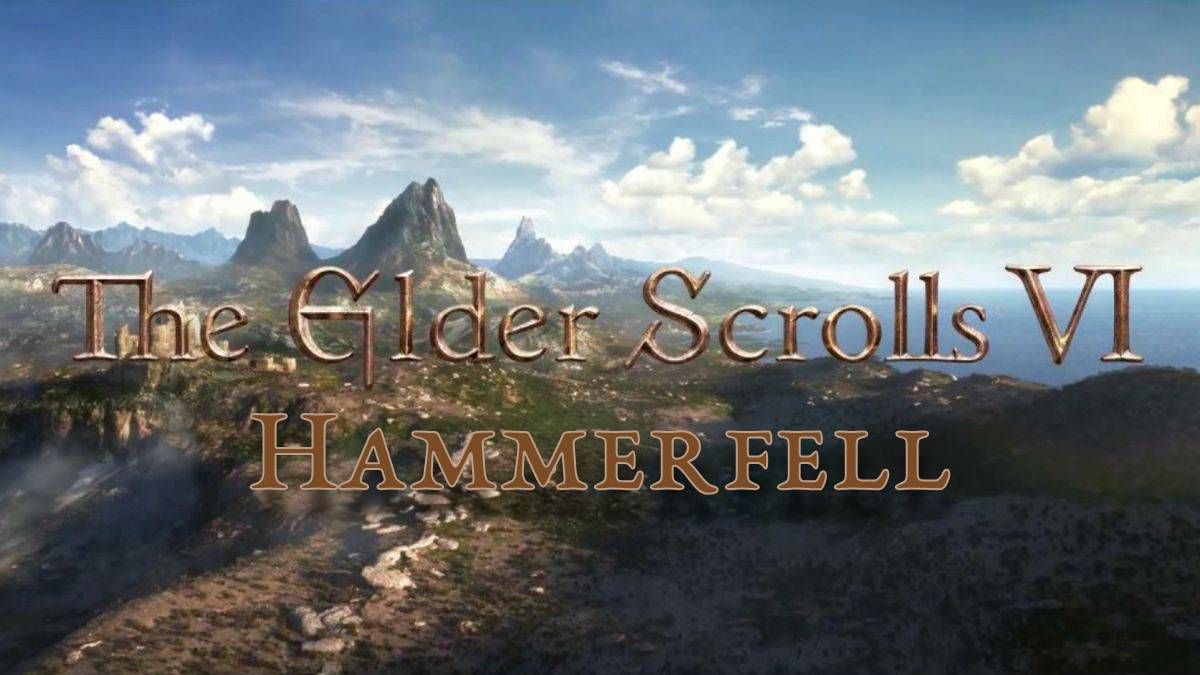
That includes the long-running Hammerfell assumption. The required image attached to this article is titled “Official artwork for The Elder Scrolls VI: Hammerfell,” but the supplied public listing identifies the project as The Elder Scrolls VI and describes that as a working title. None of the provided sources confirms a Hammerfell subtitle or setting. Treat any setting claim outside an official Bethesda statement or storefront listing as speculation, even when it fits popular map-reading theories or fan expectations.
The same caution applies to internal morale. Kuhlmann says he would have preferred to make The Elder Scrolls 6 instead of Fallout 76 and Starfield, and he believes that would “probably be true for the majority of the studio,” according to FRVR and GamingBolt. That is valuable testimony from a veteran who worked on the series for many years. It is not a current statement from Bethesda Game Studios, Microsoft, or every developer who worked on Starfield.
Practical guidance for players waiting on the next Bethesda RPG
If you are waiting for The Elder Scrolls 6 before buying hardware, planning time off, or expecting a near-term reveal, the sourced answer is simple: wait for Bethesda. The supplied material confirms no release date and no platform details. The safest reading is that Elder Scrolls 6 is now in active development, but still too undefined publicly for purchasing decisions.
Kuhlmann’s comments are still useful because they explain the shape of the delay. Bethesda did not simply forget Tamriel, and the wait was not caused by a single hidden Elder Scrolls production crisis in the sources we have. The reported sequence is clearer: Fallout 4 shipped, Fallout 76 drew in more of the studio than originally expected, Todd Howard pushed Starfield as a new IP he wanted to make while the window existed, and The Elder Scrolls 6 moved into active production after Starfield.
That should temper both anger and hype. It is fair for Elder Scrolls players to look at the years since Skyrim and feel the cost of Bethesda’s choice. It is also fair to recognize that a studio known for enormous RPG sandboxes made a deliberate business and creative bet on a new universe. Until Bethesda shows The Elder Scrolls 6 properly, the grounded expectation is patience, not prophecy.