
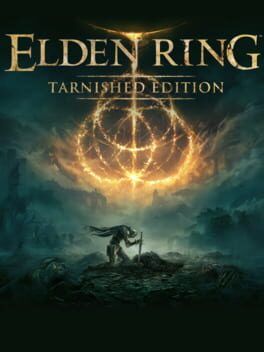

Amazon’s new listing for Elden Ring: Tarnished Edition on Switch 2 raises big questions about Game-Key Card packaging and how high premium pricing will climb on Nintendo’s new platform.
Amazon’s quietly updated listing for Elden Ring: Tarnished Edition on Nintendo’s next system might be the clearest sign yet of what “premium” will look like on Switch 2. It is not just about FromSoftware’s modern classic finally going portable. It is about how much Bandai Namco thinks it can charge for a four-year-old game, and what form “physical” releases are going to take on Nintendo’s new hardware.
What Elden Ring: Tarnished Edition Actually Includes
The Tarnished Edition is not a simple repackage of the 2022 base game. According to the Amazon product page and follow-up reporting, this bundle is essentially the full Elden Ring package that has existed on other platforms for a while.
You get the original Elden Ring, complete with the full Lands Between open world and all the patches and balance passes the game has received since launch. On top of that is Shadow of the Erdtree, the enormous expansion that adds a new map, bosses, weapons and late-game character builds. Tarnished Edition also folds in some extra cosmetic and equipment content, including new armor and horse appearance options themed around the DLC.
Put bluntly, this is the complete Elden Ring experience on Switch 2 from the moment you redeem the code. There is no base-game-then-buy-the-DLC-later structure here. For anyone who has not already bought Elden Ring elsewhere, the package makes sense on paper.
That context matters once you hit the price line.
The $79.99 Price Point And How It Compares
Amazon US currently lists Elden Ring: Tarnished Edition for Switch 2 at $79.99. That figure immediately stands out to longtime Nintendo fans who are used to new flagship releases clustering around $59.99 on Switch and only occasionally pushing to $69.99.
On one level, Bandai Namco is simply matching what already exists. Tarnished-style bundles, pairing the base game with Shadow of the Erdtree, sit at about the same $79.99 mark on PlayStation, Xbox and PC storefronts. From that perspective, Switch 2 players are not being charged a unique “Nintendo tax.” The publisher is lining the new version up with the going rate for the same content on competing platforms.
The friction comes from a different place. Elden Ring is heading toward its fourth anniversary by the time this Switch 2 port lands, at least going by its placeholder 2026 release window. Many players have watched the base game frequently drop to half price or less on other systems, with DLC promotions not far behind. The idea of paying eighty dollars this late in the game’s life cycle feels out of sync with how the broader market usually treats ports of older titles.
For Nintendo’s upcoming hardware, though, the listing helps draw a line. If a cross-platform package like Elden Ring plus its marquee expansion can comfortably occupy the $79.99 slot, it suggests that is where high-end third party releases, complete editions and “prestige” bundles will likely land on Switch 2.
Why The Game-Key Card Packaging Is Stirring Controversy
If the price had fans debating value, the packaging format is what really lit up comment sections. Elden Ring: Tarnished Edition is not listed as a full cartridge release. Instead, it is designated as a Game-Key Card.
That term is already familiar to anyone who has followed recent Bandai Namco output on Nintendo platforms. A Game-Key Card is essentially a boxed download code that you redeem on the eShop. The plastic case looks like a standard retail game on the shelf, but inside there is no game card. Owners still need to download everything over the internet and house it on their internal storage or microSD.
This format is controversial for a few reasons. Collectors and preservation-minded players feel shortchanged when a “physical” product does not actually contain the software they are paying for. Years from now, if the Switch 2 eShop is shuttered or a code has expired, that Game-Key Card package may be little more than an empty box.
Families that prize physical copies for practicality have their own headaches. One advantage of cartridges is the ability to slot them into different consoles and lend or resell them easily. A Game-Key Card is permanently tied to a single account the moment the code is redeemed. For people hoping to share Elden Ring around the household, that is a meaningful downgrade compared to a real game card.
Then there are data caps and slow connections. Elden Ring is a massive game, and the full bundle including Shadow of the Erdtree is not going to be small. Players in regions with unreliable broadband viewed the phrase “Game-Key Card” as an instant red flag, because it turns what might have been a plug-and-play purchase into a long, bandwidth-hungry download.
Why Publishers Keep Choosing Game-Key Cards
From the publisher’s perspective, this direction is not surprising. High capacity cartridges are still expensive, and open world action RPGs like Elden Ring are among the worst offenders when it comes to file size. Shipping a full cart big enough to contain Elden Ring plus Shadow of the Erdtree on Switch 2 would significantly cut into per-unit margins.
Using a Game-Key Card puts almost all of those storage costs onto the consumer. The code itself is cheap to produce, and there are no worries about fitting everything onto a specific capacity. That flexibility becomes even more appealing as games receive patches and content updates. Publishers do not need to print new runs or deal with multiple versions of the same cart.
With Bandai Namco already using Game-Key Cards for other hefty titles on Nintendo hardware, Elden Ring: Tarnished Edition fits a pattern. The problem is that Switch fans are watching that pattern become the rule rather than the exception for major third party releases.
What This Means For Premium Pricing On Switch 2
Put together, the $79.99 tag and Game-Key Card format paint a fairly clear picture of where Switch 2 is headed for big marquee ports and multi-platform launches.
One expectation is that $69.99 will not be the ceiling for Nintendo’s upcoming platform. The presence of an eighty dollar third party edition out of the gate shows that high-end bundles are going to chase the same pricing territory as PlayStation 5 and Xbox Series consoles. Complete editions that pack in base games and story expansions are likely to sit at that upper tier, particularly when they carry a recognisable prestige brand like Elden Ring.
The second expectation is that more of those expensive packages will arrive as pseudo-physical products. Publishers are treating Switch 2’s retail shelves more as display space for digital content than as a guarantee of cartridges inside every box. That makes sense from a cost and logistics angle, but it chips away at one of Nintendo’s traditional strengths, where buying a game in a box meant getting the whole thing on a tiny, durable card.
The big unknown is how players will vote with their wallets. If Elden Ring: Tarnished Edition sells strongly at eighty dollars in Game-Key Card form, other publishers will feel emboldened to follow the template. If it stumbles because players either wait for sales on other platforms or balk at the lack of a true cart, companies may need to re-evaluate how they price and package similarly large, late-arriving ports for Switch 2.
For now, the Amazon listing is just that: a listing, with a placeholder 2026 date and plenty of time for details to shift. But Elden Ring is exactly the sort of premium, “can it really run on Switch 2?” port that sets tone and expectation. The way Bandai Namco is handling Tarnished Edition tells us as much about the economics of Nintendo’s next system as it does about the state of the Lands Between.