
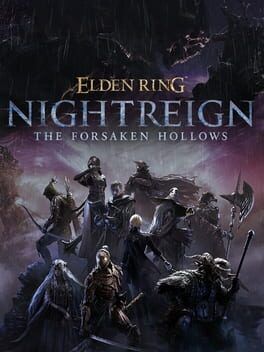

A spoiler‑light launch-day guide to Elden Ring: Nightreign – The Forsaken Hollows, covering how to access the DLC, what it adds, early difficulty impressions, new builds like Undertaker, and how welcoming it is for returning Tarnished on PC, PS5, and Xbox.
With Nightreign: The Forsaken Hollows finally live, players are already throwing themselves into FromSoftware’s latest gauntlet. This is your spoiler‑light launch primer that recaps the key prep steps from pre‑release guides, then focuses on what early players are saying about difficulty, how the new Undertaker archetype fits into buildcraft, and whether lapsed Tarnished on PC, PS5, and Xbox should feel safe coming back.
Quick recap: what The Forsaken Hollows actually adds
The Forsaken Hollows is a substantial DLC slice for Elden Ring: Nightreign rather than a tiny side mode. Without touching specific story beats, this is what you are stepping into:
It introduces a new Shifting Earth region called The Great Hollows, a labyrinth of buried temples, crystalline towers and choking miasma. Within that space you are getting new enemy families like the Limveld and multiple major bosses, including the Balancers. On the player side there are two new Nightfarers, Scholar and Undertaker, which open up fresh build archetypes and gear synergies.
On top of that there are new raid‑style encounters and bases that will start seeding into the wider Deep of Night pool after a post‑launch update, provided your matchmaking group includes enough DLC owners. In other words, Forsaken Hollows is not just a one‑and‑done side story. It is meant to sit alongside your existing progression and give veteran Nightreign players new routes to theorycraft and co‑op.
How to unlock Forsaken Hollows in‑game (spoiler‑light)
If you already see The Forsaken Hollows installed on your system and are wondering where it actually starts, here is the bare minimum you need to know without walking through every cutscene.
First, you must progress the main Nightreign campaign far enough to defeat Tricephalos. Once that boss is down, head back to Roundtable Hold. The Iron Menial there will have new dialogue that points you toward the Small Jar Merchant. Follow that thread and you will gain access to the new Nightfarers, Scholar and Undertaker, and the route into the Forsaken Hollows content begins.
To reach the centerpiece activities like the Balancers expedition and the Shifting Earth event, The Great Hollows, you need to have beaten at least two bosses in Nightreign, including Tricephalos, and have both new Nightfarers unlocked. When those conditions are satisfied, a chapel connected to the Small Jar Merchant opens up, which functions as your gateway to the toughest DLC encounters.
Nothing in that chain is missable, but it does assume you are well past the tutorial phase and comfortable with Nightreign’s baseline difficulty.
How to make sure the DLC is actually installed
A surprising number of launch‑day headaches are just platform install issues. Before you panic that the DLC did not work, double‑check this on your system.
On PlayStation 5 and PlayStation 4, owning Nightreign’s Deluxe Edition or having a DLC preorder does not magically apply everything. Highlight Elden Ring: Nightreign on your dashboard, scroll down to the Add‑ons or DLC section beneath the icon, and manually trigger The Forsaken Hollows download. Once it is installed and the latest patch is applied, the in‑game unlock steps described above will kick in.
On Xbox Series X|S and Xbox One, go to My Collection, hover over Elden Ring: Nightreign, press the Menu button, then choose Manage games and add‑ons. Select the main game tile, look under Add‑ons and tick The Forsaken Hollows. Save changes to force the download. After that, launching the game with the current update will enable the DLC triggers.
On Steam for PC, The Forsaken Hollows should roll out automatically alongside the latest Nightreign patch. Check the game’s Properties page, then the DLC tab, to ensure The Forsaken Hollows checkbox is ticked and fully downloaded. You also need the matching title update installed, or the entrance to the new content will simply not appear, even if you own the DLC.
Early difficulty impressions: where The Forsaken Hollows sits on the curve
FromSoftware DLC usually assumes you are not only finished with the base game but also at least moderately over‑leveled and mechanically sharp. Nightreign’s Forsaken Hollows continues that tradition. Early reports from players jumping in on launch day paint a familiar picture: if you were coasting through the mid‑game of Nightreign, the first hours of the Hollows feel like hitting a stone wall.
The standard fodder enemies have HP and damage output tuned for late campaign builds. The miasma mechanics in the new area punish passive play, asking you to move deliberately and keep track of line of sight and safe spaces instead of turtling behind a shield. Even basic patrols can delete you if you try to face‑tank without a solid defensive plan.
Boss encounters skew heavily toward multi‑phase attrition duels, with big punish windows but very little room for mistakes. Balancers in particular is shaping up to be a gear and pattern check that compares favorably to Elden Ring’s hardest late‑game fights, both in terms of health pool and pattern density.
If you walked into Shadow of the Erdtree under‑leveled and remember that feeling, expect a similar shock here unless you have kept up with Nightreign’s gear curve. The DLC is not tuned for fresh characters. It is tuned for players who know their input timings, are comfortable abusing iframes, and already have a coherent build.
The Undertaker archetype: a new strength‑faith powerhouse
The Undertaker is one of the headline draws of The Forsaken Hollows. She functions as a strength and faith hybrid that rewards you for aggressive, in‑your‑face play with built‑in sustain and some frightening burst potential.
In simple terms, Undertaker feels like a gravedigger paladin. Heavy weapons and colossal tools pair neatly with her stats, but she does not play like a slow juggernaut. Early impressions suggest she has access to kit options that convert kills and stagger windows into short healing spikes or temporary buffs, which lets you stay in the pocket instead of backing off to chug every time you get clipped.
For players who enjoyed hybrid holy bruisers in the original Elden Ring, Undertaker is a natural evolution. You can run her as a classic strength build that happens to toss out faith‑based crowd control or debuffs when needed, or lean harder into miracle‑like effects and let raw weapon damage sit slightly behind utility.
Importantly, Undertaker does not feel like a mandatory DLC pick. Existing Nightfarers still hold their own, but she creates a fresh archetype that thrives in Forsaken Hollows’ cramped, hazard‑filled arenas. The more confident you are at reading enemy strings and sticking to close range, the more Undertaker’s kit opens up.
Scholar and other emerging build archetypes
Scholar, the other new Nightfarer, leans in the opposite direction. Early builds treat Scholar as a battlefield analyst and arcane specialist. You trade some frontline robustness for long‑range control and setups that reward you for observing enemy behavior.
Rather than just another glass cannon caster, Scholar encourages you to manipulate openings. Timed debuffs and disruption tools can prime enemies for burst from you or co‑op partners. In the cramped geometry of the Hollows, being able to steer enemies into chokepoints, manipulate aggro, or lock down priority targets is massive.
Between Scholar and Undertaker, Forsaken Hollows pushes Nightreign into two distinct play patterns: a punishing up‑close brawler that is hard to dislodge once she gets rolling, and an arcane controller that wins encounters by planning ahead. Co‑op squads that pair the two are reporting especially strong synergy, with Undertaker anchoring threats while Scholar sculpts the battlefield.
As the meta settles, expect to see variants like high‑faith Undertakers who lean on support tools rather than pure strength, or tanky Scholars sacrificing some spell damage for survivability. For launch day, the main takeaway is that both archetypes feel designed to exploit the DLC’s arena shapes and status pressures.
How welcoming is Forsaken Hollows for lapsed Tarnished?
If you have been away from Nightreign for months, the big question is whether jumping straight into The Forsaken Hollows is realistic. The answer depends less on your level number and more on how comfortable you remember feeling with the game’s core systems.
For returning players on PC, PS5 and Xbox, the DLC will not stop you entering just because you are rusty. As soon as you hit the required bosses and quest flags, the doors open. But the baseline tuning assumes you still have your timing and build discipline.
If you have forgotten enemy animations, roll spacing and how your old build actually works, the first hours can be brutal. Forsaken Hollows rarely offers “easy” warm‑up fights. It expects decisive dodges, smart stamina usage and confident commitment to damage windows.
The good news is that Nightreign’s flexibility still works in your favor. Before charging into the deepest parts of the Hollows, spend time in older zones or base‑game expeditions to reacquaint yourself with your inputs. Respecs, weapon upgrades and spirit companions remain viable tools to smooth out your return. Starting a new Nightfarer like Undertaker or Scholar can even be a soft reset, giving you a fresh progression curve inside familiar systems.
On the performance side, early reports on PC point to Forsaken Hollows behaving similarly to Nightreign’s existing endgame areas. If your hardware already handled those smoothly, you will not suddenly hit a wall here, though dense effects in some of the new arenas can dip on under‑spec machines. Console performance on PS5 and Xbox Series X|S sticks close to the base game’s target with the usual FromSoftware quirks, so your experience there will largely mirror what you are used to.
If you are a lapsed Tarnished debating whether to come back just for this DLC, the honest read is simple. Forsaken Hollows is not built as an entry point. It is a late‑game challenge suite. As long as you are willing to treat the first couple of sessions as a refresher course and maybe retool your build, it is a satisfying reason to return, especially with the new Nightfarers giving your old save a distinct new identity.
Final tips before you descend into The Great Hollows
Go in expecting resistance. Look at Forsaken Hollows as Nightreign’s late‑game victory lap rather than a casual detour. Make sure your favorite weapons are fully upgraded, your flasks and healing economy are where you want them, and you have a build that actually fits how you like to play.
If you are curious about Undertaker, give her a real shot instead of treating her as a side character. Her strength and faith blend is tailor‑made for the DLC’s cramped killboxes, and her sustain potential helps take the edge off mistakes while you relearn patterns.
Above all, take your time. The Hollows are dense, hostile and easy to underestimate, but for players ready to step back into the Lands Between at their harshest, this is exactly the kind of punishing, layered design you want from a FromSoftware expansion.