
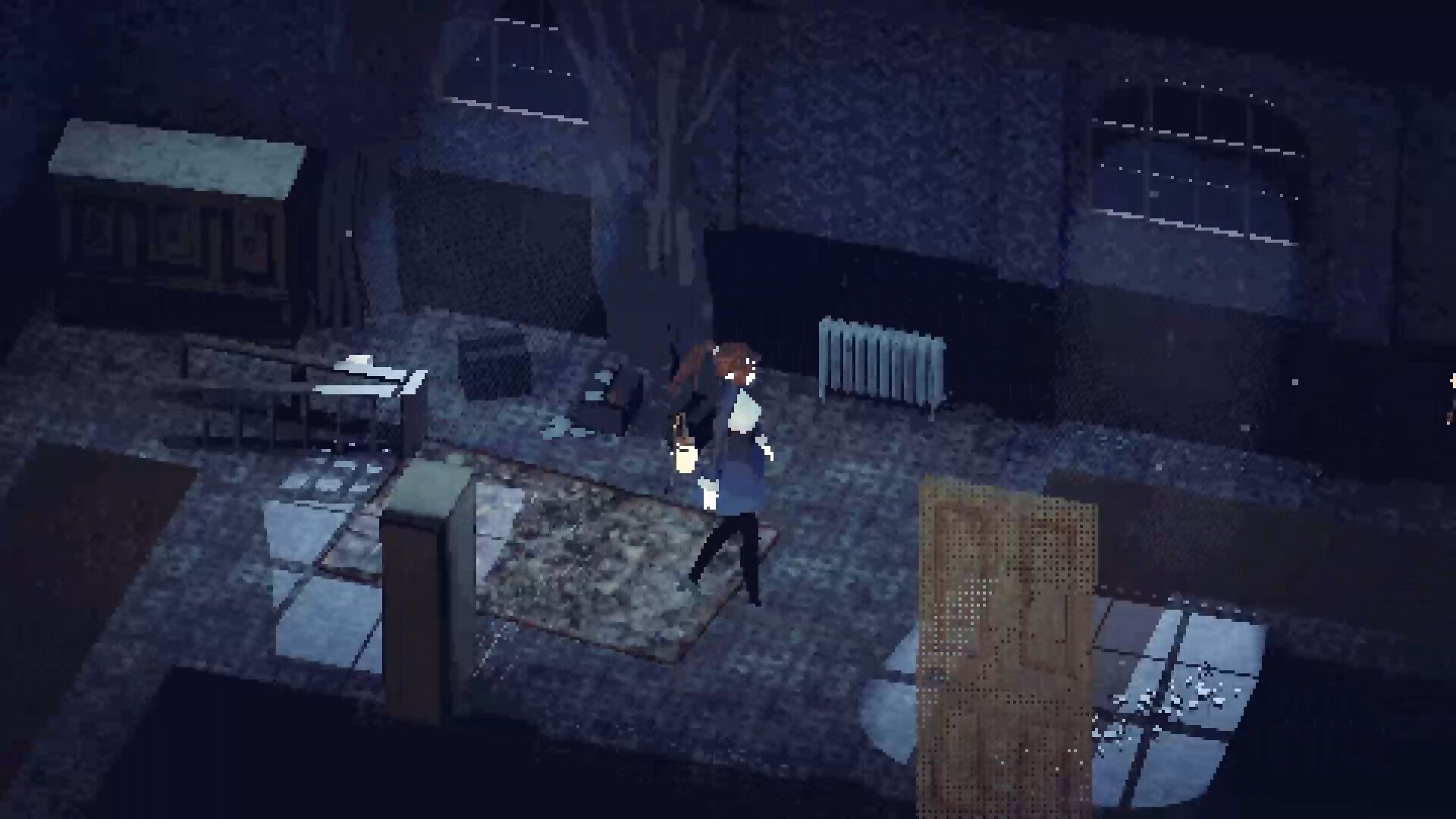

Echograph blends Resident Evil-style manor survival with first-person photography combat, making its haunted camera the clearest reason horror fans should watch Pappy's Pipe Dream's retro 3D debut.
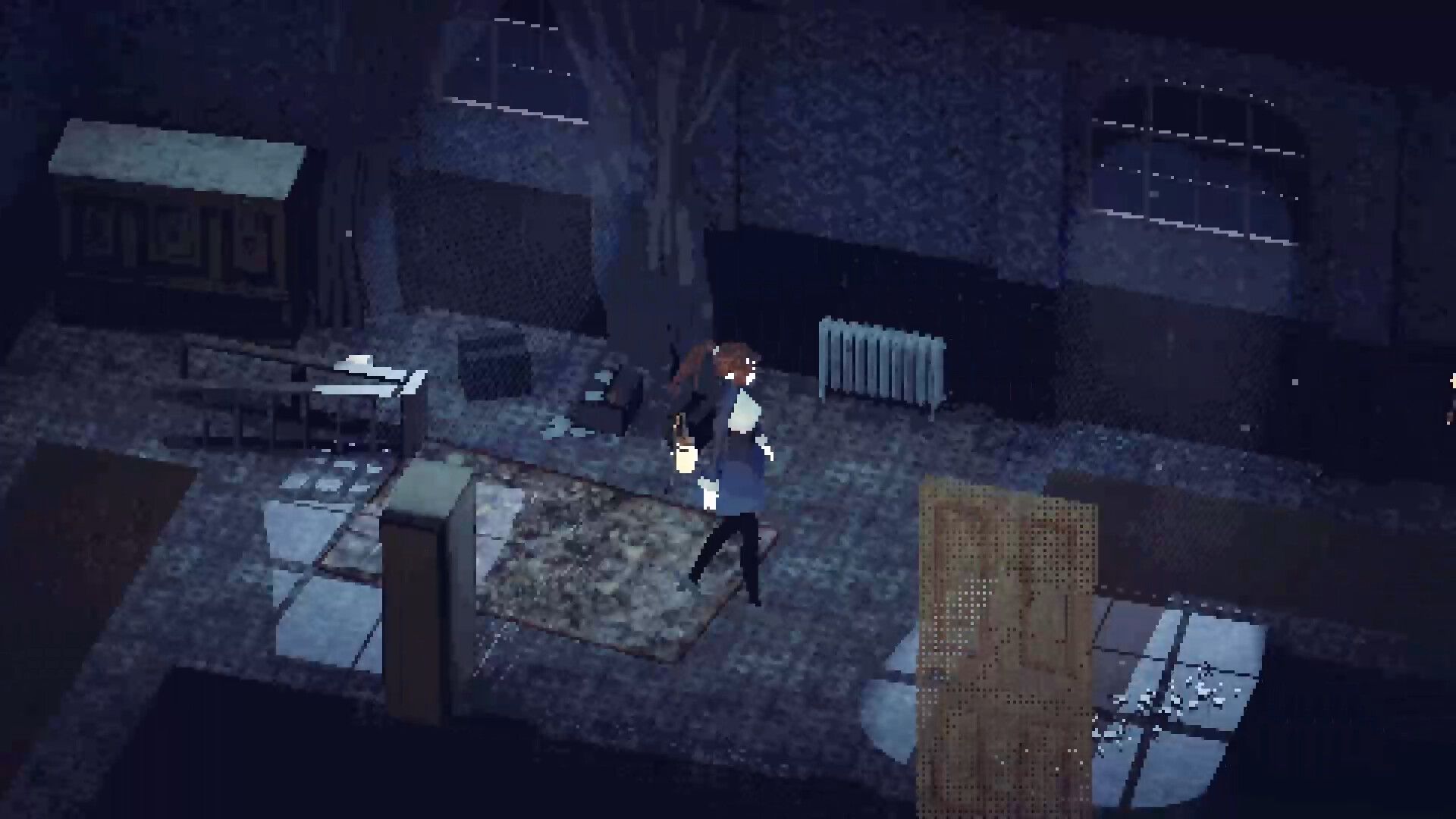
Image: steambase.io
Echograph’s demo puts the haunted camera in players’ hands
The strongest concrete news around Echograph is that Pappy’s Pipe Dream’s retro 3D survival horror has moved from premise to playable shape. GameWatcher reports that a free Echograph demo is available on Steam, while IGN and Bloody Disgusting both published hands-on impressions from the opening stretch ahead of the extended demo’s release. The Wand Report lists the game’s release window as TBA and says its preview build was played on PC, so for now the clearest practical guidance is simple: the demo is the thing players can try, while the full launch timing remains unannounced in the provided sources.
That matters because Echograph is being sold on feel as much as on premise. According to IGN, the game follows Layla, the sole survivor of a traumatic event that killed her family at Calder Manor. GameWatcher identifies her as Layla Calder and says she returns to the ancestral home to uncover the family curse tied to that tragedy. The Wand Report adds another piece of character context from its preview build: Layla is pregnant and wants to end the curse before it can continue through her bloodline.
The setup is familiar by design: a cursed family, a decaying manor, secret rooms, puzzles, hostile spirits, and a protagonist moving through a house that wants to keep its history buried. The difference is in what Layla has to survive with. The sources agree that her central defensive tool is an antique or mysterious camera, used to repel or damage ghosts rather than a firearm. Bloody Disgusting says the spirits are called “echos,” while GameWatcher spells them as “echoes.” That minor terminology split is worth noting because it comes from preview coverage rather than a single final style guide, but the mechanical point is consistent across outlets: in Echograph survival horror, looking directly at the dead is both your weapon and your risk.
The Resident Evil comparison is about structure, pressure, and the house
IGN’s headline comparison to Resident Evil is easy to understand once you look past surface nostalgia. The outlet’s preview describes Echograph as classic survival horror in tone and structure, with exploration, clues, puzzles, locked areas, key-item progression, and backtracking through Calder Manor. Bloody Disgusting similarly describes the house as a place of strange puzzles and secret passageways. GameWatcher calls the manor a character in its own right, filled with dark corners and rooms that open through puzzle solving.
That is the Resident Evil side of the pitch: the anxiety of leaving a safe-ish room, remembering a locked door, carrying a puzzle solution back through dangerous territory, and deciding whether a threat is worth spending resources on. IGN notes that the familiar key-item backtracking can feel repetitive in the opening, which is a useful caveat for anyone hoping the retro 3D horror game will avoid old genre habits entirely. Echograph appears to embrace those habits, then shifts the combat language around them.
The survival pressure comes from limits rather than spectacle. Bloody Disgusting reports that the camera uses film stock, and GameWatcher says using the camera against the main ghost type requires film. The Wand Report’s preview build included normal and survival difficulty options, with survival described in-game as making camera shot timings shorter, resources scarcer, ghosts stronger, and enemies generally harder to kill. Those are the kinds of settings that can decide whether a horror game feels like a guided haunted-house tour or a true rationing exercise.
For Resident Evil fans, the question is not whether Echograph has a mansion and puzzles. Based on the previews, it does. The more important question is whether Calder Manor can make every return trip feel newly unsafe. The preview coverage suggests Pappy’s Pipe Dream is trying to do that through enemies that block routes, resource-gated confrontations, and camera angles that make even the act of examining a room part of the tension.
The Pokemon Snap label points to framing, timing, and the lens itself
IGN framed Echograph as “equal parts Resident Evil and Pokemon Snap,” but the comparison needs careful unpacking. None of the provided sources describe a creature-collecting album, score-chasing photography safari, or a bright on-rails structure like Nintendo’s photography series. The shared idea is narrower and stranger: the player’s main interaction with threats is to raise a camera, frame a subject, and capture the decisive shot.
Bloody Disgusting gives the clearest mechanical description. Pressing a button shifts into a first-person camera viewfinder with a circle in the middle, and photographing enemies damages them. The same preview says allowing ghosts to come closer makes the shot more powerful, which creates an ugly little bargain at the heart of the combat. The optimal play may require waiting when every horror instinct says to move. If film is limited, panic shots are wasteful. If the ghost gets too close, patience becomes punishment.
That is where the Pokemon Snap comparison becomes useful for horror readers, even if Fatal Frame is the more direct lineage. Pokemon Snap trained players to watch movement, anticipate behavior, and compose a photograph under time pressure. Echograph appears to drag that photographic grammar into survival horror. Instead of chasing a better score, you are trying to survive an encounter while a hostile spirit advances through the frame.
Bloody Disgusting’s demo account suggests the system grows beyond single target standoffs. The outlet describes multiple ghosts, projectiles, and a boss fight where an echo fired shots from around the room, forcing movement while the player looked for safe openings to stop and take a stronger photo. That detail is important because camera combat can become static if every encounter is simply “wait, aim, shoot.” The previewed boss structure hints at a more demanding loop: read the room, dodge, ration film, rotate back toward the threat, and accept that the strongest picture may require the worst possible proximity.
Fatal Frame is the shadow in the viewfinder
Although the assignment’s headline comparisons lean on Resident Evil and Pokemon Snap, every hands-on source ties Echograph most directly to Fatal Frame. IGN says the mysterious camera calls back to Koei Tecmo’s ghost-photography horror series. Bloody Disgusting calls Echograph Fatal Frame-inspired and argues that modern indie horror rarely tries to mimic that specific lineage. The Wand Report states that Pappy’s Pipe Dream does not hide its affection for Fatal Frame, citing the young woman in a haunted manor and a camera used to repel ghosts.
That influence is not a problem by itself. Horror has always worked through ritual. A door animation, a save room, a radio crackle, a camera viewfinder, a footstep that arrives one beat too late: these mechanics become genre language. Echograph’s challenge is whether it can make the camera feel like its own instrument rather than a borrowed relic.
The preview details suggest one promising answer: perspective switching. In standard exploration, outlets describe Echograph as isometric rather than locked to old Resident Evil fixed angles. When Layla raises the camera, the game moves into first person. The Wand Report connects that shift directly to tension, explaining that hauntings feel closer when the viewfinder pulls the spirit toward the player’s face. Bloody Disgusting notes that coming out of the camera can reorient the game camera toward the direction the viewfinder was facing, creating a brief moment of disorientation that the writer said was not too rough to get used to.
That disorientation could become a strength if handled carefully. Survival horror often thrives on the half-second after a choice, when you have acted but do not yet know whether it was wise. In Echograph, the danger may sit in the transition: lower the camera, find your bearings, check your film, and hope the room has not shifted against you. The hands-on coverage does not prove the full game will sustain that pressure, but it identifies a mechanical space where Echograph could distinguish itself from a straightforward homage.
Retro 3D presentation is doing design work, not only nostalgia
The retro look is the first thing many players will notice. IGN places Echograph inside the growing revival of low-polygon horror inspired by the PS1, Sega Saturn, and N64 era, naming games such as Derelikt and Crow Country as part of the wider movement. GameWatcher calls Echograph PSX-inspired. Bloody Disgusting describes it as low-poly classic survival horror. The Wand Report adds that the game switches between pixel art and low-poly art, with dialogue portraits using a different visual style than the 3D environments.
That visual approach carries practical consequences. Low-poly horror works because it leaves room for uncertainty. A face can be half-read. A hallway can look flat until something moves at the far end. A doorframe can hide a shape because the camera angle, texture resolution, and lighting all conspire against clean information. IGN says the isometric perspective provides decent visibility while still heightening dread in tight hallways and puzzle-box rooms. Bloody Disgusting and GameWatcher both describe player camera rotation, with GameWatcher saying the perspective allows environments to hide details at certain angles, encouraging thorough inspection.
That is a different retro grammar than pure fixed-camera imitation. Crow Country comparisons appear in the coverage because Echograph lets the player rotate the isometric view, which can make searching a room feel tactile. If a clue only reveals itself when you swing the camera, then looking becomes a mechanic before the antique camera even enters the player’s hands. The world asks to be examined, then punishes examination when an echo appears.
The Wand Report’s note about presentation also adds texture to the throwback. Pixel art portraits against low-poly spaces can create the feeling of a memory reconstructed from mismatched sources. That suits a story about a survivor returning to a cursed family estate, even if The Wand Report found the early story setup familiar. The retro 3D horror game label may draw players in, but the stronger question is whether Echograph’s art direction can keep guiding play after the nostalgia wears off.
Resource management may decide whether the camera hook holds
For horror players, a clever weapon is only as good as the pressure around it. The camera in Echograph sounds distinctive because the previews describe several overlapping constraints. Film is limited, according to Bloody Disgusting and GameWatcher. Shot strength is tied to proximity, according to Bloody Disgusting. Survival difficulty reduces camera timing windows and makes resources scarcer, according to The Wand Report. Some ghosts can be avoided, according to GameWatcher, but enemies can grab Layla if the player tries to slip past at a poor angle.
That creates meaningful survival math. Spending film may clear a route and reduce future risk. Saving film may preserve options for a stronger enemy, but leave an echo stalking a hallway you need to cross again. GameWatcher says Layla has a run button, though the outlet describes it as closer to a jog, and reports that ghosts were not fast in straight chases during its preview. That detail suggests Echograph may lean less on constant pursuit speed and more on route control, tight spaces, and bad decisions under pressure.
Enemy variety will be crucial. GameWatcher mentions ghostly hands and arms that block doors and items, as well as normal echoes. Bloody Disgusting describes multiple ghosts and projectile-throwing encounters. These are encouraging signs because a camera combat system needs enemies that challenge positioning, timing, and attention in different ways. A slow ghost in a hallway asks whether you are brave enough to wait. A projectile enemy asks whether you can create time to frame the shot. A route-blocking manifestation asks whether the camera is also a tool for investigation and access, not only combat.
Audio is not deeply detailed in the provided previews, so it would be irresponsible to make claims about sound design beyond the broad tension reported by the outlets. Still, horror built around a camera has an obvious audio burden. Players need to know when something is entering the edge of the frame, when it is safe to lower the viewfinder, and when a room’s silence has curdled into a warning. The available sources show the visual and mechanical foundation. The full game still has to prove the sensory mix across a longer campaign.
What is confirmed, what remains unanswered, and who should try the demo
The confirmed picture is narrow but compelling. Echograph is the debut game from Pappy’s Pipe Dream, according to Bloody Disgusting, and the developer is also named by IGN and The Wand Report. The available preview coverage describes a PC demo or preview build, with GameWatcher specifically saying a free demo is on Steam. The Wand Report lists release as TBA. The provided sources do not confirm final platforms beyond the PC demo context, do not give a price, and do not provide final PC requirements or a full release date.
That leaves several open questions. We do not yet know how large Calder Manor will be, how much enemy variety exists beyond the previewed ghosts, hands, projectiles, and boss encounter, or whether the family-curse story can move beyond familiar haunted-lineage beats. IGN’s note about repetitive backtracking in the opening is also worth watching. Backtracking is central to this style of horror, but it becomes dead air if the house does not meaningfully change or threaten the player’s expectations on return trips.
Still, the new horror game Echograph has a clear pitch for a specific audience. If you miss survival horror that makes you count resources, read rooms, and fear the walk back through a hallway you already solved, the demo is worth attention. If your favorite horror combat is built around aggressive firearms and generous mobility, Echograph’s antique camera and deliberate framing may feel restrictive by design. That restriction is the hook.
The Resident Evil Pokemon Snap horror shorthand works best as a doorway into the idea, not as a complete description. Resident Evil explains the manor, puzzles, resource pressure, and survival loop. Pokemon Snap explains the act of watching, framing, and waiting for the right image. Fatal Frame remains the clearest ancestor. Echograph’s chance to stand apart lies in combining those pieces through rotating retro spaces, first-person viewfinder combat, and the dreadful calculation of letting a ghost come closer because the better shot might be the one that almost kills you.