
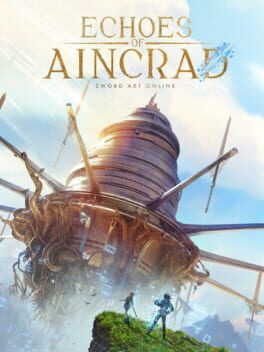
Breaking down Echoes of Aincrad’s latest gameplay trailer, with a focus on its harsher combat, MMO‑style progression, and why this darker Sword Art Online revival might finally escape the “just another anime tie‑in” curse.
Sword Art Online games have spent more than a decade chasing the fantasy of Aincrad without ever quite nailing what made that first arc feel dangerous. The new gameplay trailer for Echoes of Aincrad is the closest Bandai Namco has come to turning that original death game premise into a modern action RPG that actually looks tense, punishing, and reactive.
From the first shots of the trailer, it is clear this is not another bright power fantasy. The lighting is colder, the UI cleaner, and the camera work more interested in telegraphs and spacing than in flashy cut‑ins. Echoes of Aincrad is still very much an anime action RPG, but it finally looks like one where positioning and timing matter as much as raw stats.
A combat system built around commitment and punishment
The centerpiece of the new footage is combat. Rather than spamming skills through endless particle effects, Echoes of Aincrad leans into a more grounded real‑time system where every swing has weight. Standard attacks chain into directional combos, and the game clearly wants you to think about where you are standing relative to the enemy.
You can see this in the boss fights that anchor the trailer. Telegraphed red zones and sweeping halberd swings force the player to dodge or step out, but the movement has just enough recovery that roll‑spamming will get you clipped. There is a small, readable delay when committing to a heavy attack, and missing that window leaves the player exposed. It is closer to something like Tales of Arise tuned a notch harsher than to the more mash‑friendly SAO games on PS4.
Weapon choice looks more meaningful this time as well. One section shows a heavier greatsword style with slower arc‑heavy swings that stagger, followed almost immediately by a quick, dual‑wield setup with shorter reach but faster recovery. Animations actually sell the tradeoffs. Greatsword swings push Kirito‑style characters forward and away, while dual blades keep them planted in close quarters, rewarding gutsy play but punishing greedy strings.
The trailer also hints at a proper risk‑reward loop through enemy aggression. Mobs are not politely waiting offscreen; smaller enemies will dive in while you focus on a larger target, and several clips show the player interrupted mid‑combo by a stray attack from the flank. Echoes of Aincrad is not full Soulslike, but there is a welcome sense that the game expects situational awareness, not just rotation memorization.
Skills, cancels, and party synergy
Past SAO RPGs pushed the anime fantasy through long skill chains and flashy sword arts, but they often felt disconnected from the base combat. Echoes of Aincrad tries to tighten that up. Skills now look woven directly into combos, with clear visual tells when you are canceling between normals and arts.
One of the more striking clips shows the player launching an enemy, canceling into an aerial skill, then finishing with a ground‑slam art that creates a window for a party member to trigger a follow‑up. It is fast, but readable, and the UI offers small but useful cues when a link attack or assist is available.
Party members are not just passive stat sticks either. Minimalistic portraits light up when certain conditions are met, suggesting a system of synergy triggers similar to cross attacks in past games, but less intrusive. The trailer cuts to a moment where a companion pins a boss with a bind skill, buying the player time to unload a high‑risk finisher. It looks closer to a coordinated MMO group burst than to the old automated support AI of the PSP days.
Cooldown management appears crucial, too. Skills are displayed on a compact bar with visible timers, but the spacing between activations looks long enough that you will not be able to spam your best moves. One clip shows the player running dry and being forced to rely on basic attacks and careful dodging while the bar slowly rebuilds. That forced downtime, paired with enemy aggression, could be the key to making basic combat feel engaging rather than filler.
A harsher progression loop that fits the death game fantasy
Echoes of Aincrad is set in the floating castle again, and the trailer frames progression like a genuine climb. Floors are no longer just different biomes; they look like escalating layers of risk. Early zones show relatively open fields with predictable mob patterns, while midgame areas tighten into narrow corridors, vertical drops, and layered arenas where enemies can surround you from above and below.
The footage teases a familiar MMO‑styled structure of quests, dungeons, and boss raids, but the tone is much more desperate. NPCs huddle around campfires in dim lobbies, gear looks scarred and practical, and UI elements for difficulty modifiers flash briefly when entering major encounters. One highlight is a brief cut where the player approaches a field boss and a warning prompt appears recommending a higher floor‑wide threat level, implying that the world can be tuned up for better rewards at real risk.
Character progression looks like a mix of traditional leveling and more granular specialization. Menus show branching skill boards for weapon types and roles, with nodes devoted to things like stagger resistance, crit windows, and support cooldowns. It suggests you will be able to lean into specific playstyles, such as a high‑risk burst DPS build with fragile defenses or a safer, sustain‑oriented setup that trades raw damage for survivability.
There are also hints of meta progression. One screen briefly flashes an account‑wide profile with slots for titles, passive bonuses, and what looks like death game modifiers, possibly tied to higher difficulties or challenge runs. If Bandai Namco doubles down on that structure, Echoes of Aincrad could give longtime players a reason to keep rerunning floors beyond just filling a compendium.
A darker Aincrad that finally remembers people can die
The most surprising thing about this trailer is not the combat pacing, but the tone. Echoes of Aincrad finally gives Aincrad back its menace. Environments are moody and underlit, with fog‑choked forests, fractured bridges vanishing into sky, and boss arenas that feel claustrophobic instead of heroic.
Most importantly, the UI and dialogue snippets keep reminding you of risk. At one point, the trailer shows a low‑health warning accompanied by a subtle heartbeat effect and a permanent‑death icon in the corner during what appears to be a special “Death Game Mode.” This mode, teased alongside the Ultimate Edition bonuses, looks like a brutal variant where a failed run could mean losing progress or characters. It is a sharp contrast to past SAO games, which paid lip service to permadeath without making you feel it in the systems.
Cutscenes lean into that dread. Characters talk about thinning numbers, failed raids, and the emotional cost of pressing upward. Combined with a grittier art direction that uses muted color palettes and harsher shadows, it finally feels like the original premise is being treated as horror‑tinged survival instead of a cheerful online hangout.
More than a licensed button‑masher?
The obvious question for any Sword Art Online adaptation is whether it is just another licensed action RPG. The new Echoes of Aincrad trailer suggests something more ambitious, at least in how it handles combat and progression.
By slowing combat just enough to make commitment matter, tying skills directly into positioning, and using party synergy as a tool instead of a scripted spectacle, the game looks closer to a thoughtfully tuned action RPG than a simple fanservice vehicle. The progression systems, with their layered floor structure, specialization boards, and challenge modifiers, hint at a game designed to be replayed, optimized, and mastered.
There are still unknowns. We do not see much of the social side of Aincrad, and SAO games have a history of drowning strong combat in endless dialogue and filler quests. AI behavior over long sessions and the balance curve for solo play versus MMO‑style party compositions are also open questions. But the raw gameplay on display is sharper, meaner, and more deliberate than anything the series has shown in years.
What longtime SAO fans should watch in the trailer
If you have followed Sword Art Online from the original Aincrad arc through years of mixed‑quality games, there are a few specific details in this trailer you should pay attention to before launch.
Look closely at how enemies respond to your actions. Stagger animations, counterattacks, and flanking moves all suggest a system where foes are playing the same spacing game you are, rather than serving as punching bags. That will matter a lot on higher difficulties and in Death Game Mode.
Keep an eye on the UI whenever the player takes a big hit. Temporary debuffs, trauma‑like status icons, and changing threat indicators hint at a layered damage model, not just HP loss. If those systems play out across whole dungeon runs, Echoes of Aincrad could finally deliver on that exhausting, survival‑driven feel Aincrad has always promised.
Finally, watch how each new floor changes the rhythm of combat. Open plains fights, cramped ruins, vertical arenas, and raid‑style boss rooms all demand different loadouts and approaches. The more the final game demands that you adapt rather than just upgrade, the more likely it is to break clear from the long shadow of “just another anime tie‑in.”
On the strength of this new gameplay trailer, Echoes of Aincrad is at least pointed in the right direction. It looks like a darker, tighter, and more demanding take on Sword Art Online, one that might finally give Aincrad the merciless edge it has always deserved.