

Breaking down what’s confirmed about the new wave of Ecco the Dolphin projects, how the new site and countdown set the stage, why the originals still matter, and where a modern ocean odyssey could go on current consoles and Switch 2.
In 2026, Ecco the Dolphin is somehow one of the most intriguing comeback stories in games. After decades adrift, Sega’s surreal, notoriously challenging marine adventure is swimming back into the spotlight as a full franchise initiative rather than a single nostalgia play.
California based studio A&R Atelier, founded by members of the original development team and led creatively by series creator Ed Annunziata, has confirmed that “several” new Ecco the Dolphin products and games are in active development. Between a new official website, a community focused Discord, and a long runway teed up by a prominent countdown, this looks less like a one off remaster and more like a multi year relaunch.
Here is what is actually confirmed, what the new site is telegraphing, why the 16 bit originals still command a cult following, and how a modern Ecco could take shape on today’s hardware and a likely Switch 2.
What’s officially in the works at A&R Atelier
A&R Atelier is not being coy about the broad strokes. Across press statements and interviews, the studio and Annunziata lay out a simple roadmap. First come remasters of the original Sega Genesis titles Ecco the Dolphin and Ecco: The Tides of Time. These are being built by the original creators rather than outsourced, and previous comments suggest they will be more than bare bones emulation, likely polishing controls, presentation, and accessibility while preserving the harsh, dreamlike tone.
Alongside those remasters, A&R Atelier has also confirmed a “third” mainline Ecco project that goes beyond simple revival. Different outlets describe it as a new game and as part of “several new products and games,” implying a broader slate that might also include smaller experimental titles or cross media projects. The tone across reporting is consistent. This is a full franchise plan, not a one shot retro collection.
Annunziata himself has been clear that he does not see Ecco as just a dolphin platformer. In a resurfaced IGN interview, he describes Ecco as a bridge between worlds and often talks about the series as a vehicle for science fiction, cosmic horror, and environmental themes. That philosophical framing matters, because it suggests the new mainline project is likely to lean harder into narrative and worldbuilding than the minimalist 16 bit originals ever could.
Inside the new site, countdown, and community push
The newly launched eccothedolphin.com is the clearest public sign that Sega and A&R Atelier are treating this as a coordinated relaunch. The landing page is anchored by a large countdown timer, which, based on the hours listed in early coverage, is set to hit zero around April 22, 2026. That date makes sense as a target window for a full reveal or even the release of the remasters, with the new mainline game following later.
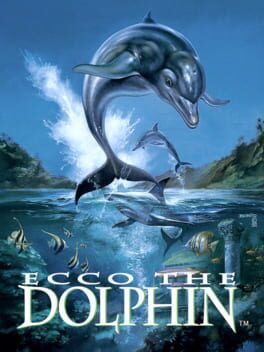
The site’s Games section currently shows key art of Ecco leaping out of the water alongside other marine life, tagged as developed by A&R Atelier and stamped with a 2026 trademark. Beyond confirming the involvement of the new studio and the 2026 timing, it is notable for how clean and modern the branding looks. This is not a pure throwback logo, but an attempt to refresh Ecco as a contemporary IP while still recognizable to fans.
The About section outlines the site’s role as a central hub. Fans can create accounts, presumably to opt in to newsletters, betas, or community initiatives as the projects progress. Social links point to an official Discord server, giving the team a direct channel for feedback and community building. For a series that once felt like a cult curiosity, Ecco is suddenly being treated like a live, evolving brand.
The long countdown itself is another signal. By setting expectations this far ahead, A&R Atelier is buying time to build anticipation while still working quietly on the actual games. It also suggests that at least part of the slate is already scoped in a way Sega is confident enough to put a date on. Remasters are the safe bet for 2026, but a teaser for the new entry seems likely when that clock hits zero.
Why the original Ecco still has such a grip on people
For players who grew up with 16 bit consoles, Ecco the Dolphin stands out as one of the strangest mainstream games Sega ever published. On paper, it is a side scrolling action adventure about a dolphin searching for its lost pod. In practice, it is a moody, unforgiving, and often opaque journey through an ocean that slowly reveals itself to be connected to alien forces and time travel.
Several ingredients explain why Ecco has a cult following even today.
First is the atmosphere. The Mega Drive and Sega CD soundtracks fused ambient, almost new age melodies with eerie, dissonant tones that made the ocean feel both beautiful and hostile. The pixel art pushed the hardware to deliver smooth animations and layered parallax backgrounds that evoked depth and motion, making you feel the weight of currents and the vastness of the sea.
Second is the tone. Ecco is surprisingly bleak. There is no hand holding, and the narrative is delivered in sparse, cryptic text. You are frequently lost, vulnerable, and underpowered. When the aliens behind the disaster finally emerge, it feels more like a horror twist than a triumphant reveal. The way the game treats the ocean as an ancient, mysterious place packed with non human intelligence gives it a vibe that still feels different from most modern mascots.
Third, there is the difficulty and structure. Ecco games are punishing, full of environmental puzzles, maze like caverns, and limited oxygen that forces you to surface or find air pockets. This combination of action and almost simulation like resource management made success feel earned. For many players, that brutality translated into long term obsession and vivid memories, even if they never saw the ending.
All of that adds up to an experience that is hard to pigeonhole. It is not a pure platformer, not a typical story adventure, and not really a sim. That slippery identity is part of why nostalgia for Ecco is so strong. There has never been anything quite like it, and there is still room for that niche today.
What a modern Ecco could look like on PS5, Xbox Series, and Switch 2
With current consoles and a likely more powerful Switch successor on the horizon, an Ecco revival has a lot of technical and design space to play in. While A&R Atelier has not detailed mechanics or platforms, we can make some educated guesses based on the series’ history and comments from Annunziata about his interests.
One likely direction is a deeper, seamless ocean world instead of discrete, linear stages. Technical interviews over the past decade have made it clear that modern hardware is ideal for dense underwater simulation. Systems for volumetric water, dynamic caustic lighting, and fluid currents can make the sea feel alive, not just as a backdrop but as a force that affects movement and combat. Picture a semi open ocean map, with strong currents acting like expressways, deep trenches hiding horror tinged secrets, and surface hubs linking pockets of marine civilization.
Control is another big opportunity. The original games already made movement feel good, with Ecco accelerating smoothly, flipping in the air, and using sonar to scan. Modern analog controls could go further with full 3D swimming, drift like momentum, and context sensitive tricks, while still allowing classic 2D style movement for sections that need precision. Adaptive triggers and haptics on PS5 and advanced HD rumble on a Switch 2 style device could simulate the push and pull of currents and collisions in a convincing way.
On the narrative side, expect a stronger emphasis on environmental themes. Annunziata has spoken about Ecco as a way to explore ocean conservation and the idea of a hero who is inherently non human. Modern Ecco could fold real world concerns about climate change, acidification, and pollution into its science fiction in a way that feels topical without turning into a lecture. The cosmic horror and time travel elements are unlikely to go away. In fact, modern visual effects are perfect for texture heavy, organic alien structures and surreal time warp sequences that echo the most memorable set pieces from the original games.
Game structure is a tougher call. Hardcore fans might want an unyielding experience, but a modern release will need more flexible difficulty and onboarding. Expect quality of life features such as optional navigation aids, toggles for oxygen drain speed, and more generous checkpoints, balanced by extra challenge modes that recreate classic brutality. The remasters of the first two games are a good testbed for this, letting A&R Atelier learn what contemporary players will tolerate.
Cooperative or asynchronous multiplayer is another angle that makes sense in 2026. While Ecco has always been a solitary figure, a modern design might introduce pod segments where you coordinate with other dolphins or marine species, either through drop in co op or AI partners. Less obvious but equally interesting is community driven exploration, where players share sonar maps or discoveries that slowly fill out a shared global atlas of the ocean.
For Switch 2 specifically, the hybrid nature of the hardware encourages shorter session structures. A&R Atelier could design missions or routes that can be completed in 15 to 20 minutes while still contributing to long term goals, perfect for handheld play. If the rumored specs hold and the device targets performance closer to current home consoles, then dynamic water simulation and dense fish schools should still be achievable, perhaps at lower resolutions but without gutting the mood.
How the remasters can set up the new mainline game
The remastered versions of Ecco the Dolphin and Ecco: The Tides of Time are more than nostalgic appetizers. They are a way to reintroduce Ecco’s mechanical language to a generation that mostly knows him from retro collections and memes. If A&R Atelier can strike the right balance between authenticity and comfort, those remasters become crucial on two fronts.
First, they will re establish the core feel of Ecco. Responsive, momentum driven swimming, sonar based interaction, and the mix of environmental navigation with puzzle solving are non negotiable pillars. Small tweaks such as optional maps, modern save systems, and more readable objectives can prepare new players for a deeper, more ambitious third game without erasing what made the originals distinctive.
Second, they can set narrative expectations. Updated translations or subtle new lore notes could gently align the old story beats with where the new mainline entry is heading. That might mean re emphasizing the alien forces behind the sea’s trauma, or better foregrounding the idea of the ocean as a sentient, interconnected space. Done carefully, this would make the remasters feel like canon groundwork rather than museum pieces.
The stakes of bringing Ecco back
Ecco’s return is not just another retro revival. It is a chance to test whether mid budget, idiosyncratic projects can still find space beside live service giants and annualized blockbusters. A&R Atelier is led by the original creator, backed by Sega’s licensing and publishing footprint, and is openly planning multiple products rather than quietly shipping a one off.
That confidence itself is a good sign. It suggests Sega sees untapped potential in smaller legacy IP that can appeal to both nostalgic fans and players tired of interchangeable mascots. If Ecco’s revival lands, it could open the door for more experimental approaches to other dormant series.
For now, the countdown on eccothedolphin.com keeps ticking toward 2026. Until the timer hits zero and the studio finally shows real footage, Ecco remains what he has always been in the imagination of his fans. A lonely figure cutting through a vast, uncanny ocean, caught between tranquil beauty and existential dread, and just strange enough to matter in a landscape that often feels too safe.