
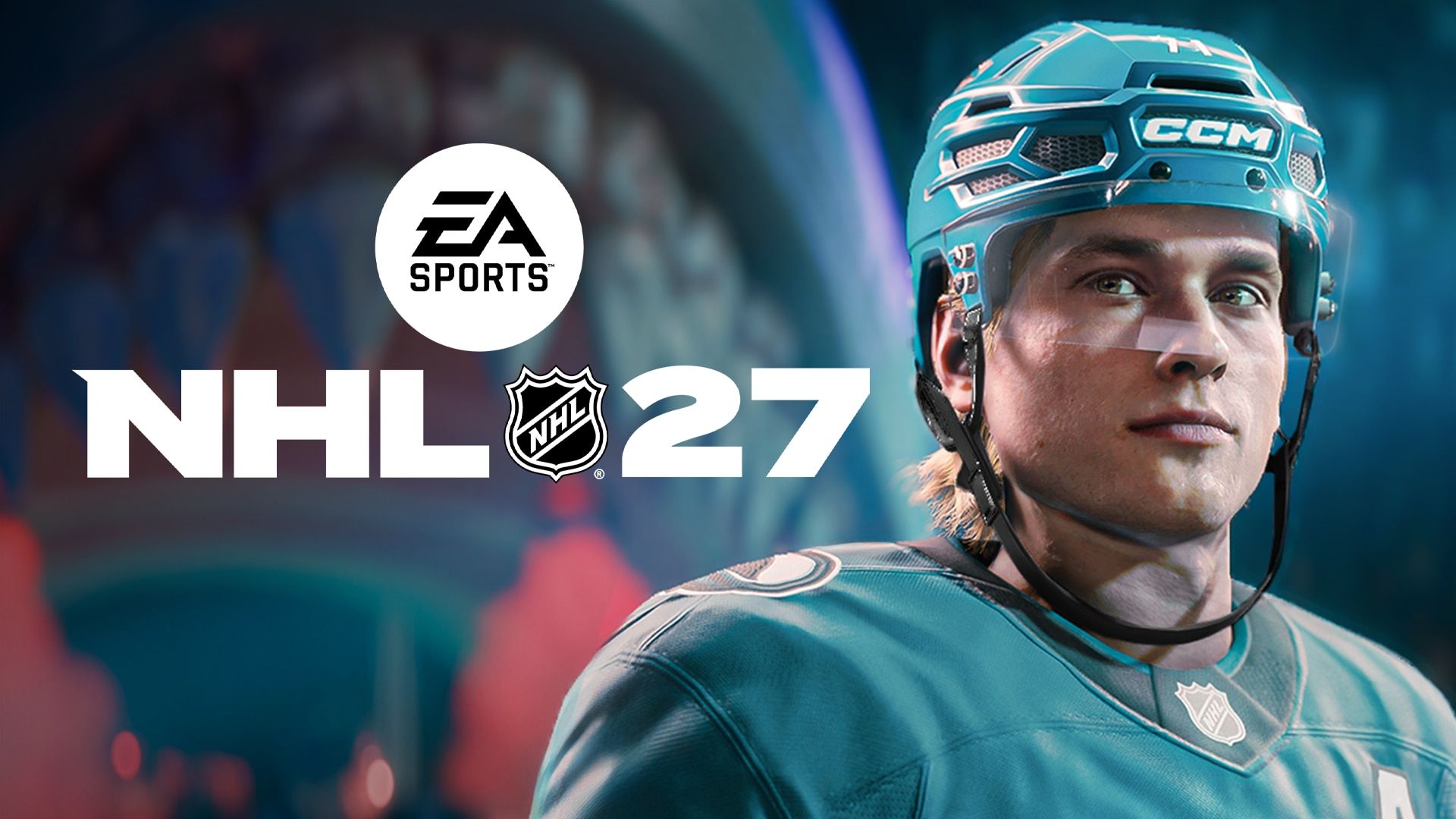

EA Sports NHL 27 brings back 32-team online Connected Franchise, but EA's interview shows a mode built around social play first, with major franchise features still waiting on post-launch plans.
Image: ea.com
EA is asking franchise players to wait while it builds the missing middle
EA Sports NHL 27’s biggest franchise-mode development is also its biggest source of tension: Connected Franchise is back as a 32-team online mode, but EA has acknowledged that several core league-management pieces are either absent or still being shaped by post-launch feedback.
In a GamingBolt interview published after NHL 27’s release, EA Sports developers said Connected Franchise was built first around “human connection,” with the team prioritizing social league features such as full team-to-team trading and dynamic free-agent bidding. That explains the direction of the first version, but it also frames the current problem. Players expecting a complete online franchise sandbox have found a mode without CPU-controlled teams, entry drafts, player progression, aging, retirement, and full multi-season stat carryover, according to GamingBolt’s questions to EA.
For a sports game audience, that is not a small feature gap. A 32-team online league sounds ideal on a feature list, but most real player groups are smaller than 32. Without CPU teams filling the rest of the league, Connected Franchise currently leans toward large, organized communities rather than the smaller friend groups that often sustain dynasty modes over years. EA’s answer did not confirm a timeline for CPU teams, but the studio said it is hearing that feedback and gathering community wishlists through its portal.
That puts NHL 27 franchise mode in an unusual spot. The mode has a clear foundation, and EA is publicly describing it as something meant to become a long-term staple of the series. At the same time, the first version asks its most dedicated franchise players to accept a live-service roadmap before the mode has several mechanics that define long-term team building.
Connected Franchise is built around social friction first
EA’s interview makes the design priority clear. The studio told GamingBolt that early development feedback pointed to human connection as the heart of Connected Franchise, so the first iteration focused on interactions between managers. In practical terms, that means the day-one design is strongest where users negotiate, bid, and compete with each other.
Full team-to-team trading is the obvious fit. Online franchise modes live on trade drama, roster gambles, and the long memory of a manager who gave up too much for a rental. Dynamic free-agent bidding serves the same purpose. It gives leagues a shared event where roster needs, cap discipline, and player valuation collide in public.
EA also said it built a brand-new UI system from scratch for Connected Franchise, describing the goal as a solid and friction-free experience. That is a meaningful production detail because online franchise modes can collapse under slow menus, poor commissioner tools, unclear transaction flows, and scheduling pain. If the user interface is reliable, the mode has a better chance of supporting active leagues over multiple seasons.
The tradeoff is that EA appears to have spent its first Connected Franchise pass on the social layer rather than the full simulation layer. For players who want an online GM league with 32 human managers, that prioritization makes sense. For a four-person or eight-person group trying to build a league around the NHL calendar, the missing AI-controlled teams change the shape of the mode immediately.
The absent franchise systems change the long game
The most important issue is not that NHL 27 lacks one community-requested toggle. It is that several missing systems all point to the same weakness: long-term continuity.
GamingBolt specifically asked EA about the absence of the entry draft, player progression, aging, retirement, and certain statistics carrying forward between seasons. EA responded that time constraints required priority decisions, while also acknowledging that deeper stories over time are fueled by drafts, player aging, retirements, and statistical histories.
That acknowledgment matters because those systems are the statistical engine of a franchise mode. Trades and free agency create short-term roster decisions, but drafts and progression create team identity. Aging and retirement create consequences. Multi-season stat tracking gives a league its record book. Without those pieces, a multi-season Connected Franchise can still produce competitive games, but it has less connective tissue between one season and the next.
From a mode-analysis standpoint, this is the difference between running a tournament league and running a franchise universe. A tournament league can survive on scheduling, standings, trades, and playoffs. A franchise universe needs prospect pipelines, regression curves, contract windows, and historical data. EA’s interview suggests the studio understands that distinction, but understanding it is separate from shipping it.
EA did not commit to specific dates for those larger franchise systems in the GamingBolt interview. The safe read is that players should treat them as priorities EA has acknowledged, not as confirmed NHL 27 updates until the studio announces release timing and patch details.
Fantasy Draft is the clearest post-launch target so far
The most concrete NHL 27 post-launch plan currently discussed in public is Fantasy Draft. According to coverage of EA’s developer Q&A by Yahoo Tech and Athlon Sports, EA Sports senior game designer Gurn Sumal said the team is in the implementation stage, designing and prototyping the feature. Senior game design director Mike Engelhardt also said EA’s goal is to get Fantasy Draft into NHL 27 as part of the live cycle.
That is still short of a guarantee. Athlon Sports noted that Fantasy Draft was not available for early access and that EA’s comments do not ensure it will arrive in NHL 27. The useful distinction for players is this: Fantasy Draft is confirmed to be in development, and EA has publicly stated a goal of adding it during NHL 27’s live cycle, but it remains unannounced as a dated update.
If it lands, Fantasy Draft would address one of Connected Franchise’s immediate competitive problems. Yahoo Tech reported that EA acknowledged the feature could help create better balance at the start of Connected Franchise leagues, where team strength varies based on which NHL clubs users select. That is especially relevant in a user-only league structure. If every manager is picking from the real NHL roster pool, the difference between choosing an elite roster and a rebuilding club can define a league before the puck drops.
Fantasy drafts also fit EA’s stated social-first philosophy. Draft night is one of the highest-engagement events a league can have, especially when users are building identities from scratch. It would not solve the absence of CPU clubs, prospect development, aging, or retirement by itself, but it would give Connected Franchise a stronger opening act and a cleaner competitive baseline.
Gameplay and AI changes matter because franchise players live in repetition
EA’s post-launch conversation is not limited to menus and league structure. Yahoo Tech’s report on the developer Q&A said EA confirmed several gameplay and AI changes in NHL 27, including a nerf to the L2/LT skating exploit, improved poke checks and stick-on-stick contact, body checking tuned more closely around player size and speed, more reactive goalies at higher difficulties, and reduced effectiveness when players repeatedly rely on the same scoring methods.
Those details carry extra weight for franchise players because franchise modes expose weak gameplay balance faster than one-off exhibition matches. If one skating input creates too much separation, if the same shot beats goalies too often, or if AI defenders cannot process common hockey situations, long seasons become pattern recognition rather than roster strategy.
Yahoo Tech also reported that AI teammates have improved awareness in situations such as dump-and-chase plays, screens, and forechecking. Mashable’s launch coverage separately described NHL 27 as featuring real-world data playbooks and a 32-team playbook system, with rebuilt arena atmospheres and a new broadcast duo of John Buccigross and Darren Pang.
For Connected Franchise, the AI improvements are a little complicated. On the ice, better teammate awareness and more varied team tactics should make user games feel less static. Off the ice, the absence of CPU-controlled teams means the current Connected Franchise structure does not fully use AI management to fill a league for smaller groups. That contrast is central to NHL 27’s first-year franchise story: the hockey layer appears to be receiving meaningful tuning, while the league-management layer is still waiting for several pillars.
Platforms, PC questions, and buying advice for franchise-first players
Mashable reported that EA Sports NHL 27 is out now on PS5 and Xbox Series X|S, with its launch coverage listing Amazon prices around $69 to $69.99. The provided source material does not include a PC release. Yahoo Tech reported that EA said a PC return is “absolutely on our radar,” but developers also said any PC version would need to meet quality standards such as proper widescreen and resolution support plus mouse-and-keyboard functionality.
That makes the current platform guidance straightforward. Console players on PS5 and Xbox Series X|S have access to NHL 27 now. PC players have a signal of interest from EA, but no confirmed NHL 27 PC version in the supplied reporting.
For franchise-first buyers, the decision depends on what kind of league you actually run. If you have a large, organized group that can fill many human-controlled teams, NHL 27’s Connected Franchise foundation is more immediately relevant. Team-to-team trading, free-agent bidding, and a social-first structure are built for that audience. If your league is a small group that depends on CPU teams, drafts, long-term progression, aging curves, retirement, and historical stat tracking, the current mode sounds incomplete based on EA’s own interview answers and the issues raised by GamingBolt.
The fairest expectation is that NHL 27’s Connected Franchise is a first live version rather than the finished online dynasty many players have wanted for years. Fantasy Draft is the feature to watch because EA developers have described active work and a goal of adding it during the NHL 27 live cycle. CPU-controlled teams and deeper franchise systems have been acknowledged as important, but the source material does not provide dates or firm commitments.
That leaves EA Sports NHL 27 with a familiar sports-game challenge: live support can turn a rough first version into a stronger mode, but franchise players make buying decisions based on what exists now. EA has opened the door to a more complete Connected Franchise. The next test is whether NHL 27 post launch plans move quickly enough to keep those leagues active after the opening rush.