
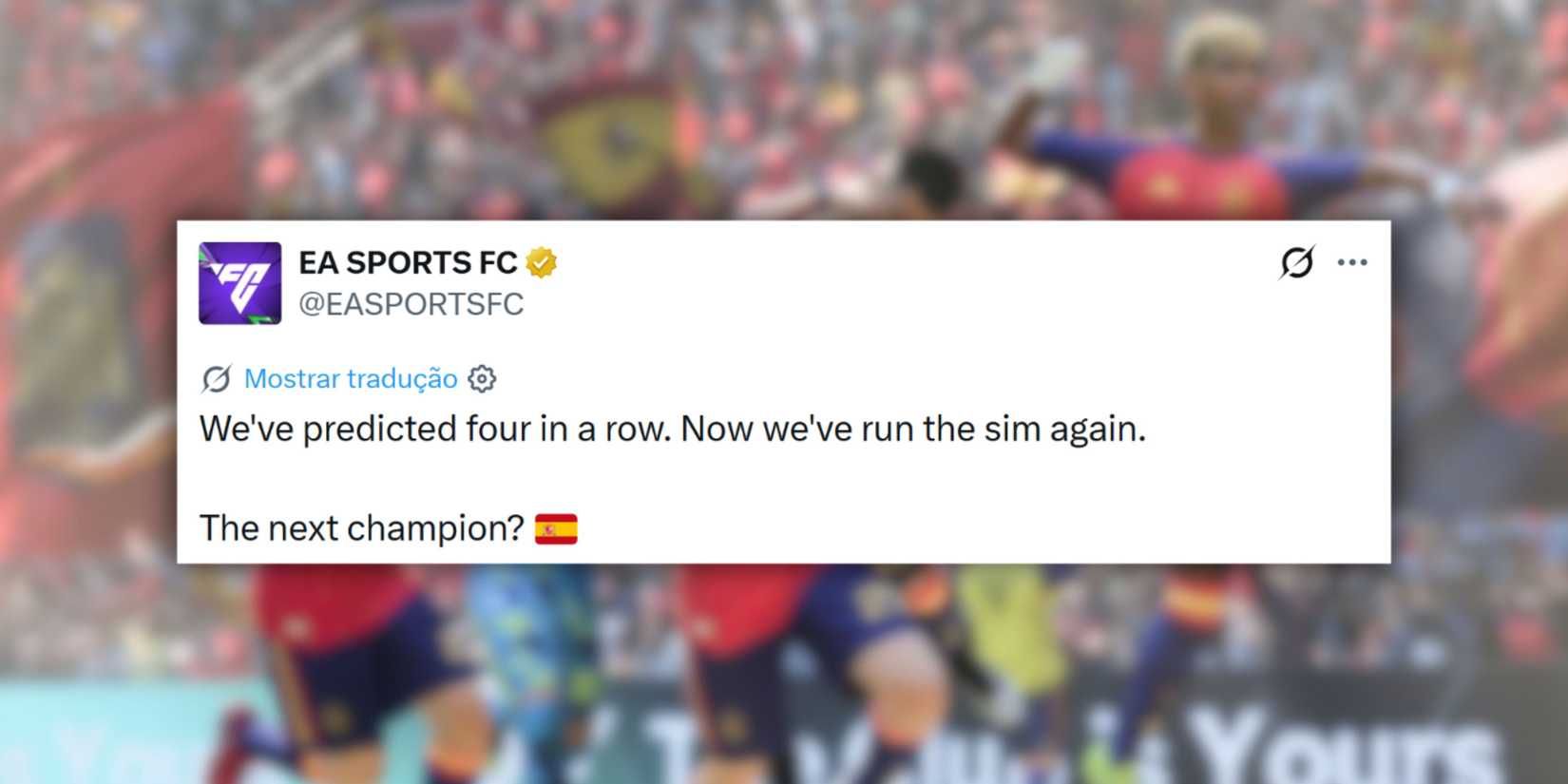

EA Sports FC’s 2026 World Cup simulation picked Spain, extending a streak that has sports game fans arguing over how much a virtual tournament can really tell us.
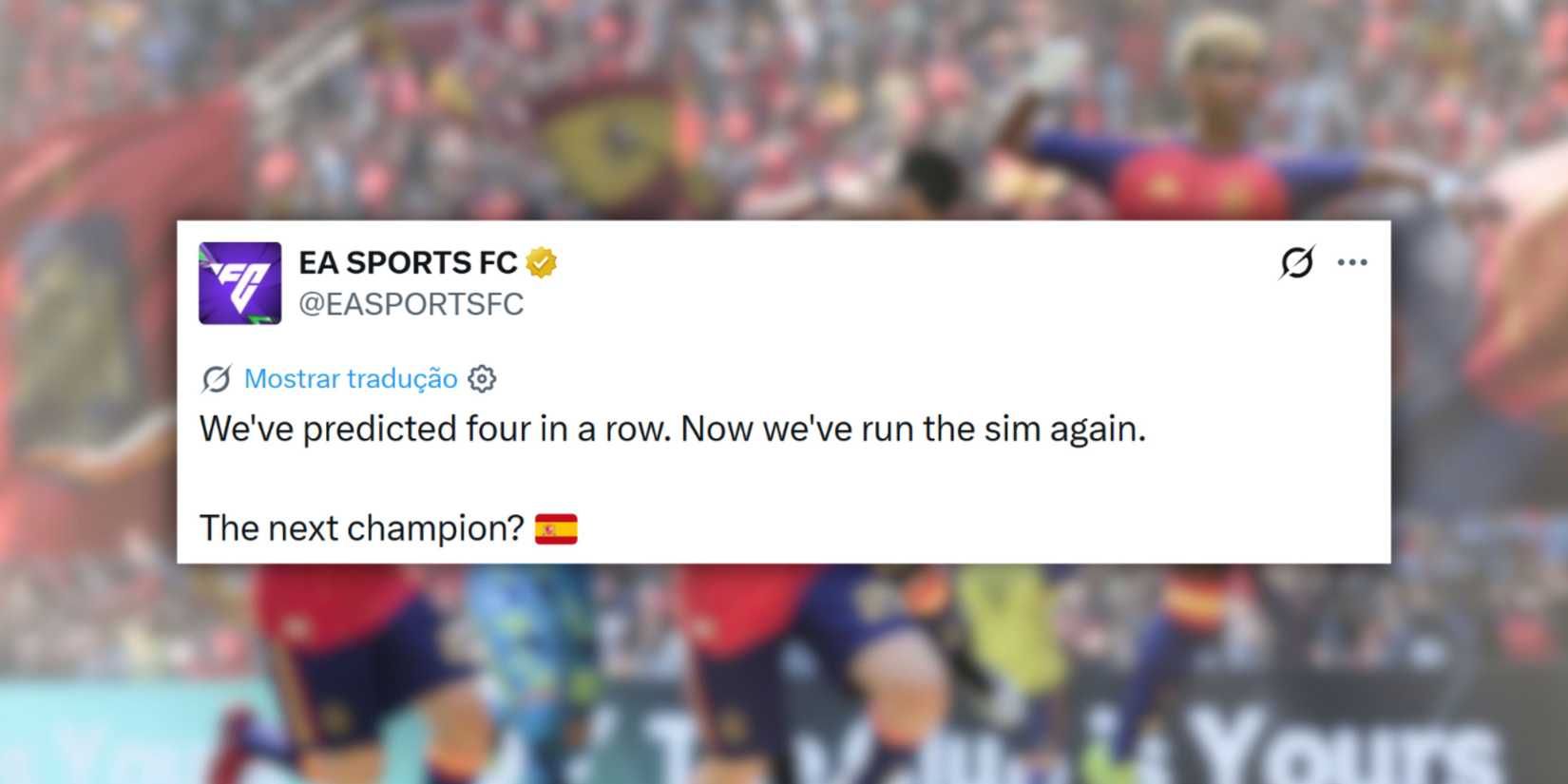
Image: dualshockers.com
EA Sports FC’s Spain call has turned a marketing stunt into a sports game argument
EA Sports FC’s 2026 World Cup prediction is drawing attention because, according to DualShockers and Meristation, EA’s football sim picked Spain before the tournament and Spain has now been reported as the champion. Meristation says EA Sports FC has correctly predicted the World Cup winner for a fifth consecutive men’s tournament: Spain in 2010, Germany in 2014, France in 2018, Argentina in 2022, and Spain again in 2026.
That is the strongest concrete claim around the story, and also the point where sports game fans should slow down. The supplied sources support that EA’s prediction streak has become a real talking point, but they do not all frame the achievement the same way. DualShockers describes EA as having “nailed the winner” five times in a row and says the 2026 call came from a simulation using EA Sports FC’s in-game database and player statistics. Meristation also reports the five-tournament winner streak, while noting that this World Cup felt different in games because EA Sports FC no longer holds the FIFA license and did not release a full World Cup update, instead presenting the tournament under “The World’s Game.”
For players who follow ratings, Ultimate Team live content, Career Mode databases, and international squad balance, the interesting part is not whether EA has built a magic oracle. It is that a commercial sports game database, tuned around player attributes and team strength, has lined up with five World Cup champions in a row. That is worth noticing. It is not worth treating as proof that the next bracket is solved before a ball is kicked.
What EA’s 2026 simulation is reported to have predicted
The core reported result is straightforward: Spain was EA Sports FC’s pick to win the 2026 World Cup. GameSpot’s supplied text says EA’s 2026 Men’s World Cup simulation predicted Spain to win, capturing the country’s second men’s World Cup and first since 2010. DualShockers says EA posted across social platforms at the beginning of the previous month pointing to Spain as the winner. Meristation similarly says EA Sports FC announced on social media that Spain would be the World Cup champion.
The exact match details in the supplied material are messier. Meristation reports Spain won the final 1-0 over Argentina, with Ferran Torres scoring in extra time through a linked soccer report. DualShockers also reports a 1-0 Spain win decided by Ferran Torres in the second half of extra time, but the excerpt provided does not identify the opponent in that sentence. GameSpot’s supplied headline text says EA’s prediction “survives” as Spain defeated France to advance to the final, which places France in the semifinal context rather than as the reported final opponent.
That distinction matters because prediction stories often blur three separate achievements: naming the champion, naming both finalists, and predicting the exact score or match flow. The material here most strongly supports the first claim for 2026: EA Sports FC predicted Spain as champion. The final opponent and scoreline should be treated as reported by individual outlets rather than as one clean, fully corroborated package from the supplied sources.
The streak is impressive, but the wording has shifted over time
The streak drawing attention has two versions in the provided reporting. DualShockers and Meristation emphasize five straight World Cup winners: Spain in 2010, Germany in 2014, France in 2018, Argentina in 2022, and Spain in 2026. beIN Sports, writing before the 2026 forecast, described EA Sports FC as having correctly predicted the last four World Cup finals. In that account, EA’s simulation predicted Spain versus Netherlands in 2010, Germany versus Argentina in 2014, France versus Croatia in 2018, and Argentina versus France in 2022, with the correct winner attached to each.
Those are related claims, but they are not identical. Picking both finalists is a narrower and harder target than picking the eventual champion. The supplied 2026 post-tournament reporting focuses on the champion streak, while beIN’s pre-tournament piece says exact scores did not always match in earlier years but both finalists did. Readers should keep that separation in mind when they see the EA Sports FC World Cup prediction shared as a perfect record.
From a sports game perspective, the winner streak is still notable because international tournaments are small-sample chaos. A strong squad can run into penalties, injuries, red cards, tactical matchups, or one bad night from a goalkeeper. A simulation built on ratings is going to favor depth, elite individual attributes, and balanced lineups. That can identify obvious contenders, but five correct champions in a row is still an unusually clean run for a public-facing game simulation.
How the simulation claim lines up with the way EA Sports FC actually works
The sources describe the simulation as database-driven rather than mystical. DualShockers says EA used its in-game database and player statistics to simulate the tournament from the group stage through the final. beIN Sports says EA Sports FC’s predictions draw on individual player ratings, overall team performance, historical statistics, and algorithms capable of simulating thousands of matches, with each game processed by the video game’s AI.
That tracks with what sports game players already understand from the pitch. EA Sports FC is built around player ratings, role fit, team chemistry concepts, AI behavior, and match engine outcomes. If a national team has high-rated midfield control, elite fullbacks, a deep bench, and attackers who fit the current match engine, it is likely to perform well over repeated simulations. Spain, as reported by DualShockers, was modeled with high-level players including Rodri, Cucurella, Pau Cubarsí, Pedri, Oyarzabal, and others in the excerpted text.
The useful takeaway is that an EA Sports FC simulation can function like a highly visible ratings consensus. It reflects how EA’s database values player quality and how its engine converts those values into results. For fans, that can be a meaningful snapshot of squad strength. It should not be confused with a full forecasting model that publicly accounts for travel, injuries, lineup politics, weather, refereeing, tactical changes, or the emotional volatility of knockout football.
The FIFA license split changes the 2026 context
Meristation points out a major backdrop to the 2026 prediction: EA Sports no longer holds the FIFA license and therefore no longer holds the World Cup license. According to the outlet, EA Sports FC did not release a full World Cup update for 2026 and instead featured the tournament under the name “The World’s Game.” That makes this prediction streak different from the older FIFA-branded era, when EA’s football series and the World Cup license were more naturally linked in players’ minds.
EA’s own supplied page for the “World’s Game Predictor 2026” is framed as a fan bracket tool. It lets users go round by round, complete a tournament bracket, crown the nation they believe will lift the trophy, submit a prediction, and compare it with the FC community. The page lists groups and includes bracket submission and sharing features. On its own, that page is evidence of EA running a public prediction experience around the tournament, but it is not the same thing as a detailed technical disclosure of EA’s internal simulation methodology.
That split is important for anyone reading the phrase “EA Sports FC 2026 World Cup.” Based on the supplied reporting, EA had a World Cup-adjacent mode or presentation under “The World’s Game” and a public predictor, but Meristation says there was no full World Cup update. If your interest is playing an officially licensed World Cup package inside EA Sports FC, the sources here do not support that expectation.
What sports game fans should take seriously
Fans should take the EA Sports FC simulation seriously as a reflection of roster evaluation. Sports games are strongest when they aggregate scouting, form, reputation, physical tools, and role value into a playable database. If that system keeps landing on real tournament winners, it suggests the database is good at identifying the teams with the deepest and most resilient talent profiles.
It is also fair to treat the streak as a sign that football games have become more sophisticated in how they represent elite teams. beIN Sports describes the process as using player ratings, team performance, historical statistics, algorithms, and AI-generated match scenarios. DualShockers describes a full-tournament simulation from group stage to final. Those details matter because a tournament sim has to survive bracket path, squad depth, and matchup variance rather than simply ranking teams from best to worst.
Mode-focused players can read this as another reminder that databases drive the whole experience. The same ratings logic that powers a public World Cup champion prediction also shapes Career Mode squad building, kickoff balance, AI team behavior, and live-service content debates. When fans argue over whether a midfielder is underrated or a national team is too strong in-game, those numbers are not cosmetic. They can swing simulated outcomes across a tournament bracket.
What to ignore before the next prediction goes viral
The part to ignore is the certainty. A five-tournament streak makes for a great social post, but the sources do not establish that EA’s simulation is a transparent, independently audited forecasting model. They describe a video game simulation using ratings, stats, historical data, algorithms, and AI. That can be smart and useful while still being a promotional exercise tied to one of EA’s biggest sports brands.
Fans should also be careful with exact-score claims and final-match specifics unless they are clearly sourced. In the material provided, Meristation names Spain over Argentina 1-0, DualShockers reports Spain’s 1-0 extra-time win with Ferran Torres but does not identify the opponent in the excerpt, and GameSpot’s supplied text centers on Spain as EA’s predicted champion. The safest supported conclusion is that EA Sports FC predicted Spain to win the 2026 World Cup and that outlets are now treating it as a fifth straight successful champion pick.
For the next World Cup champion prediction, use EA Sports FC as one input, not a betting slip. It is valuable for reading squad strength, star-player impact, and the way EA’s match engine sees international football. It is weak on the unpredictable parts that define knockout tournaments. That tension is exactly why the streak is fun: the game is good enough to be worth discussing, but football remains volatile enough that nobody should pretend the bracket has been solved in advance.